
PEM Electrolyzer Buying Guide
Start with the hydrogen the receiving process needs, then ask each supplier to quote the equipment and services required to deliver it.
Table of Contents
Start with the hydrogen the receiving process needs, then ask each supplier to quote the equipment and services required to deliver it. A comparable proposal names the hydrogen measurement point, the operating cases, the electrical and water boundaries, and the evidence the buyer will use to accept the installed configuration.
Define the hydrogen duty before choosing a model
Provide a time profile showing when the receiving process needs hydrogen, how much it uses, and what it can tolerate during starts, load changes or interruptions. State flow and its reference conditions, delivery pressure and gas-quality limits at one agreed point. If the process needs separately controlled moisture or other constituents, include their limits, sampling location and test method. Ask how much hydrogen the proposed equipment can supply inside those limits over the required duty.
Where the hydrogen user draws from storage, have the owner and EPC specify the buffer function and the scope of the electrolyzer supply. A high demand interval can be served by a mix of production and stored gas. The proposal should identify which part of the quoted duty belongs to each source. DOE's electrolysis overview distinguishes PEM, alkaline and solid-oxide technologies. A procurement comparison should use the operating profile and project constraints to screen technologies before selecting equipment. US DOE hydrogen production by electrolysis
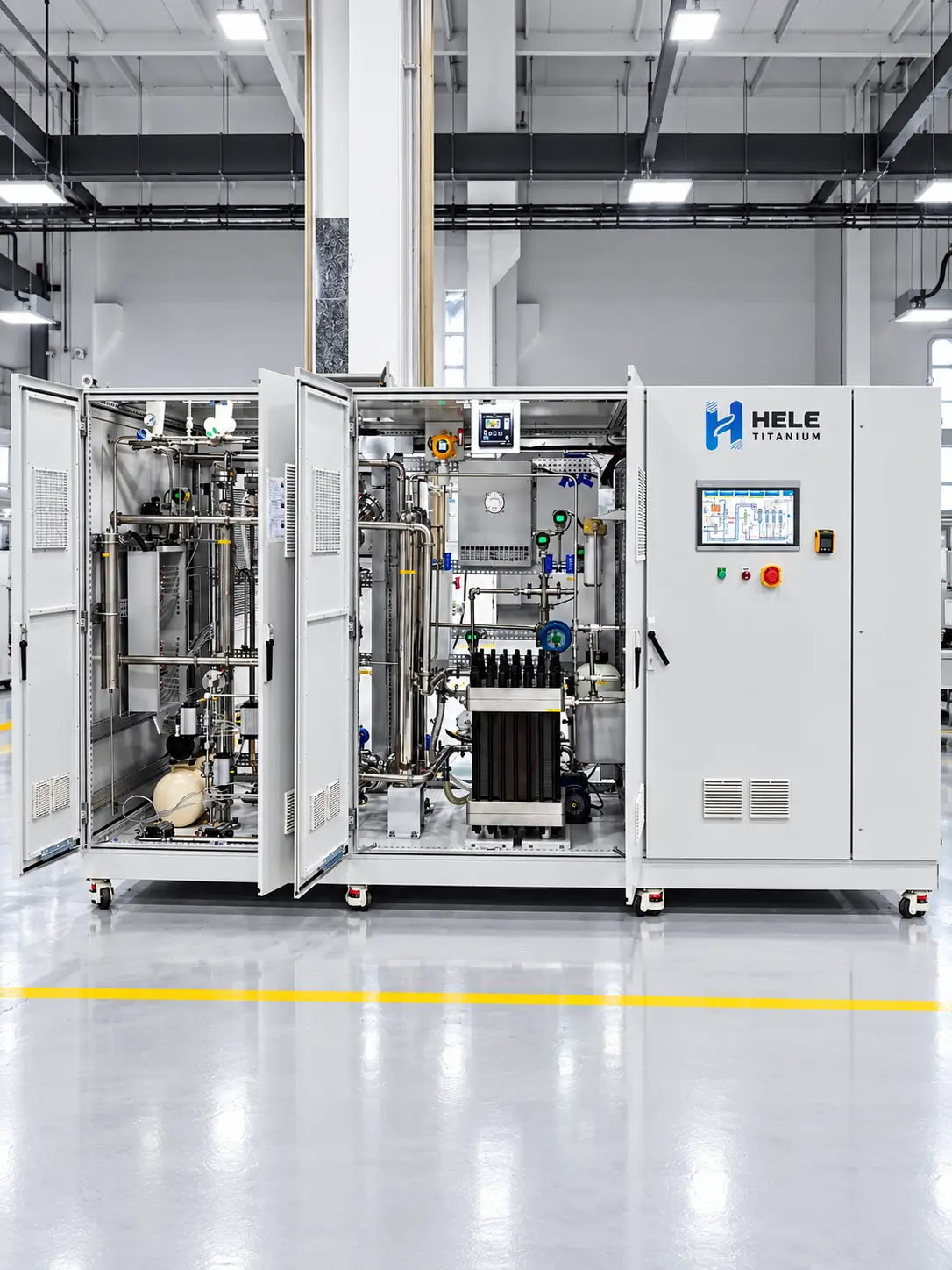
HELE-branded equipment cabinets with open panels showing piping, instruments and a stack assembly. Equipment shown on the HELE PEM product page. Confirm the quoted configuration, included auxiliaries and delivery conditions in the order.
Compare packages at the same supply boundary
Require a scope list with an owner for the stack, power conversion, water treatment and circulation, cooling, separators, gas treatment, controls, safety systems and site connections. Review compression and storage against the delivery point. If the offer covers a stack or an OEM module, ask the integrator to list the interfaces and supply the remaining functions. For a packaged system, verify the actual equipment list and approved exclusions. PEM stack versus system PEM balance-of-plant scope
Compare electrical consumption with the same measurement points and operating conditions. An offer quoting energy at the stack DC terminals requires separate treatment of conversion and auxiliary loads before it can be compared with a package AC figure. For utility pricing, check the run time and assumed load as well as which services the offer includes. Ask for the electrical diagram, meter locations and operating basis underlying the quoted figure. PEM energy and utilities
Put water, cooling and site interfaces on the drawing
Ask for the selected package's inlet specification, expected makeup flow and the conditions at which the thermal duty was calculated. Identify who supplies treatment and which party verifies water at the connection. Where treatment, storage and distribution sit outside the package, agree how those stages will be accepted. Define cooling supply and return conditions at the package boundary. Keep cooling flow, internal circulation and net water makeup as individually named quantities. Reclaimed industrial water handover
Include electrical, mechanical and communications interface documents in the order. State which drawings and control descriptions must be accepted before manufacture, who verifies the site utilities before installation, and who is responsible for the installed system. Mark any connected equipment needed for the promised gas conditions.
Qualify the offered configuration and agree the acceptance cases
Request the equipment and stack build identification and the applicable test record. Where a reference project is offered, check which functions the supplier actually delivered, whether the operating point is comparable and what evidence supports the stated milestone. Match safety and conformity documentation to the configuration and destination. ISO 22734-1 describes safety requirements for hydrogen generators using water electrolysis. Applicability and any demonstration required for the project belong in its specifications and acceptance plan. ISO 22734-1 catalogue scope PEM reference installation verification
For factory acceptance testing (FAT), write down the equipment in the test, supplied utilities, instruments, operating cases, durations, decision limits and witness responsibilities. Where cold starts or sustained low load matter, define when hydrogen first meets the delivery conditions and how long it must be maintained. Allocate site tests to performance or interfaces that depend on installed utilities, gas treatment or controls. Agree how open deviations and missing evidence will be closed before final acceptance. Cold-start and low-load acceptance
Before requesting a quote
Provide the hydrogen duty, delivery pressure and quality, installation location, available utilities and the items the buyer wants included. Ask HELE to identify the proposed configuration and list the confirmations needed for an order-specific offer. HELE PEM electrolyzer systems and technical enquiries
Frequently asked questions
Can I choose a PEM system from a listed production rate?
Use the rate to shortlist configurations, then confirm the pressure, gas quality, duty profile and utilities. Ask where the flow is measured and which services must be available at the stated operating point.
Which electrical figure should I use for operating cost?
Use the boundary that matches the cost model. Identify the loads billed to the project, then ask for a comparable system input and hydrogen output under the same conditions.
What should be included in the water documentation?
Request the inlet requirements, treatment responsibility, sampling point, expected net makeup and cooling conditions for the offered package. Agree how each will be verified.
Will a dryer always be included in a packaged system?
Check the offered equipment list and the point where gas quality is specified. If the buyer requires conditioning to a defined limit, assign the treatment and measurement scope in the order.
Can factory acceptance cover the installed delivery point?
It can cover the agreed factory configuration and conditions. Assign a site check to interfaces or final equipment not represented in that setup.
Does a comparable installation establish the warranty for a new order?
It provides evidence about a previous delivery. Agree the covered components, operating conditions, duration, limits and remedies in the new contract.
Prepare a technical enquiry
Share the hydrogen or test duty, operating conditions, interfaces and the equipment scope you need reviewed.
Ask a technical question →References

Project contact