
How to Verify GC-MS Method Suitability When Introducing a Hydrogen Generator
Agree on three decisions before releasing a gas chromatography–mass spectrometry (GC-MS) method using hydrogen carrier gas.
Table of Contents
Agree on three decisions before releasing a gas chromatography–mass spectrometry (GC-MS) method using hydrogen carrier gas. Confirm that the instrument configuration supports hydrogen, verify that the installed supply meets the specified conditions, and show that the analytical method meets the laboratory's acceptance criteria. Each decision needs its own owner and evidence.
Confirm what the instrument manufacturer supports
Record the exact GC, inlet, sample introduction device and mass spectrometer configuration. Use model-specific instructions to identify supported uses and any required changes. Agilent's conversion guidance illustrates why this detail matters. It lists compatibility by component and advises laboratories to allow time for validation and updates to procedures when changing carrier gas. Use the applicable manufacturer's instructions for the installed system. Agilent carrier gas conversion guidance
Put the approved gas conditions and the verification point on a separate supply acceptance record. Agree who checks that record and who owns compatibility and safety review for the installed system. A gas supplier can address the scope it offers. The instrument team and laboratory decide what is needed to approve the configuration and method.
Establish the analytical comparison before the change
Have the method owner identify the analytes, sample types, intended decisions and criteria the lab must meet. Preserve relevant results from the established method for comparison where available. If the lab has no suitable baseline, ask the responsible team to define what evidence will support approval rather than relying on a single acceptable-looking chromatogram.
Agree on which blanks, standards and representative samples the laboratory will use and how the results will be assessed. The comparison may need to address retention or separation, peak shape, identification, sensitivity or quantitative performance, depending on the method. Set acceptance criteria using the governing procedure and retain the samples and run records needed to review any difference.
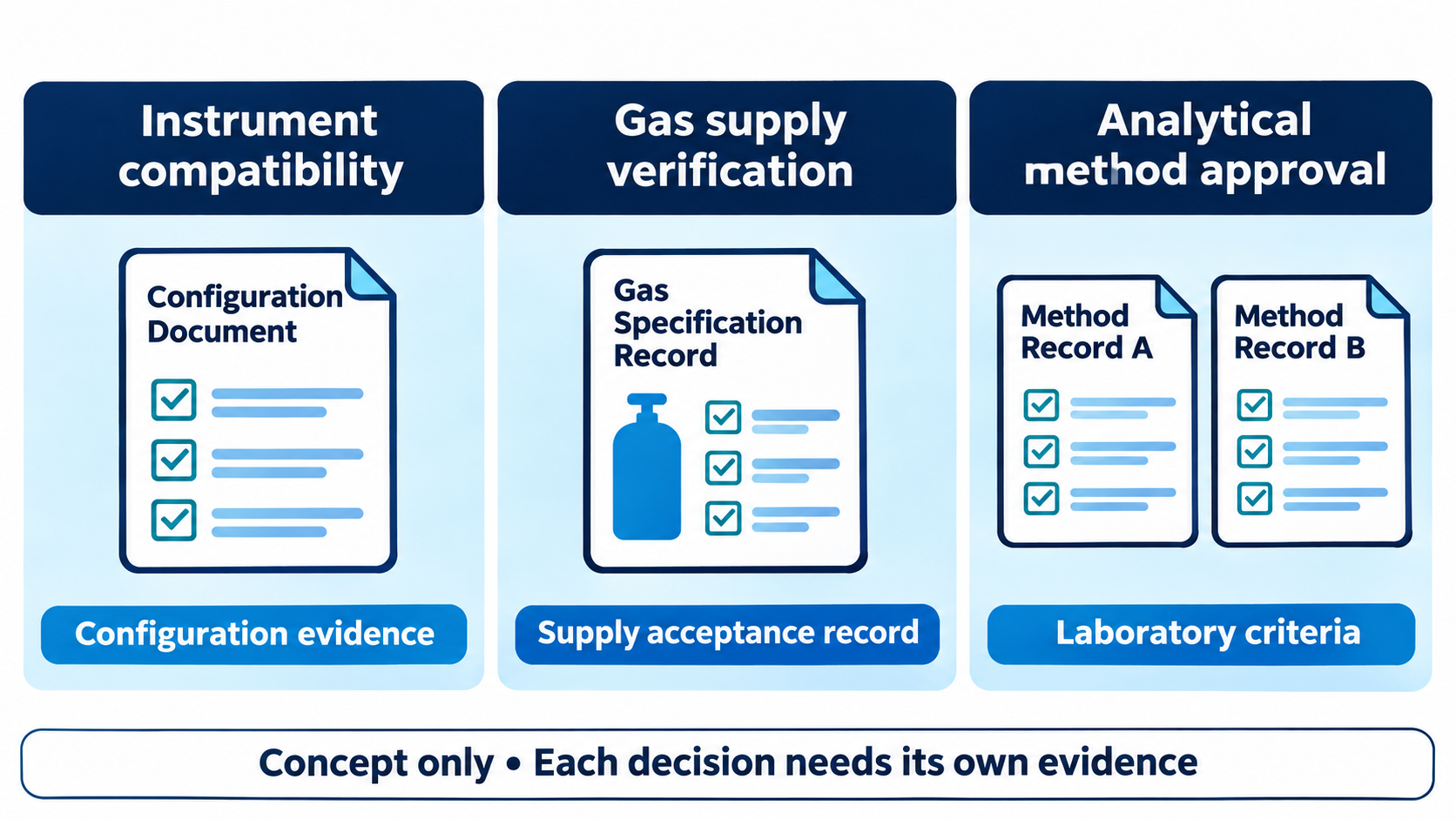
Three separate evidence categories cover instrument compatibility, gas supply verification and analytical method approval. Conceptual illustration only. Geometry, symbols and document icons do not represent an approved design, measured result or completed acceptance.
Decide what evidence supports release for routine use
If a comparison shows a change in peak shape or identification, preserve the result alongside the instrument configuration, verified gas record and method revision. Ask the lab and instrument support team to identify which checks can distinguish among the possible causes. Keep affected use pending until the laboratory records its disposition.
Have the method owner approve the defined application and capture any resulting revision to laboratory procedures. Keep instrument approval, supply verification and analytical results traceable to the released configuration. Record which changes would require reviewing that approval again.
For a lab generator enquiry, send the model-specific gas requirements, intended carrier-gas use and the acceptance responsibilities for the supply and the analytical method. Ask the supplier to define the scope it can substantiate for that project. HELE hydrogen generator enquiries
Frequently asked questions
Does a gas purity certificate release the analytical method?
It can support the stated gas specification within its documented scope. The laboratory still needs evidence that the method meets its analytical criteria in the approved configuration.
What if the GC supports hydrogen but a sample introduction device is undocumented?
Ask the manufacturer or authorized instrument team to confirm that component and its role in the configured system. Keep compatibility open for the affected workflow pending confirmation.
How should a laboratory handle a changed library match?
Retain the spectra and supporting control results. Apply the laboratory's identification criteria and route discrepancies to the method owner for review before reporting affected samples.
Should blanks and standards be run for every method?
The method owner specifies the applicable controls and acceptance rules. Verify which controls cover the intended compounds, matrices and reporting decisions.
Can a successful test on one matrix qualify another?
Check what the approved comparison covers. Where a second matrix falls outside that scope, ask the laboratory which validation or verification is required for the additional use.
Which records should be kept when the change is approved?
Retain the configuration approval, gas verification record, comparison results, method revision, any exceptions and the designated approval. These records show what application and setup the release covers.
Prepare a technical enquiry
Share the hydrogen or test duty, operating conditions, interfaces and the equipment scope you need reviewed.
Ask a technical question →References

Project contact