
How to Identify Replacement Plates and Gaskets for an Existing Titanium Heat Exchanger
Use the unit serial number and plate position schedule to identify titanium heat exchanger plates and gaskets before ordering.
Table of Contents
For a partial repair of a gasketed plate heat exchanger, identify the exact unit and the positions to be replaced before requesting prices. Use the equipment serial number, the current plate schedule and the approved identifiers for the plates and gaskets. That combination gives the reviewer a basis to verify a proposed part against the installed configuration.
Confirm which plate schedule represents the unit today
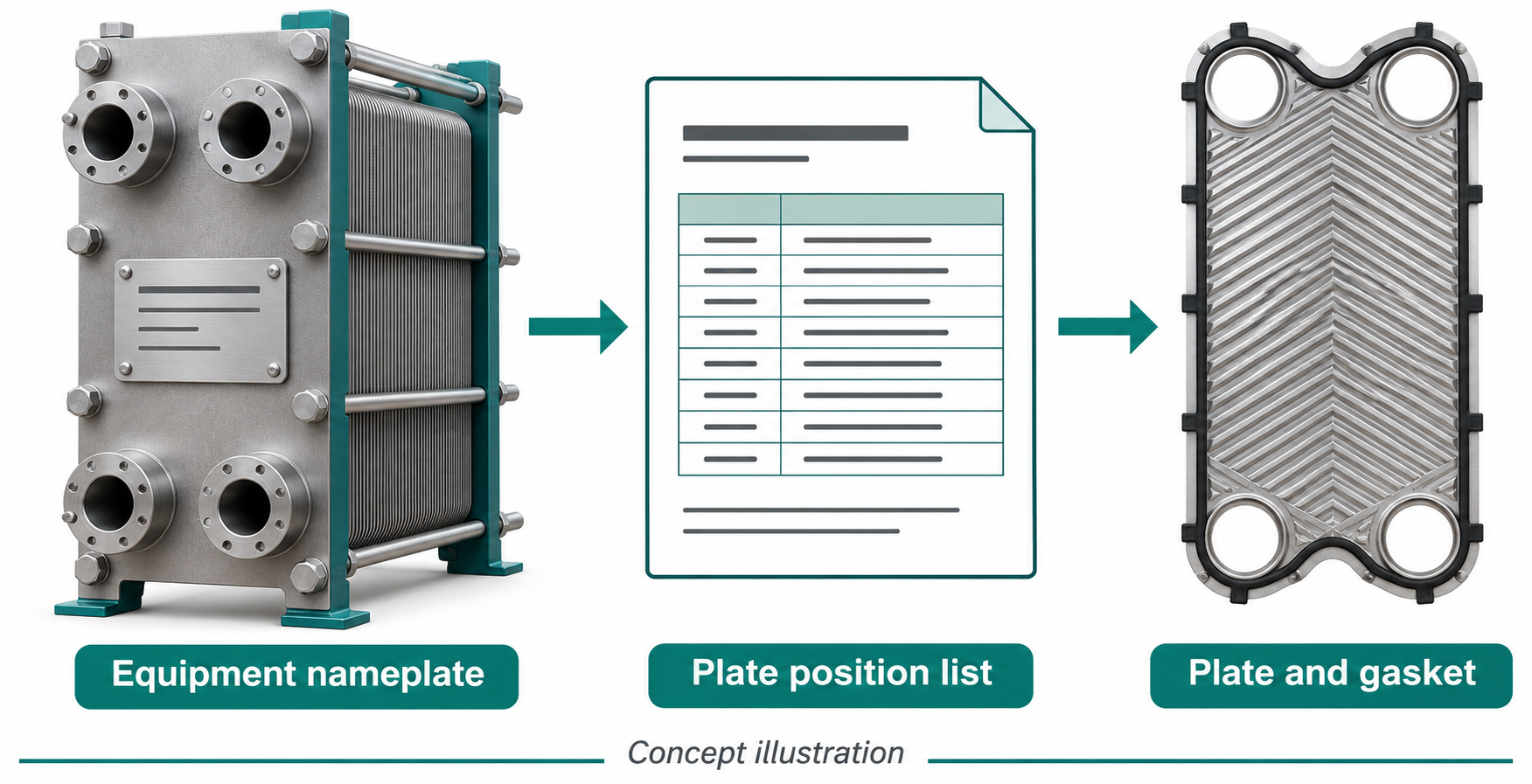
Record the equipment tag, manufacturer, model and serial number from the nameplate. Then find the equipment-specific plate and gasket schedule. Some manufacturers call the plate order a hanging list. It shows where different plates or gasket arrangements belong. If a prior repair changed the plate pack, identify the latest approved service record and reconcile it with the schedule before ordering. Plate heat exchanger maintenance manual
Use removed parts, markings and photographs to corroborate the records. Record the position and condition of each observed part if that information is available. An unlabelled loose plate may suggest a pattern, but the equipment owner should resolve whether it belongs to this unit and position.
Describe the parts by position and approved identifier
| Order field | What to record | What the reviewer can resolve |
|---|---|---|
| Unit reference | Equipment tag, serial number, model and applicable schedule revision | Which installed configuration the offer covers |
| Plate line | Position or position range, approved part identity, plate material and pattern reference | Which plates and quantities are in scope |
| Gasket line | Approved gasket identity, material designation and attachment arrangement where specified | Which sealing parts belong to those positions |
| Change record | Last approved revision or repair record and any discrepancy still open | Whether an old parts list can support this purchase |
| Commercial scope | Individual plates and gaskets, assembled components, or complete plate pack | Which work and parts the offer includes |
Ask the supplier to identify every proposed substitution in writing. Similar outside dimensions can leave the corrugation, port arrangement or gasket groove unresolved. Use the specified grade and part identifiers as the basis of comparison. The equipment owner or designated design authority approves any alternative and its effect on the installed unit. Example of individual spare parts and plate pack scope
Keep parts identification separate from outage release
Agree which records and markings will be checked at delivery and who approves them. Keep the installed checks and return-to-service criteria on the equipment owner's procedure. If the unit is opened during an outage and the affected positions change, issue a revised list and review any differences against the ordered items.
A short parts list with one open identity is often easier to resolve than one general line for all plates. Mark the affected positions and obtain an approved cross-reference or written disposition before releasing that part of the order.
Frequently asked questions
Is the heat exchanger model enough to identify a spare?
Use the unit serial number and the latest approved part and position schedule as well. The model can identify a family of equipment.
Can I order from a photograph of the used plate?
Attach the photograph as supporting information and retain the position or tag. Resolve part identity against the approved equipment records.
What if two plates have the same outside size?
Check their pattern, port configuration and gasket groove or attachment against the approved references for the intended positions.
Should the gasket material be ordered separately?
Record the approved gasket specification and whether it is supplied loose or fitted. The order should make the assembly scope clear.
Does a complete plate pack remove the need for the old schedule?
Use the unit-specific record to confirm what the offered pack covers and how it corresponds to the equipment configuration.
Who approves a different plate or gasket identifier?
The owner or its designated design authority reviews the proposed change and its evidence. Ask the quoting party to state the proposed identity and deviations.
Prepare a drawing-based titanium material or parts enquiry
Send HELE TITANIUM the unit record, position list and released titanium material or part specification for the scope you want reviewed. Review titanium for heat exchangers · Submit the defined scope
Prepare a technical enquiry
Share the product form, grade or standard, dimensions, quantity and inspection requirements.
Ask a technical question →References

Project contact