
Titanium Plate and Sheet Buying Guide
Specify titanium plate or sheet by the service, material specification, delivered condition and planned downstream process.
Table of Contents
Specify titanium plate or sheet by the service, material specification, delivered condition and planned downstream process. Ask suppliers to quote the same finished dimensions, flatness, surface, edge condition and inspection. Include the drawing when the supply covers cut blanks or fabricated parts.
Confirm the form, grade and condition for the intended use
Describe the service and whether the material will be formed, welded, machined or used as supplied. Have engineering select the grade and applicable material specification for the actual function. Confirm whether the order is for full mill sheet or plate, a cut blank or a part with additional processing.
Set the approved material and delivery condition and the documents needed to trace it. An offer quoting only a grade leaves open the form, condition and applicable requirements. Ask the supplier to identify the exact product and any deviations before comparing offers.
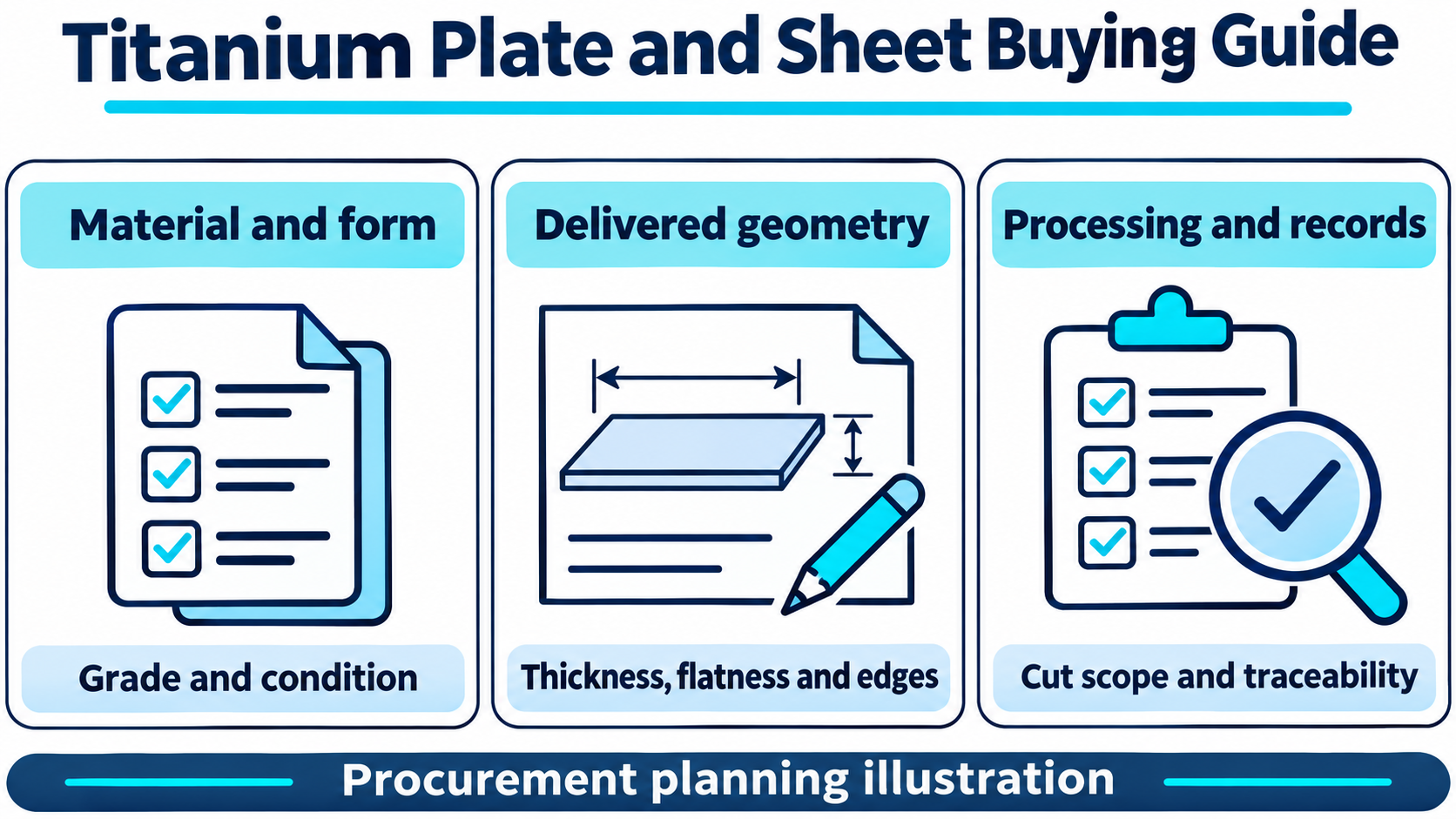
Titanium Plate and Sheet procurement illustration: material and form, delivered geometry, processing and records. Concept illustration of the article's procurement checks: grade and condition; thickness, flatness and edges; cut scope and traceability.
Control the geometry and surface buyers will receive
Specify thickness, length and width or a cut outline, with the relevant tolerances for the delivered condition. Determine flatness and measurement support where that characteristic matters to forming or machining. Show machining allowance, protected surfaces, edges and any orientation requirement tied to subsequent operations.
Agree how the supplier will verify the surface. If the buyer requires a particular finish or contamination limit, state the method and accepted condition. Request appropriate packaging and surface protection matched to transport and receiving.
Review processing scope, cost and inspection
Separate base material, cutting, flattening or finishing where those operations change delivered scope. For a cut blank, give the finished geometry and any permitted processing or edge condition. Specify how material identity is retained after cutting and where labels are applied.
Compare quotes using delivered usable material, processing, scrap assumptions if relevant, inspection and packaging. Before requesting a quote, send the material definition, drawing, quantity, downstream operation and required test and inspection documents. HELE titanium plate and sheet Titanium material certificate and inspection guidance
Frequently asked questions
What should appear with the grade on a plate RFQ?
Specify the product form, material standard and revision, delivery condition, dimensions and examination or inspection required.
Can a nominal thickness be used for all comparisons?
State the applicable tolerance and where it is measured. Where the design depends on minimum thickness, make the agreed basis explicit.
When is flatness part of the order?
Include it where fit, machining or downstream processing depends on it. Agree the measurement condition and method.
Should surface finish be listed for both sides?
Identify each surface that matters and the required condition. State any protection or handling needed after verification.
Who controls stock identity after a sheet is cut?
Agree the transfer method and reporting as part of the processing order. Keep identifiers on pieces or supporting records.
How can cut-blank and full-sheet offers be compared?
Account for usable dimensions, processing work, remaining allowance, inspection, packing and traceability under the same requirement.
Prepare a technical enquiry
Share the product form, grade or standard, dimensions, quantity and inspection requirements.
Ask a technical question →
Project contact