
What a Heat Exchanger Retubing RFQ Needs from In-Service Inspection
Use the approved tube map, inspection report and replacement scope to prepare a titanium heat exchanger retubing RFQ.
Table of Contents
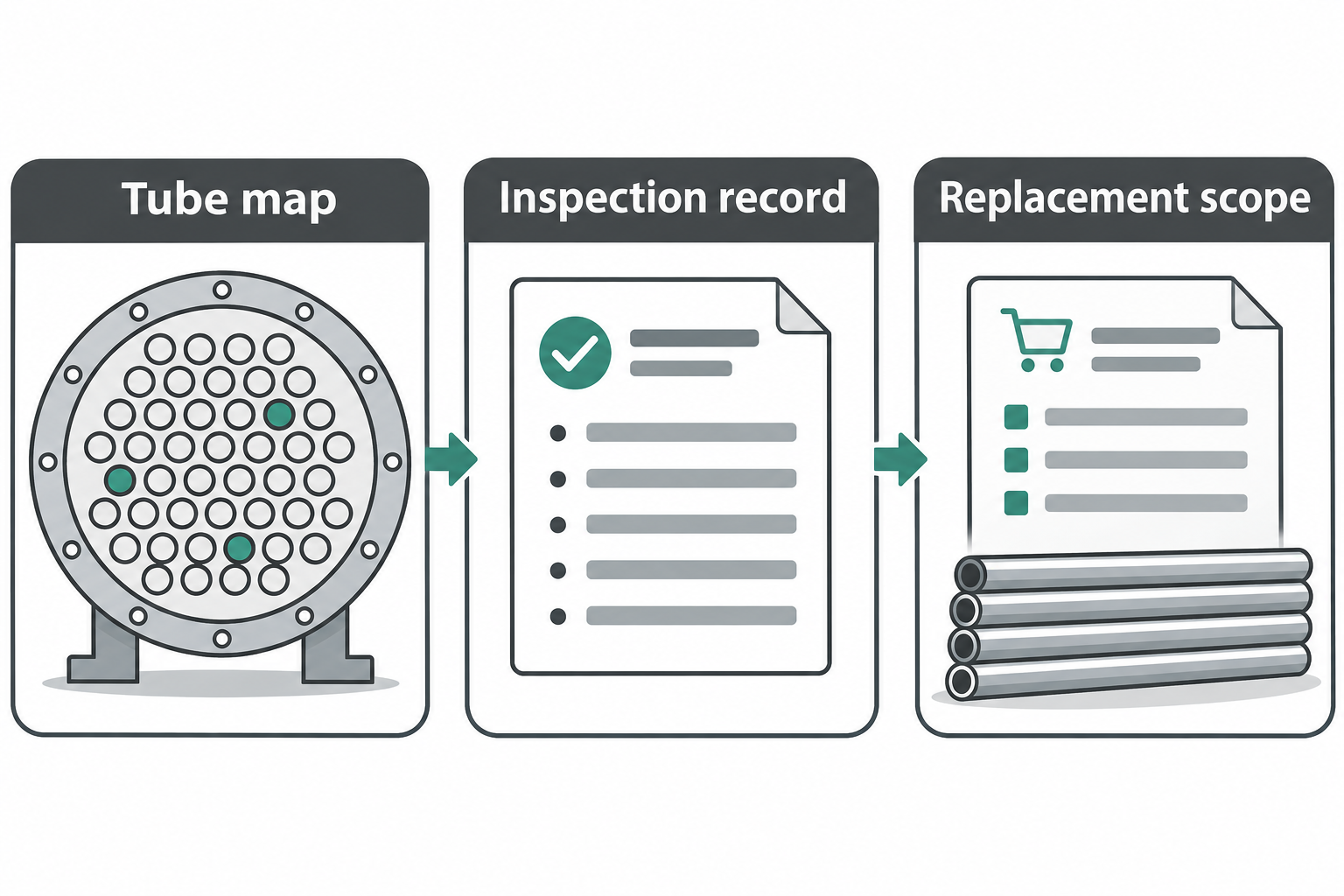
Use the approved tube map and the owner’s disposition to define the replacement enquiry. The inspection report records the examination and its limitations. The purchase package should show which tube positions have been released for replacement, the specification of the new tubes and the part of the outage each supplier is expected to support.
Connect the report to the installed tube positions
Begin with the exchanger or bundle identifier and a revision-controlled map. Identify the map orientation and the convention for tube positions. Record the report identifier, inspection date, positions examined, inaccessible positions and relevant limitations. Keep the inspection results and their engineering interpretation with the asset owner.
Eddy current testing is used in heat exchanger tube assessment. The facility’s qualified personnel determine the applicable procedure, scope and coverage. Collection of an indication or a finding is one input to the owner’s engineering decision. ASNT electromagnetic testing overview
On the enquiry schedule, distinguish positions approved for replacement from positions pending assessment. Preserve the report and map revision against each category. Ask the owner which information can be shared and which restrictions apply to its use. A supplier can quote material against an authorized schedule while engineering keeps unresolved positions open.
Translate the authorized scope into a tube order
| Item | What goes in the request | Who confirms it |
|---|---|---|
| Tube positions and quantity | Exchanger identity, map revision, approved positions and separately stated spares | Asset owner or project engineer |
| Replacement tube | Approved grade, product specification, route, dimensions, length and end condition | Design owner defines it, supplier confirms the offered product |
| Installed interface | Tube-sheet and joint drawing, applicable allowances and change restrictions | Equipment engineer and installation contractor |
| Receiving evidence | Traceability, dimensions, end condition, specified tests and packing | Buyer and supplier agree the records before release |
| Outage work | Delivery point, target date, removal and installation responsibilities, final verification | Owner and contractors approve their respective scope |
For titanium tubes, use the approved material and tube-sheet interface from the project. If dimensions or material cannot yet be confirmed, ask for a conditional quotation with its assumptions shown. Keep a provisional stock enquiry visibly separate from the purchase release. See the HELE TITANIUM titanium tube and pipe buying guide for supplied tube specifications, routes and inspection records.
Keep the handover valid when the outage scope changes
Ask the owner which report and map revision bidders should use. If an additional examination changes the affected positions, record the changed schedule, its approval and what moves in procurement. State who can authorize additional stock, release a different tube specification or change the scope of a return to service. A bid should distinguish the material supply from installation, examinations and final equipment acceptance.
At delivery, check the tube identification and documents against the purchase schedule. At installation and turnover, have the assigned teams record which approved positions were replaced and what remains open. Keep the final map, material traceability and site acceptance documents together so the next outage starts from the updated equipment record.
Frequently asked questions
Can a tube inspection report be used as the replacement drawing?
Use it with the approved position map and disposition. The tube dimensions, material and joint requirements come from the authorized equipment and purchase documents.
What if the inspected and approved replacement counts differ?
State each count and the map revision. The order should distinguish approved replacements, pending positions and authorized spares.
Who selects an inspection method or release criterion?
The asset owner assigns qualified inspection and engineering personnel to establish the method, coverage and disposition under its approved requirements.
What should accompany a request to hold replacement stock?
Send the likely material and dimensions, quantity basis and decision date. Clearly identify which requirements are provisional and who can release them.
Which documents belong with the delivered tubes?
Agree the order-linked material certificate, dimensions, traceability, end-condition and required test records before issue. Confirm the exact list for the ordered scope.
Who confirms the exchanger is ready to return to service?
The facility’s responsible authority confirms the required site checks and release. The supplied-tube report documents the delivered product within its stated scope.
Request a titanium tube supply review
Send HELE TITANIUM the approved replacement tube schedule, interface drawing, delivery window and required receiving evidence. Identify which outage activities the request covers. Review titanium tube and pipe · Submit a tube enquiry
Prepare a technical enquiry
Share the product form, grade or standard, dimensions, quantity and inspection requirements.
Ask a technical question →References

Project contact