
Titanium Tube and Pipe Buying Guide
Specify titanium tube or pipe by its service, governing product specification and exact delivery dimensions.
Table of Contents
Specify titanium tube or pipe by its service, governing product specification and exact delivery dimensions. For heat-exchanger tubes, identify the tube-sheet fit, end condition and inspection basis. For piping, have the design team specify the code basis, wall requirements and joint interfaces. Give suppliers the same grade, route and verification requirements before comparing their offers.
Identify whether you need tube, pipe or a manufactured component
For a condenser or heat exchanger, send the function, tube outside diameter, wall requirement, length and dimensions governing fit at the tube sheet. Include any required expanded, bent or welded condition and state whether the supplier is providing straight stock or a drawing-based item. For a pipe run, specify the design basis, pipe designation and ends, then identify who supplies fittings, flanges and fabricated spools.
ASTM B338 covers seamless and welded titanium and titanium alloy tubes for products including condensers and heat exchangers. ASTM B861 identifies seamless titanium or titanium alloy pipe, and ASTM B862 covers welded pipe. Confirm the applicable edition, grade, condition and supplementary requirements for the order. The product specification forms part of the purchase definition. Pressure design and assembly acceptance follow the project code and engineering documents. ASTM B338 ASTM B861 ASTM B862
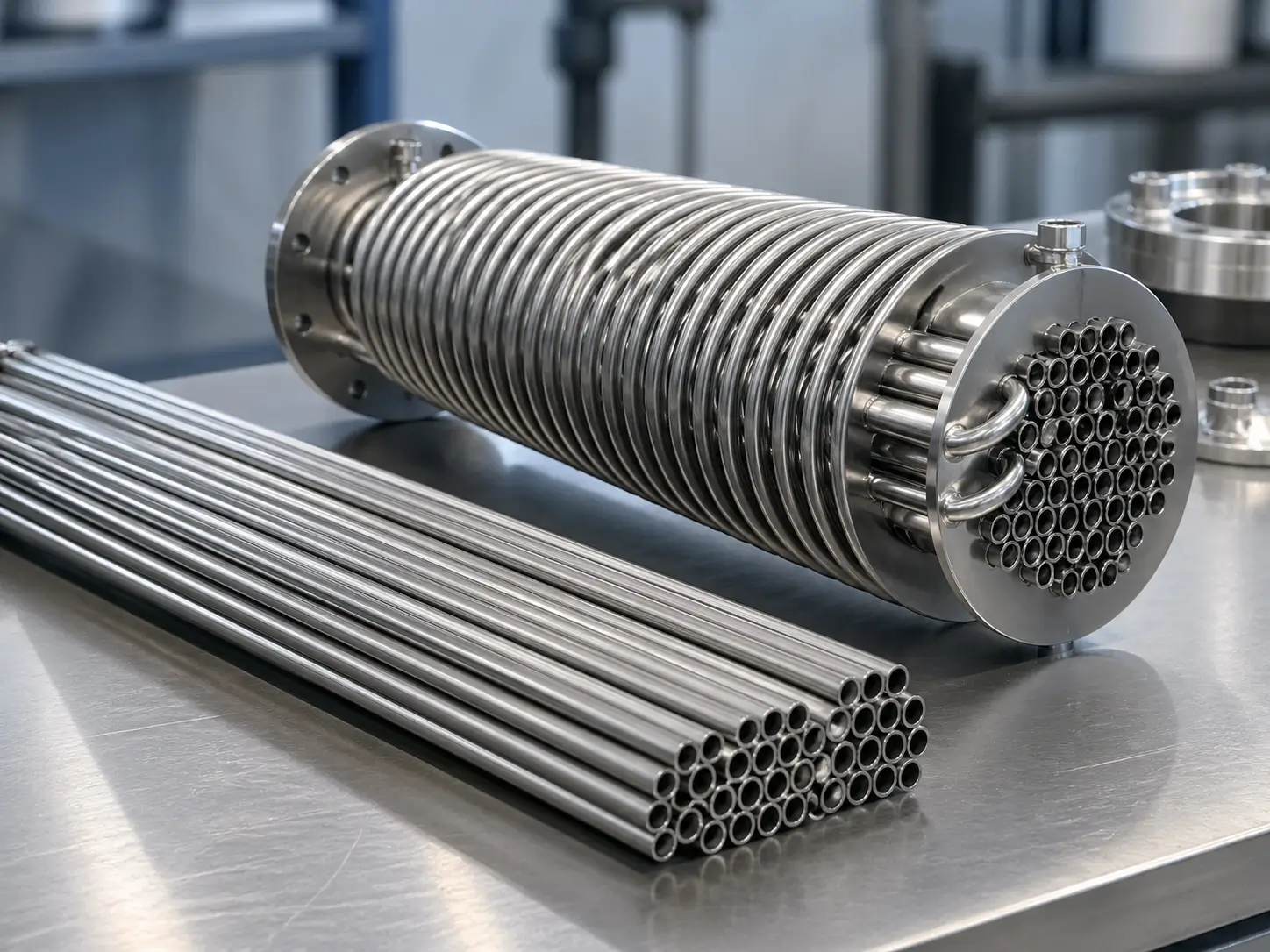
Straight metal tubes beside a tube bundle assembly with circular end plates. Product-page image showing straight tubes and a manufactured tube assembly. Specify whether the order covers stock lengths or a drawing-based component.
Define the service and choose the manufacturing route
Give the design owner the process media and concentration range, temperature and pressure cases, corrosion concerns and the intended fabrication or joining route. Ask that team to specify grade and condition in the context of the application. The same grade designation can appear on offers for products with different routes, geometry or inspection obligations. The order should identify all of them.
If both welded and seamless routes are permitted, compare them against the material requirements, actual sizes, fabrication needs, examinations and delivery timing. Ask how a supplier will identify the route on the certificate and provide the specified examination record. Request approval of proposed changes before the material is bought or processed. For installed pressure service, confirm the design and joining responsibilities with the design authority.
Make the critical geometry measurable at delivery
State the outside diameter or other controlling dimensions, wall basis, required length and permissible variation. If minimum wall governs the design, make the measurement basis explicit so it can be compared with offers listing nominal wall. Specify straightness, ovality, surface and end preparation where they matter for insertion, joining or sealing. Use the relevant drawing revision to identify where each check applies.
For heat-exchanger retubing, provide the tube sheet and joint details. Agree whether the order includes straight stock, bends or prepared ends, and specify where finished dimensions will be checked. For spools, identify the mating joints, required fit-up characteristics and what evidence the fabricator must provide beyond the original mill records.
Write the acceptance and traceability requirements into the quote
Specify which tests are required under the selected edition and which checks the project adds. For any required nondestructive examination or pressure test, define the applicable method, coverage, acceptance basis, record and witness role. Agree how the test results are linked to the supplied lengths or lot. Distinguish mill testing of tube or pipe from testing of a fabricated assembly under the approved project plan.
Request order-specific marking and heat or lot identification, material certificates, dimensional results and the applicable test records. Define how identity will be carried through cutting, bending or fabrication if those operations are within the order. Specify end protection, packaging and packing list identification for long lengths or prepared surfaces. When comparing delivered cost, include inspection, agreed finishing, packaging and transport as well as material price. Titanium material certificates and inspection
Before requesting a quote
Send the intended service, the product specification and grade, dimension schedule or drawing, route limits, quantity, end condition and inspection documents required. If asking for a fabricated item, include the interface drawing and engineering responsibilities. HELE titanium tube and pipe enquiries
Frequently asked questions
Which ASTM specification should I put on the RFQ?
Identify the intended product and verify the applicable edition with engineering. B338 is a tubing specification for applications including heat exchangers. B861 and B862 address seamless and welded pipe respectively.
Can the same dimensions be used for tube and pipe offers?
State which dimensions control the purchase and how they are designated in the governing documents. Match outside diameter, wall basis, tolerances and the ends when comparing offers.
Is seamless required for every pressure application?
Follow the project code and the approved specification. Compare permitted routes against the required examinations, fabrication and service, then record the accepted route on the order.
Who determines the acceptable pressure and temperature?
The project design authority sets the rating and identifies the governing code and design conditions. Ask the supplier to confirm the supplied material, dimensions and test scope against those requirements.
How do we keep traceability after lengths are cut?
Agree on controlled labels or records that carry the heat or lot identity from the parent length to the resulting pieces. Match the packing list to the resulting identifiers.
What should be included for replacement heat-exchanger tubes?
Provide the tube schedule, mating tube-sheet details, joint method, installed duty, required condition and test plan. State which dimensions are verified on receipt and which apply after installation.
Prepare a technical enquiry
Share the product form, grade or standard, dimensions, quantity and inspection requirements.
Ask a technical question →References

Project contact