
When a Changed Duty Requires Re-Rating a Titanium Plate Heat Exchanger
Prepare both circuits, pressure-drop targets and the installed plate schedule for a titanium plate heat exchanger rating review.
Table of Contents
Ask the equipment manufacturer or responsible design authority to review the rating of a gasketed titanium plate heat exchanger when the proposed duty differs from the approved basis. Have both fluid sides reviewed together before ordering parts as a capacity or service upgrade. A parts list can identify the installed configuration, while the rating review establishes what that configuration can do in the proposed service.
Put the original, observed and proposed duties side by side
Find the unit tag, approved rating sheet and current plate pack and gasket schedule. Record any previous change that affects the installed configuration. Ask operations to provide recent measured conditions and flag instrument, fouling or cleaning history that can affect interpretation. Keep these observations separate from the design case the plant now requires.
A change in throughput, inlet temperature, required outlet temperature or fluid properties can affect the rating basis. Published equipment upgrade guidance gives changed media properties as an example of when the design may need review. Record the proposed duty and let the responsible equipment engineer assess its effect on the unit. Equipment-maker guidance on changed media
Give the reviewer both circuits and the installed unit details
| Input | What to provide |
|---|---|
| Hot and cold side conditions | Fluid identity and composition as applicable, flow cases, available inlet temperatures and the required outlet conditions |
| Performance requirements | Target heat duty or outlet requirement, allowable pressure drop on each side, and any agreed design basis for fouling |
| Mechanical and service limits | Approved operating envelope, equipment and frame identification, connections, and proposed fluid or cleaning changes |
| Installed configuration | Current plate pattern or schedule, gasket specification, any earlier revisions and recent operating history |
| Acceptance | Which operating case must be verified, which measurements are needed and who approves the result |
Define the normal case and any minimum, maximum or variable case that matters to the duty. Resolve differences between the original schedule and the currently installed parts with the equipment owner. If the reviewer needs additional operating records, identify who can provide them before parts are released.
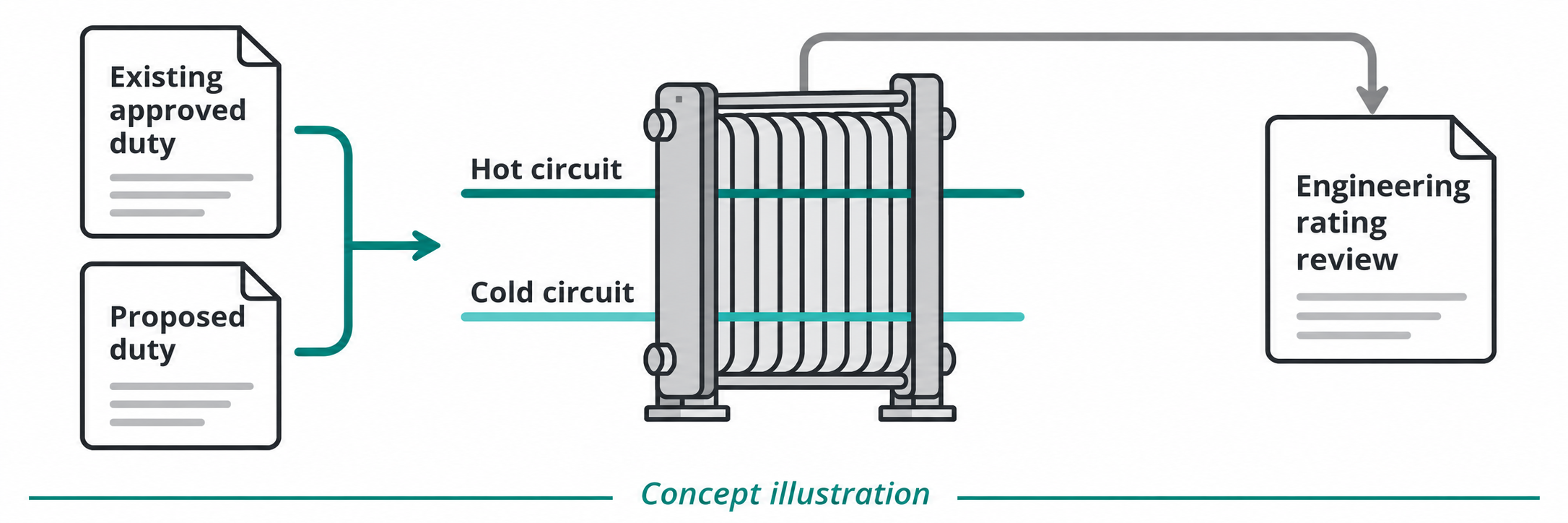
Separate a spare-parts quotation from the rating decision
For parts requested under the same approved duty and configuration, use the current equipment records to identify the correct components. For a changed duty, the rating review should state whether the frame and plate pack can be retained and identify any revised parts and conditions. Have the design authority confirm material and gasket compatibility, mechanical limits and acceptance requirements within its approved scope. A material or cut-part supplier should quote the released specification and state any scope exclusions. Replacement plate and gasket identification guide
Frequently asked questions
Can a past rating be used if only the coolant changed?
Give the reviewer the revised fluid and operating information to decide whether the existing rating applies at those conditions.
What if only one circuit’s flow is changing?
Document both circuits, including any downstream requirements. The reviewer needs their combined conditions to assess the duty.
Do we need pressure-drop limits for both sides?
Give the allowable pressure drop and any relevant measurements for each side. Record the basis and operating case for each value.
Is a reduced outlet temperature proof that the equipment needs a new plate pack?
Record the observations and service history so the responsible engineer can first determine what may explain the change and what evidence is missing.
Who approves use of the existing frame?
The equipment manufacturer or designated design authority reviews the proposed plate pack and the equipment’s mechanical limits before approving reuse.
What is needed for a titanium parts quote after review?
Send the released drawing or part identity, material specification, required condition, quantity and applicable inspection and acceptance requirements.
Request a drawing-based titanium scope review
Send HELE TITANIUM the approved material or part specification and the boundary of the intended supply. Review titanium for heat exchangers · Send the released scope
Prepare a technical enquiry
Share the product form, grade or standard, dimensions, quantity and inspection requirements.
Ask a technical question →References

Project contact