
How to Reconcile Hydrogen Dew-Point Test Results Taken at Different Pressures
Compare hydrogen dew-point results using sample location, pressure at measurement and the reported reference basis.
Table of Contents
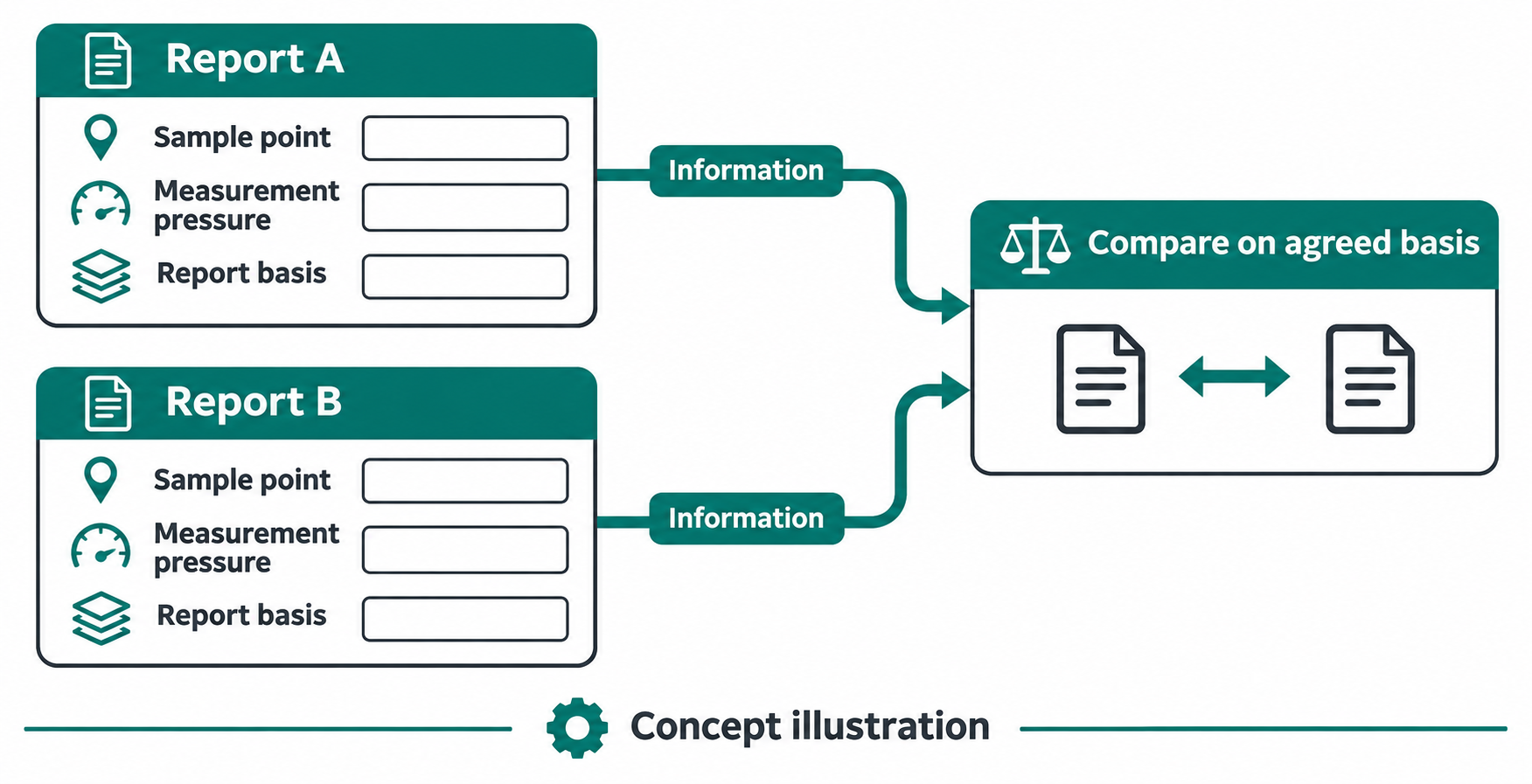
Before comparing two hydrogen dew-point results, identify where each gas sample came from, its pressure at measurement and the pressure basis used for reporting. Apply the acceptance requirement at its named location and reference. If the reports cannot be brought onto that basis with approved evidence, ask the laboratory to issue a clarification or arrange a comparable retest.
Separate the pressure at the sensor from the pressure on the report
A process reading can identify the pressure at the delivery point. A separately measured sample can be at another pressure. The laboratory may report the observed result at the measurement pressure or an equivalent value at a stated reference pressure. Ask the issuer to make those fields explicit and identify absolute or gauge pressure and units where applicable.
At a given water content, the dew-point result depends on pressure. Two readings taken at different pressures can differ even with equivalent moisture content. Use that principle to review what the reports describe. The instrument and sampling requirements for the actual hydrogen service come from the approved method and its responsible parties. Instrument manufacturer’s dew-point measurement explanation
Put each report on the same review sheet
| Field | What to ask the report issuer |
|---|---|
| Sample source | Identify the equipment, connection or sample point and test condition |
| Pressure at measurement | Record the actual reading basis, units and whether it is absolute or gauge |
| Reported reference | State what pressure the reported dew point refers to and whether any conversion was applied |
| Result basis | Identify the units, method and dew-point or frost-point convention where applicable |
| Acceptance record | State the contract limit and basis, relevant instrument evidence and who approves the comparison |
If a report was converted, keep the original observation and the approved calculation or report reference. A common pressure basis does not resolve differences in the sample location or test condition. Check those too before treating two results as interchangeable.
Record the agreed disposition
If the sampling point, reference pressure or original observation is missing, ask the lab to clarify which evidence can be recovered. An approved comparison may require a revised report, or the buyer may request a repeat measurement under its agreed conditions. Record what changed and who accepted the result. Keep the issue tied to the applicable delivery interface and its requirements. HELE hydrogen delivery conditions
Frequently asked questions
Can two reported dew points be compared directly?
Compare them once the method, sampling basis and reporting pressure have been reviewed and confirmed as equivalent for the requirement.
Is generator outlet pressure the same as sensor pressure?
Confirm both entries with the issuer and use the measured and reported bases shown on the test record.
What if a report states only that it used a reference pressure?
Ask for the reference value and units, the original measurement pressure and the approved basis used to report the equivalent result.
Do frost point and dew point always mean the same thing?
Check the report convention and its applicability to the acceptance requirement. Ask the issuer how it identified the result.
Does a common reference pressure resolve different sample points?
Check the location and approved operating case as well. The acceptance requirement determines which point the evidence must represent.
Who approves a conversion or repeat test?
Use the laboratory method and the buyer’s designated acceptance authority. Retain their decision with the original result and any revised report.
Submit the delivery and test basis
Send HELE TITANIUM the intended delivery location, applicable dew-point reporting basis and the records the buyer plans to accept. Review PEM electrolyzer systems · Send the accepted test scope
Prepare a technical enquiry
Share the hydrogen or test duty, operating conditions, interfaces and the equipment scope you need reviewed.
Ask a technical question →References

Project contact