
CNC Titanium Parts Buying Guide
Release a CNC titanium part from one controlled product definition and a measurement plan tied to the assembly.
Table of Contents
Release a CNC titanium part from one controlled product definition and a measurement plan tied to the assembly. Establish the titanium grade and stock route, critical geometry, finishing state and lot evidence before comparing quotations. Tell each supplier which checks govern approval of the first part and later deliveries.
Identify the source of truth and what makes the part fit
Provide the released drawing and referenced model with matching revisions. Resolve any conflict between them with the design owner. Identify which faces locate the part, which features provide clearance or support and which dimensions control assembly. Ask what dimensions and tolerances apply in the finished condition.
Use the governing drawing convention and specify actual datum features, critical hole patterns, thread requirements, surface texture and edges. ASME Y14.5 describes rules for stating and interpreting geometric dimensioning and tolerancing when that convention is selected. Agree the measurement setup and method for the characteristics that decide acceptance. ASME Y14.5 CNC hole-pattern inspection planning
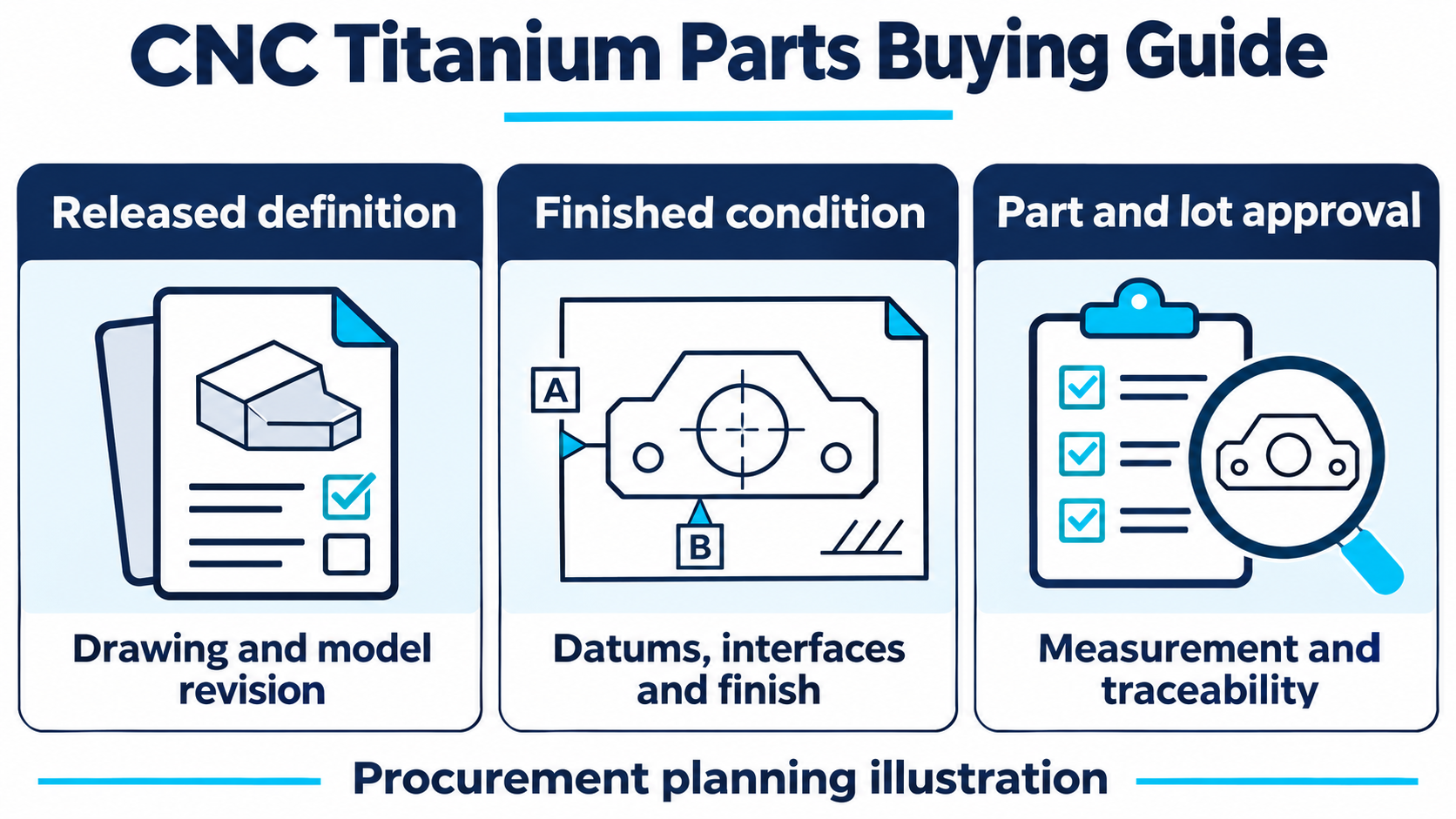
CNC Titanium Parts procurement illustration: released definition, finished condition, part and lot approval. Concept illustration of the article's procurement checks: drawing and model revision; datums, interfaces and finish; measurement and traceability.
Establish material, machining and finishing boundaries
Specify the approved grade and condition, input stock form and traceability. Ask the supplier to describe the work scope and identify deviations, especially for a feature that needs particular tooling, alignment or inspection access. For thin features, specify the agreed inspection support or part state when it can affect the measurement.
Define which supplier provides heat treatment, coating or finishing when required. Mark masking, mating and critical surfaces and distinguish any machining-stage requirement from the final one. Ask who holds the released process and inspection instructions and how external records will link back to the production lot. Functional edges on titanium parts
Define first-part approval and shipment release
Set the scope and configuration of a representative first part. Include required material documents, dimensions, finishes and assembly or functional checks. Record changes to the route and identify when they require approval or repeat verification. Specify the production lot, sampling and deviations procedure for ongoing shipments.
Compare quotes by machining, supplied stock, finishing, tools or gauges, inspection, packing and delivery scope. Before requesting a quote, send the released definition, expected volume, important interfaces and required inspection records. HELE CNC titanium parts
Frequently asked questions
Which file controls if the drawing and model differ?
Use the document authority stated on the order. Ask the design owner to resolve discrepancies before approving a quotation.
When should a cosmetic and a functional edge be handled differently?
Mark the edge that controls sealing, location or clearance and set its measurable limit. Specify any separate appearance or handling requirement on the remaining surfaces.
Does a machine capability figure establish final part tolerance?
Compare the approved measurement plan and evidence from a representative part or process. The order should define the finished requirement to verify.
What should the dimensional inspection report show?
Ask for feature ID, part or lot identification, drawing revision, method and results. Preserve fixture or alignment information where it affects interpretation.
How can an outsourced finish be tracked?
Record the processing site and scope where required, the machining and finish lot relationship and the final release responsibility.
Which checks support a repeat order?
Apply the approved lot release plan and record material, drawing and process changes. Assign fresh verification where a changed condition affects fit or acceptance.
Prepare a technical enquiry
Share the product form, grade or standard, dimensions, quantity and inspection requirements.
Ask a technical question →References

Project contact