
What Surface Evidence to Request for a Wire-EDM Titanium Feature
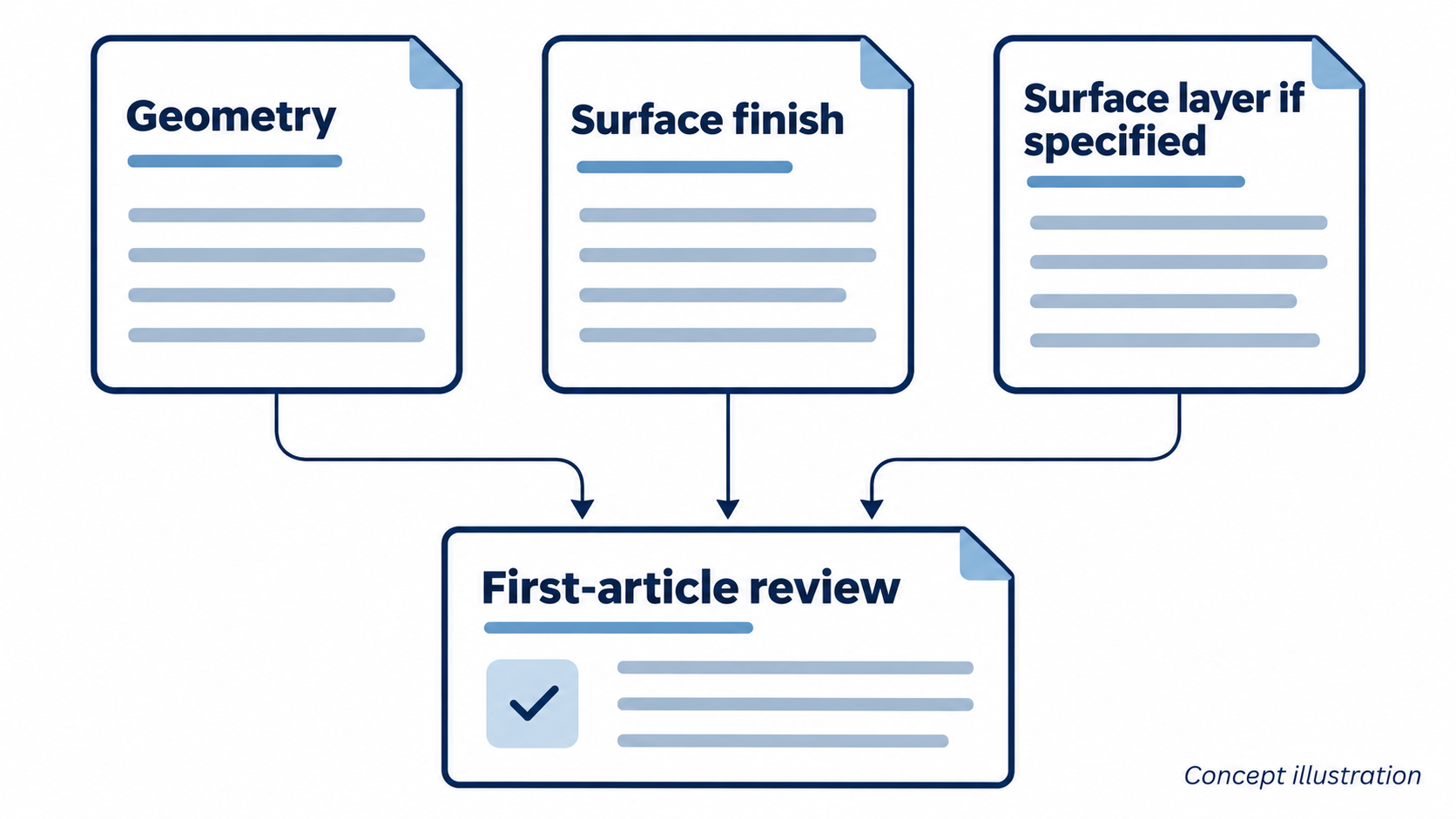
Specify separate first-article evidence for wire-EDM titanium dimensions, roughness and any surface-layer requirement on the drawing.
Table of Contents
Agree how each important titanium surface will be accepted before placing an order for wire electrical discharge machined (wire-EDM) parts. Dimensions and roughness address separate requirements. If the drawing also specifies a surface-layer condition, agree what evidence will verify that condition on the finished feature.
Does the wire-cut surface remain in the finished part?
Mark the face, slot wall or other feature on the controlled drawing. Identify whether the surface remains as cut or undergoes further finishing. Locate inspection on the stage that the drawing regulates and state who approves changes. In research on additively manufactured Ti-6Al-4V, investigators evaluated roughness and the recast layer separately after wire-EDM finishing. The study illustrates the distinction between measured properties on its specimens. Use the part's own specification to decide which properties need evidence. Original wire-EDM surface study
What should the first-article evidence cover?
| Requirement | Evidence to agree before the order | Who resolves a gap |
|---|---|---|
| Finished geometry | Feature ID, drawing revision and results linked to the finished part | Buyer design authority and supplier quality |
| Surface finish | Specified parameter, measurement location and agreed reporting basis | Supplier quality and the drawing owner |
| Surface-layer condition, where specified | Agreed inspection or examination report tied to the feature or an approved representative specimen | Design and quality authorities |
| Further processing or route change | Revision and confirmation of where the required evidence still applies | Process approver and the buyer's technical owner |
Consider a slot wall with a conforming dimension report and an accepted roughness reading. If the drawing also calls for a surface-layer examination, the reviewer can record geometry and finish as checked while keeping the surface-layer requirement open. If the proposed examination uses a separate specimen, ask the drawing owner to approve how it represents the material condition, process route and location before relying on the result.
What if the drawing never defined a surface-layer criterion?
Raise the question before award when the service condition makes it material to the design owner. Ask whether the drawing needs an applicable requirement, where it applies and what record is expected. Write the revision into the order and first-article plan. CNC titanium parts buying guide
Frequently asked questions
Does every wire-EDM surface need sectioning?
Inspection depends on the approved drawing and acceptance plan. Ask the design owner what evidence the feature needs.
Does a roughness result verify the recast layer?
Use roughness for the specified surface profile. A separate surface-layer requirement needs the evidence agreed for that property.
When can a witness specimen be used?
When the buyer has accepted how it represents the finished feature and relevant processing conditions.
What if a later operation removes the wire-cut surface?
Specify the condition required at the finished feature and agree which evidence must follow the later operation.
What if a supplier changes its manufacturing route?
Have the authorized parties determine which prior evidence is still applicable and which checks must be repeated.
What should a first-article report identify?
Tie the result to the part or approved specimen, marked feature, controlled revision and relevant inspection stage.
Request a drawing and inspection review
Send HELE TITANIUM the material condition, released drawing, marked feature and any surface or post-processing requirement. Identify the first-article evidence that needs agreement. Review custom titanium machining · Send the drawing basis
Prepare a technical enquiry
Share the product form, grade or standard, dimensions, quantity and inspection requirements.
Ask a technical question →References

Project contact