
Agree on Weld-Root Evidence Before a Titanium Assembly Is Closed
Set the weld-root hold point, required evidence and release authority while the titanium joint is still accessible.
Table of Contents
When the next assembly operation will hide the root side of a titanium weld, agree on the inspection method, evidence and release authority before that operation. Put the affected joints on the drawing and make the inspection or witness point visible in the build sequence. An agreed record lets the reviewer identify what was observed while access still existed.
Identify which joint surfaces will become inaccessible
Mark each relevant joint on the assembly drawing. Identify its root side, which later operation restricts access and when the reviewer must act. Ask the design and quality owners whether the required evidence concerns root condition, internal profile, cleanliness or another feature defined by the project. The inspection and test plan (ITP) should show which welding and assembly records must already exist when that point is reached.
Technical guidance for titanium welding explains the importance of protecting the weld and the surrounding heated material from atmospheric contamination. Use the approved process, inspection specification and acceptance criteria for the actual joint. The inspection record should establish what was observed and how it was evaluated. Titanium welding technical guidance
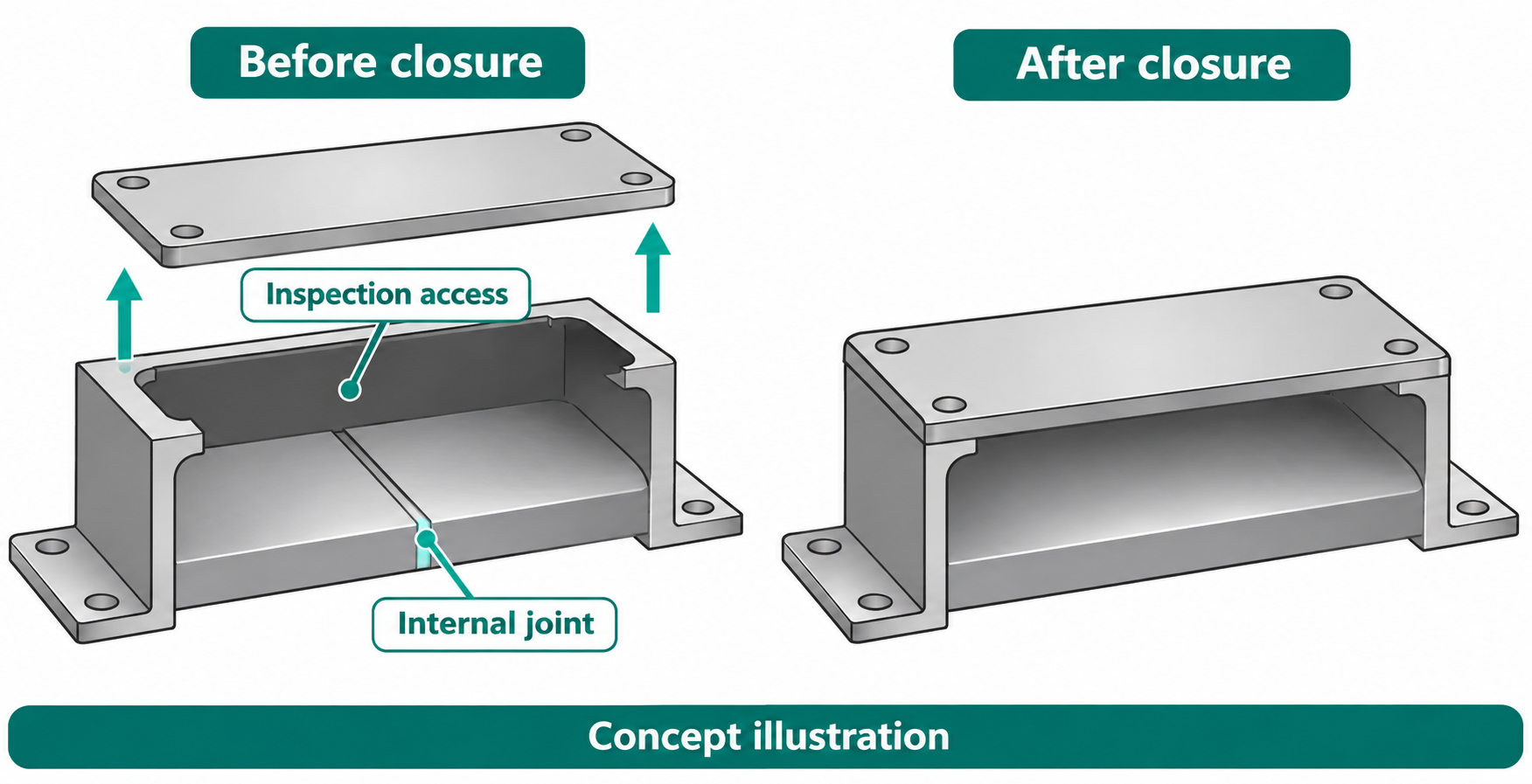
Agree on what releases the next operation
| Item to approve | What to put in the plan |
|---|---|
| Joint and inspection stage | Joint ID, accessible side, drawing revision and the next operation |
| Inspection evidence | Approved method, required coverage and record format |
| Witness or hold point | Who receives notice, who can release and how release is recorded |
| Supporting images | A joint ID, orientation and coverage reference for each image if photographs are specified |
| Deviations and access loss | Who can approve alternate evidence, reopen the assembly or decide the disposition |
Use separate entries for the observation and its interpretation. A traceable image can document the accessible surface. The applicable criteria and inspection responsibilities control what it can establish. If the plan calls for a different examination or later test, identify what that check covers and which pre-closure evidence remains necessary.
Close the record while the joint is still identifiable
Before releasing the operation, match the open inspection items to the joint map. Record any inaccessible area, unobserved segment or pending approval. If access has already been lost, ask the appointed authority to decide whether any proposed alternate examination meets the requirement. Preserve the record of the missed stage and the decision. Agree how the signed release will travel with the assembly inspection documentation.
Frequently asked questions
Does every titanium weld need a separate root observation?
Use the approved drawing, specification and inspection plan to define which joints and characteristics require a dedicated check.
What if several joints look the same?
Use the joint ID and orientation reference on each observation. Link images and reports to the drawing so the reviewer can place them on the assembly.
Can a completed leak test close this inspection point?
Check the evidence needed for the specific root-side requirement. Leak testing has its own acceptance purpose and should be recorded separately in the plan.
What should a root-side photo show?
Show the agreed joint or segment and enough orientation to identify the view. Use the required examination method and criteria alongside any photographs.
Who can approve alternate evidence?
Use the authority named in the project inspection plan or purchase order. Obtain its decision on the affected joint before proceeding.
What if an inspection point was missed already?
Record the joint and the point at which access changed. Ask the responsible authority to evaluate the available evidence and determine the disposition.
Request a titanium weld and assembly review
Send HELE TITANIUM the assembly drawing, joint map, build sequence and proposed pre-closure inspection points. Review titanium welding and assembly · Send the drawing for review
Prepare a technical enquiry
Share the product form, grade or standard, dimensions, quantity and inspection requirements.
Ask a technical question →References

Project contact