
Pool Salt Chlorinator Buying Guide
Specify a salt chlorinator using the pool's operating schedule, expected sanitizer demand and the conditions at which the quoted cell produces chlorine.
Table of Contents
Specify a salt chlorinator using the pool's operating schedule, expected sanitizer demand and the conditions at which the quoted cell produces chlorine. Confirm the permitted water and hydraulic conditions, controller compatibility and the checks required on the installed equipment.
Establish the duty and output basis
Give the supplier the pool volume, use profile, operating season and circulation schedule. Describe the required sanitation responsibility and how the facility monitors water conditions. Use the equipment manufacturer's documentation to identify the stated output and what flow, water chemistry and operating time it assumes. Ask which values the facility's operator or designer must verify before selection.
Ask how daily available sanitation output is estimated for the site's actual running schedule. If pool demand or water conditions vary widely, agree the configuration and supporting treatment with the responsible pool specialist. Keep the cell's rated output separate from verified conditions throughout the pool.
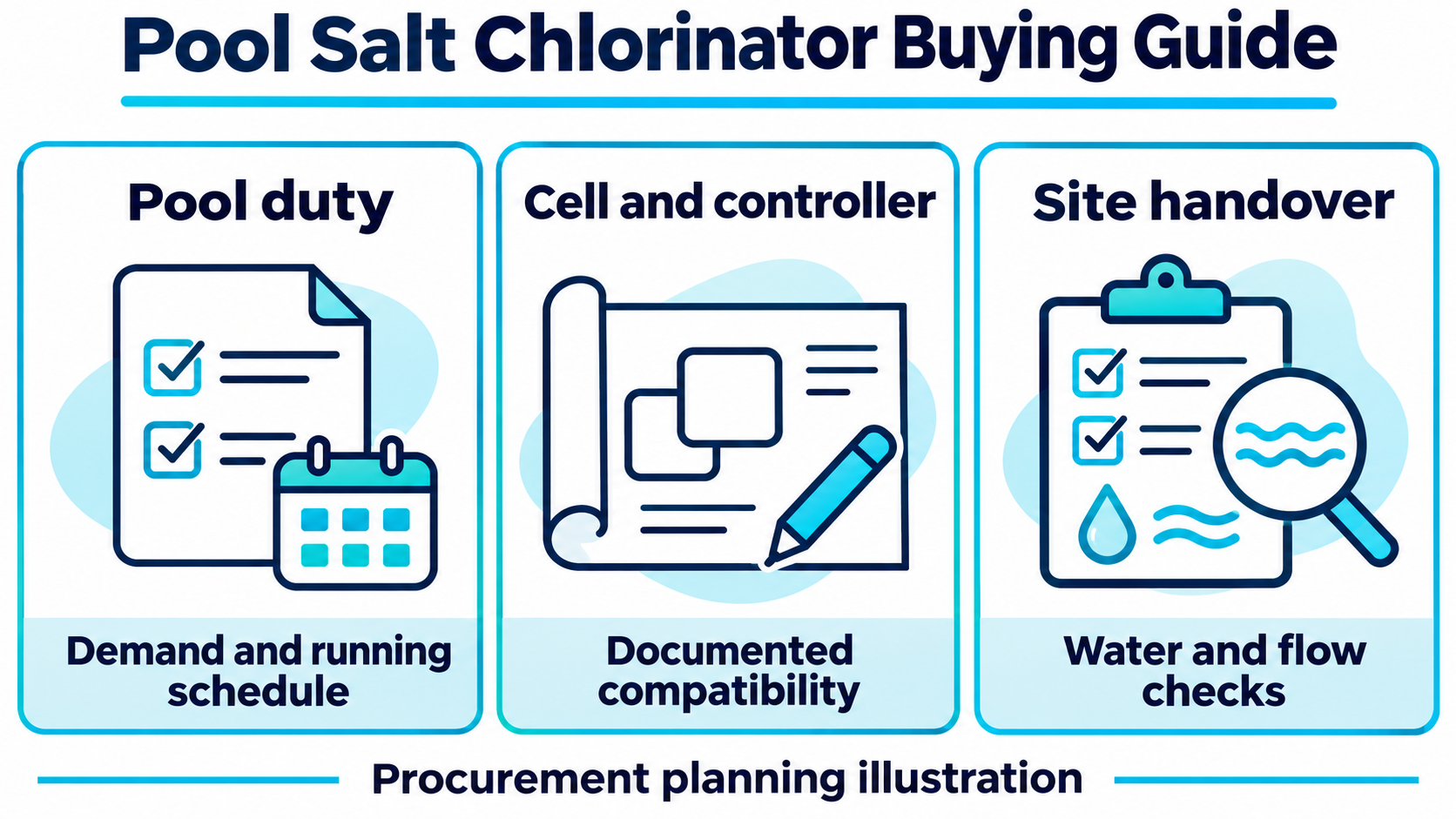
Pool Salt Chlorinator procurement illustration: pool duty, cell and controller, site handover. Concept illustration of the article's procurement checks: demand and running schedule; documented compatibility; water and flow checks.
Check the cell, controller and site interfaces
Identify the model family, pipe connection, installed space, approved flow range and power or controller compatibility. For a replacement cell, provide the controller identifier, current part number and installation photos. Have the supplier identify matched components and applicable documentation for the actual order.
Confirm who supplies plumbing connections, mounting, controls and any required verification of flow indication and operating alarms. Ask which manuals and equipment identifiers support service. Any standard, listing or installation requirement should be checked for the market and the specific model purchased.
Plan acceptance and later troubleshooting
Agree what will be checked at delivery and which functions the installer will demonstrate on site. Record the operating condition, model and observed values used in the handover. When the controller and an independent measurement differ, use the model's documented procedure and preserve the readings, sample conditions and timing for review. Salt reading discrepancy records
Before requesting a quote, send the intended pool duty, actual water information, circulation and controls description, and the equipment or replacement identifiers. HELE pool salt chlorinator enquiries
Frequently asked questions
Can pool volume alone determine the equipment size?
It is one input. Include expected demand, operating schedule and available conditions so the qualified designer can assess how the system will meet its duty.
What does a quoted chlorine output need to state?
Request the unit, equipment configuration and relevant operating conditions. Check how it relates to the actual schedule and site acceptance plan.
How should an existing cell be identified?
Send the label or part number, controller identification, installed connections and any conversion or replacement records.
Can two cells with similar connections be interchanged?
Confirm documented controller and cell compatibility, applicable operating conditions and the accepted installation arrangement.
What should a site handover include?
Include the fitted model, agreed water and flow conditions, verified indications, operator documents and the identified service contact.
How should recurring scale or low output be reported?
Provide the model, observations, water analysis and logs over the affected period. Ask the manufacturer's service team to review the evidence against that model's guidance.
Prepare a technical enquiry
Share the process or protected asset, operating conditions, geometry or drawing, and the scope you need reviewed.
Ask a technical question →
Project contact