
What to Check Before Trialling an Insoluble Anode in Copper Plating
Set the copper replenishment, bath approval, fit and trial evidence before changing to an insoluble anode in a copper plating line.
Table of Contents
Ask how copper will be replenished before approving an insoluble anode trial. A dissolving copper anode and an insoluble anode take different roles in the bath. If the change affects metal replenishment, chemistry control or the rack, the treatment belongs in the trial plan as well as the anode drawing.
Make a plant and vendor responsibility list
Identify the existing source of copper and how the plant will maintain the approved bath. Ask the line owner to specify the bath and any applicable process limits for a candidate anode. Have the electrode supplier assess the proposed coating against the actual electrolyte and electrical duty. Decide who will maintain replenishment and examine trial results before production release.
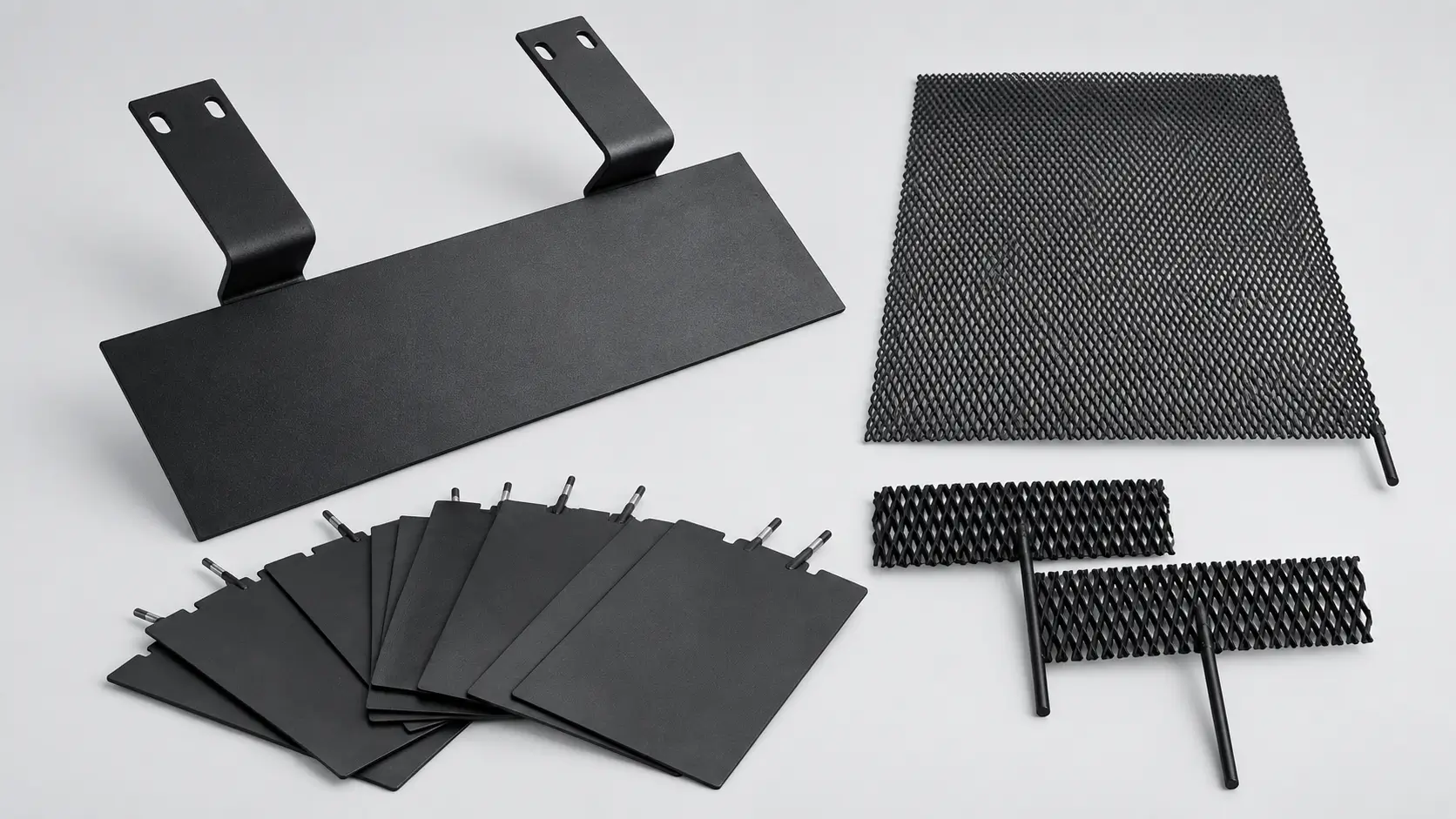
A coated titanium plate or mesh is a component offer. The bath chemistry, electrical contact, replenishment arrangement and part quality remain part of the installed process review. Use the current fixtures and approved drawing as references when evaluating alternative geometry.
Define the before and after measurements
| Check | Baseline to record | What the trial should establish |
|---|---|---|
| Metal control | Approved bath records and current replenishment route | Whether the new arrangement supports production under the agreed chemistry controls |
| Fit | Part positions, anode drawing and connections | Whether geometry and contacts fit within the existing station |
| Part quality | Measurement locations and existing acceptance limits | Whether representative parts meet the same requirements |
| Operating cost | Energy boundary, consumables and stoppages | Whether changes remain attributable on comparable work |
Use representative parts and approved measurement points. Record when samples were taken and any changes made to the bath, racks or operating practices. Define how long the plant needs evidence for the decision and who resolves a deviation. A satisfactory first sample can support an initial fit or deposit check. It provides limited evidence about coating life or long-term bath stability.
Match the proposed coating to this application
If a supplier proposes an iridium-bearing coating, request the coating designation and evidence for the bath service. Record the acceptance method for the stated duty. A recommendation for a different electrolyte provides background for review. Ask which conclusions the supplier is willing to apply to the offered drawing and chemistry.
See HELE TITANIUM electroplating applications and iridium oxide coated titanium anodes for an application review.
Frequently asked questions
Who confirms the new replenishment arrangement?
The process owner should confirm the bath and replenishment plan. Include the person responsible for monitoring and accepting trial operation.
Can a different shape keep the same plant settings?
Have the process owner review geometry, spacing, active-area basis and contacts. Confirm any limit or required trial against the installed station.
Does the coating designation guarantee compatibility?
Request evidence for the actual bath, approved operating duty and geometry. Record the unresolved items before ordering.
Can production thickness be assessed from one measurement?
Use the sampling plan agreed for the part. Include the locations and part types that govern acceptance.
How is anode life included in the trial?
Record expected service conditions and agree a condition or performance endpoint for follow-up. Keep longer-term evidence distinct from initial fit and deposit results.
What should a quotation include?
Provide the drawing, bath and duty, connection details, required tests and scope. Identify what the plant will verify and any conditions the supplier should qualify.
Request a bath-specific anode review
Send HELE TITANIUM the baseline anode drawing, approved process conditions and the trial acceptance sheet. Submit an anode enquiry
Prepare a technical enquiry
Share the process or protected asset, operating conditions, geometry or drawing, and the scope you need reviewed.
Ask a technical question →
Project contact