
What to Record Before Replacing Hull and Ballast Tank Anodes in Dry Dock
Prepare dry-dock replacement schedules for hull and ballast tank galvanic anodes, from identifying parts to inspection and turnover.
Table of Contents
Prepare separate replacement schedules for the immersed hull and the internal ballast tanks before sending a dry-dock enquiry. Record the original part, drawing revision, installed position and condition. Ask the corrosion engineer to confirm which items are like-for-like and which need a design review. A hull position and an internal tank position can have different exposure, coatings and mounting even when the castings look similar. Hull anodes · Ballast tank anodes
ISO 20313 describes cathodic protection for applicable ship hulls and seawater ballast tanks. The vessel’s approved requirements and drawings determine the actual purchase and inspection criteria. This guide addresses the records that allow a yard, vessel owner and supplier to work from the same schedule. ISO 20313 scope
Separate positions before grouping the order
A hull schedule should identify the exterior locations, the existing coating plan, the mounting form and each approved part revision. Include observations around replaced or recoated areas when available. The maintenance history can show whether a location changed duty since the last docking.
For ballast tanks, identify the compartment and zone, the coating and exposure basis, the mounting and access constraints, and the inspection opportunity before the tank is returned to service. Send approved arrangements and actual measurements separately. A pair of tags can share a purchased part code once the approved drawings establish that the components match.
| Record needed before quotation | Hull schedule | Ballast tank schedule |
|---|---|---|
| Location | Side, frame or equipment zone and drawing designation | Tank, compartment and installation location |
| Original component | Approved alloy and casting, insert and attachment revision | Approved alloy, insert and arrangement for the tank |
| Service observations | Remaining geometry, coating work and accessible inspection photos | Remaining geometry, condition of adjacent coating and reported immersion duty |
| Installation scope | Who provides fixings and who performs attachment and coating repairs | Access sequence, responsible parties and when the location can be inspected |
| Release evidence | Tag map, material and dimensional records, and completed location records | Tank and zone material records, acceptance checks and as-installed identification |
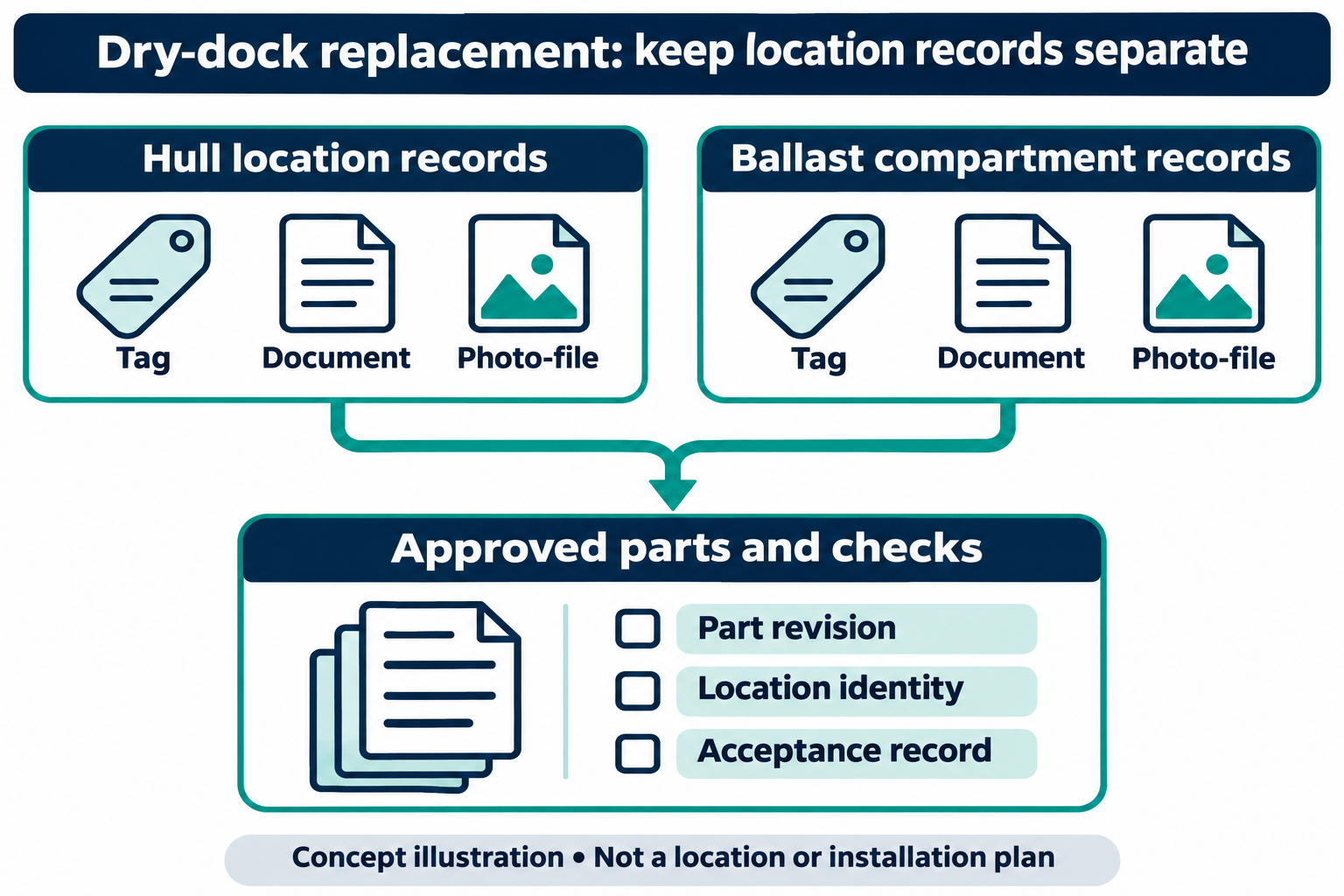
Hull location records and ballast compartment records converge on approved parts and acceptance checks in a dry-dock records concept. Conceptual record flow only. The illustration does not specify vessel locations, anode geometry or installation arrangements; use the approved vessel drawings and acceptance requirements.
Record what was found and what is approved to order
Measure the removed or exposed part only where the approved survey procedure permits. Label those values as as-found observations. Use the original drawing or an approved replacement drawing for new dimensions, insert and specified mass. A consumed part can be shorter, thinner or otherwise changed by service. A photograph can document condition and help identify the location, especially when an old tag has been lost.
Flag any mismatch between the vessel’s location record and the approved drawing. The responsible engineer can review material, geometry, coating or protection-duty changes. Track the decision against a clear revision so that purchasing does not carry an old exception forward into a repeat order. Sacrificial anode buying guide
Align delivery, yard handling and the acceptance record
Ask the supplier for a packing list by item, tagged location or agreed group. Match the inspection and material records to the delivered items before they are issued to the work crew. Record which party handles supplied attachments, fitting and coating touch-up. Separate receiving checks from the installation or commissioning hold points specified for the vessel.
At turnover, keep the final drawing and any approved deviation, the installed locations, and any inspection or measurement records named by the project. These records give the next crew a baseline for identifying the part and understanding the condition at the next visit.
Frequently asked questions
Can I order a replacement by remaining weight?
Use it as condition data. Specify new mass and dimensions from the approved design or confirmed replacement drawing.
Can one item number cover hull and ballast tank locations?
Only when approved records match the alloy, geometry, insert and mounting. Preserve the individual location tags.
Does repainting an area require a new assessment?
Notify the responsible corrosion engineer when the coating scope or surface condition changes. They determine whether the approved protection basis still applies.
What should the supplier include in its inspection records?
Specify the order’s required material identification, dimensions, mass basis and assembly checks. Link them to the parts and drawing revisions.
What should the dry-dock team report if anodes have consumed unevenly?
Record which tags and zones are affected, approximate condition, recent coating or service changes and relevant measurements. Let the assigned engineer investigate the causes.
What information should I send first if docking is approaching?
Send the location schedules, approved drawings, findings so far and the installation and delivery dates. Mark uncertain dimensions and design changes so they can be resolved before manufacture.
Prepare a technical enquiry
Share the process or protected asset, operating conditions, geometry or drawing, and the scope you need reviewed.
Ask a technical question →References

Project contact