
Sacrificial Anode Buying Guide
Buy sacrificial anodes against the design for the actual asset.
Table of Contents
Buy sacrificial anodes against the design for the actual asset. The purchase specification should identify the approved alloy, net alloy mass, external dimensions, insert and attachment, and the evidence linked to each lot. Leave protection criteria, current demand, placement and replacement intervals to the qualified cathodic protection design.
Match alloy and form to the protected asset
Identify the structure, its material and coating, the environment and design life basis. A vessel hull, buried line and tank have different installation, access and exposure constraints. Give the supplier the design schedule and approved alloy for each location. If aluminum, zinc or magnesium is under consideration, have the design authority evaluate the environment and intended protection performance before allowing substitutions.
State the stage of procurement. For a new project, use the released schedule, layout and connection details. For replacement, confirm the surveyed locations, existing insert or attachment and any approved change to the design.
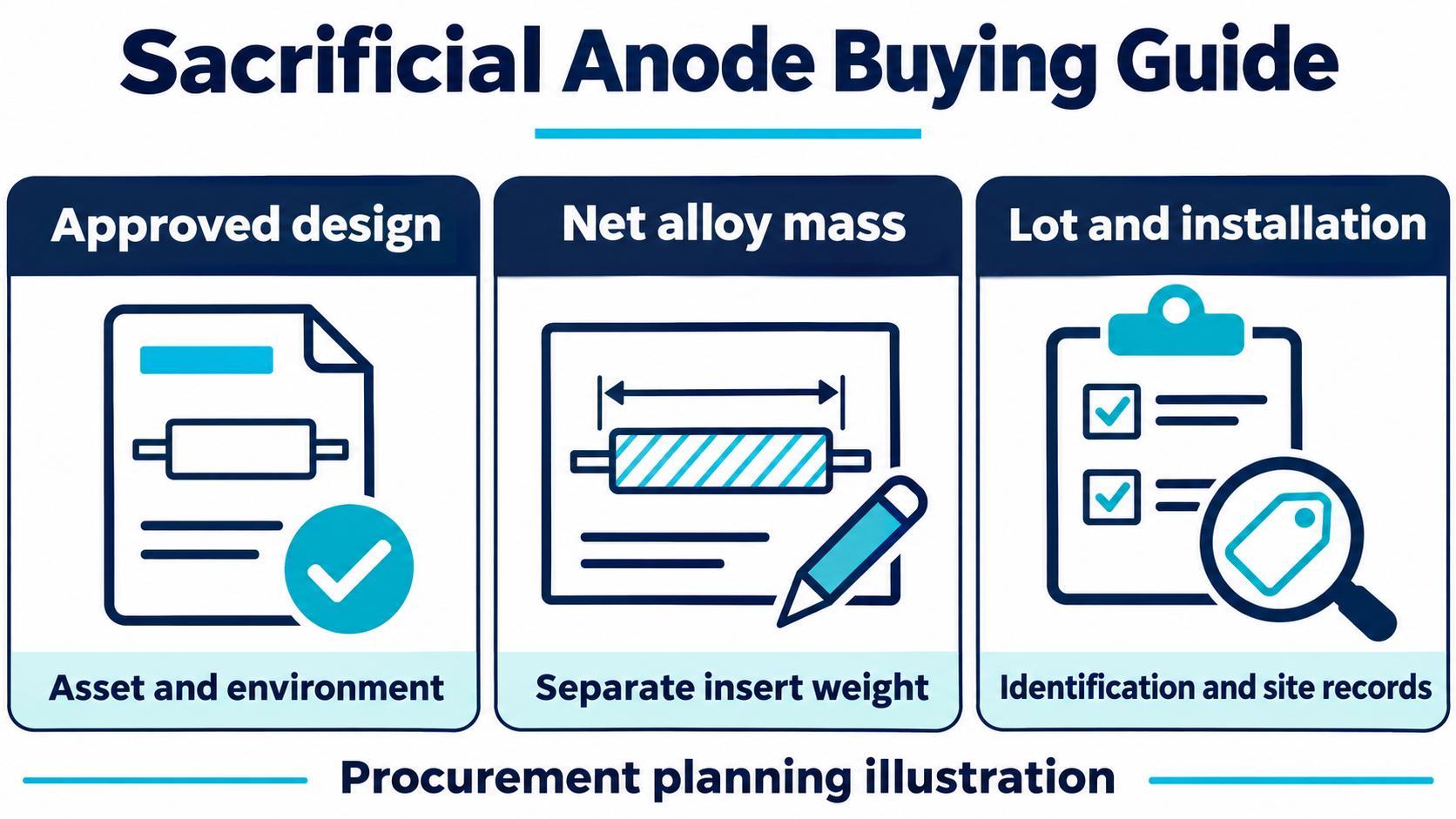
Sacrificial Anode procurement illustration: approved design, net alloy mass, lot and installation. Concept illustration of the article's procurement checks: asset and environment; separate insert weight; identification and site records.
Specify net mass, connections and identification
For each item, define whether quoted weight refers to alloy or the entire assembly including its insert. Identify the accepted mass basis, shape, cast dimensions and hardware. Where mounting, welding or cable connection is part of scope, provide mating dimensions and approved requirements. Have a design reviewer assess any proposed change that affects fit, usable alloy or electrical continuity.
Set identification requirements, including markings, drawing number, location reference and lot document links. Agree what packaging and handling protect the assembly and preserve those identifiers during delivery and installation.
Verify the lot and prepare the installation handover
Define the material evidence, dimensions, weight basis and any agreed electrochemical or connection tests. Tie results and deviations to the correct lot and drawing. Separate supplier release of anodes from the site's verification of their location, attachments and protection measurements. Agree which records the asset owner needs for later inspection and remaining-life decisions.
Send the latest design schedule, installation drawings, required dates and inspection evidence with the buyer's request. HELE sacrificial anodes
Frequently asked questions
Can the vendor choose an alloy from the asset name?
Supply the environment, approved design and project requirements. Have changes to the stated alloy approved by the design authority.
Does the gross casting weight establish usable alloy mass?
Check how the insert and other materials are treated. Ask for the specified net alloy mass and the method used to verify it.
What matters when replacing a previously installed anode?
Confirm the asset location, existing shape and attachment, approved material and current design assessment. Record differences in available installation space or operating conditions.
Which lot documents should the supplier provide?
Agree the material, dimensional, mass and testing evidence required by the purchase order. Confirm how each record matches the delivered anodes.
Who determines the protection criteria?
The responsible project designer identifies the criteria, reference basis, setup and record required for the site.
What does the installer hand back?
Ask for installed identifiers, locations and attachment records, any approved changes and the required commissioning or survey evidence.
Prepare a technical enquiry
Share the process or protected asset, operating conditions, geometry or drawing, and the scope you need reviewed.
Ask a technical question →
Project contact