
How to Document Commissioning of a Deep-Well ICCP Anode System
Agree on three handover milestones for a deep-well impressed current cathodic protection (ICCP) installation.
Table of Contents
Agree on three handover milestones for a deep-well impressed current cathodic protection (ICCP) installation. Record the constructed groundbed, the available and authorized power source, and the approved commissioning results separately. The contract should say what each signature releases and who owns any outstanding work.
Close the installation record against the design
Ask the installation contractor to reconcile the delivered anode assembly with the installed record. Identify the groundbed, installed elements and lead identifiers, connection points and approved changes. Preserve the records that will become difficult to recreate after the work is covered, including any inspection or witness points specified by the order. The design authority should decide what evidence is needed for the actual installation.
Separate the component manufacturer's release records from the field record. A factory report can document the items supplied and the checks agreed for them. The site team records what was actually installed and which interfaces it accepted. Ask each party to reference the same design revision or identify authorized differences.
Give power availability and authorization their own milestone
Name the party responsible for the power service, the rectifier and any coordination with the utility. Record the approved power arrangement and any items still open. Where the construction package closes before power is available, record the installation sign-off and the remaining dependency with its owner and intended closeout evidence.
Have the qualified site team record whether the equipment is available and authorized for commissioning. A utility connection is evidence about supply availability. The commissioning record is the place to demonstrate that the installed system was assessed under the project's approved conditions.
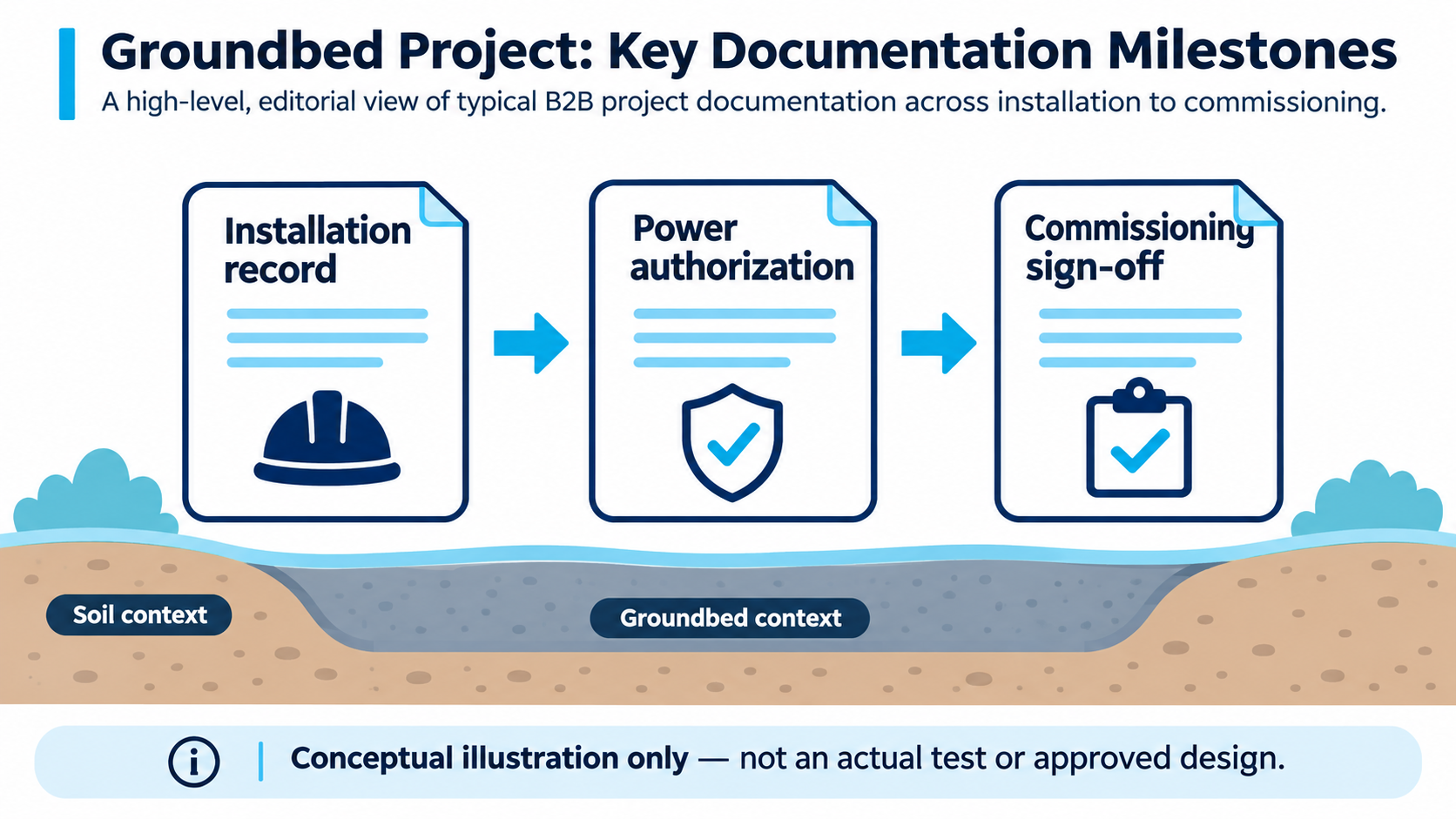
Three groundbed handover milestones separate installation records, power authorization and commissioning sign-off. Conceptual illustration only. Shapes and document icons do not represent actual equipment, measured results or an approved design.
Require a signed commissioning baseline for the asset file
The U.S. Bureau of Reclamation's maintenance guidance covers test stations and junction boxes, rectifier output, protective potential records and professional review. These evidence categories help explain what should remain traceable from commissioning into maintenance. Use the contract and approved design to determine the actual field methods and acceptance criteria. USBR FIST 4-5, §5.4.7
Request the signed commissioning record with the installed configuration, test locations, date, method and reference, operating conditions, results and unresolved exceptions. Link it to the corresponding as-built records. The handover should state which work the owner accepts and who will complete any remaining checks.
For a supply enquiry, send the approved groundbed schedule, cable and junction scope, required factory records, and the division between component supply and site work. Ask the bidder to identify its deliverables at each milestone. HELE ICCP deep groundbed enquiries
Frequently asked questions
What does an anode delivery release cover?
Check the purchase order. A delivery release can confirm the items and agreed supplied records. The site contractor's installation and commissioning evidence belong to their own milestones.
Who confirms that power is available?
Assign that confirmation in the responsibility schedule. Involve the utility or site electrical team when the approved arrangement depends on their work or authorization.
What if the groundbed was covered before a planned witness point?
Record the missed point and the available supporting records. Ask the design authority which alternative verification it accepts and whether more evidence is required.
What makes the first readings useful for maintenance?
Keep the result with the asset and test point identifiers, reference, method, configuration and conditions. A later reviewer can then assess whether a comparison is valid.
Can the owner accept the civil installation while commissioning is open?
Follow the contract's partial acceptance provisions. Record the scope accepted, the exclusions and the party responsible for closing each remaining item.
What if a component or lead was changed during construction?
Update the as-built record and identify the approved change. Determine which inspection or commissioning records the changed configuration requires before final sign-off.
Prepare a technical enquiry
Share the process or protected asset, operating conditions, geometry or drawing, and the scope you need reviewed.
Ask a technical question →References

Project contact