
How to Specify a Coated Titanium Mesh Anode
Specify titanium mesh anode openings, frame, active area and coating evidence on a common RFQ and acceptance basis.
Table of Contents
Specify the mesh geometry, coated area and electrical connections on one drawing. That gives suppliers a common basis for their offers and prevents confusion between an uncoated titanium mesh blank and an electrode ready to be fitted in the cell.
Draw the mesh and the connection together
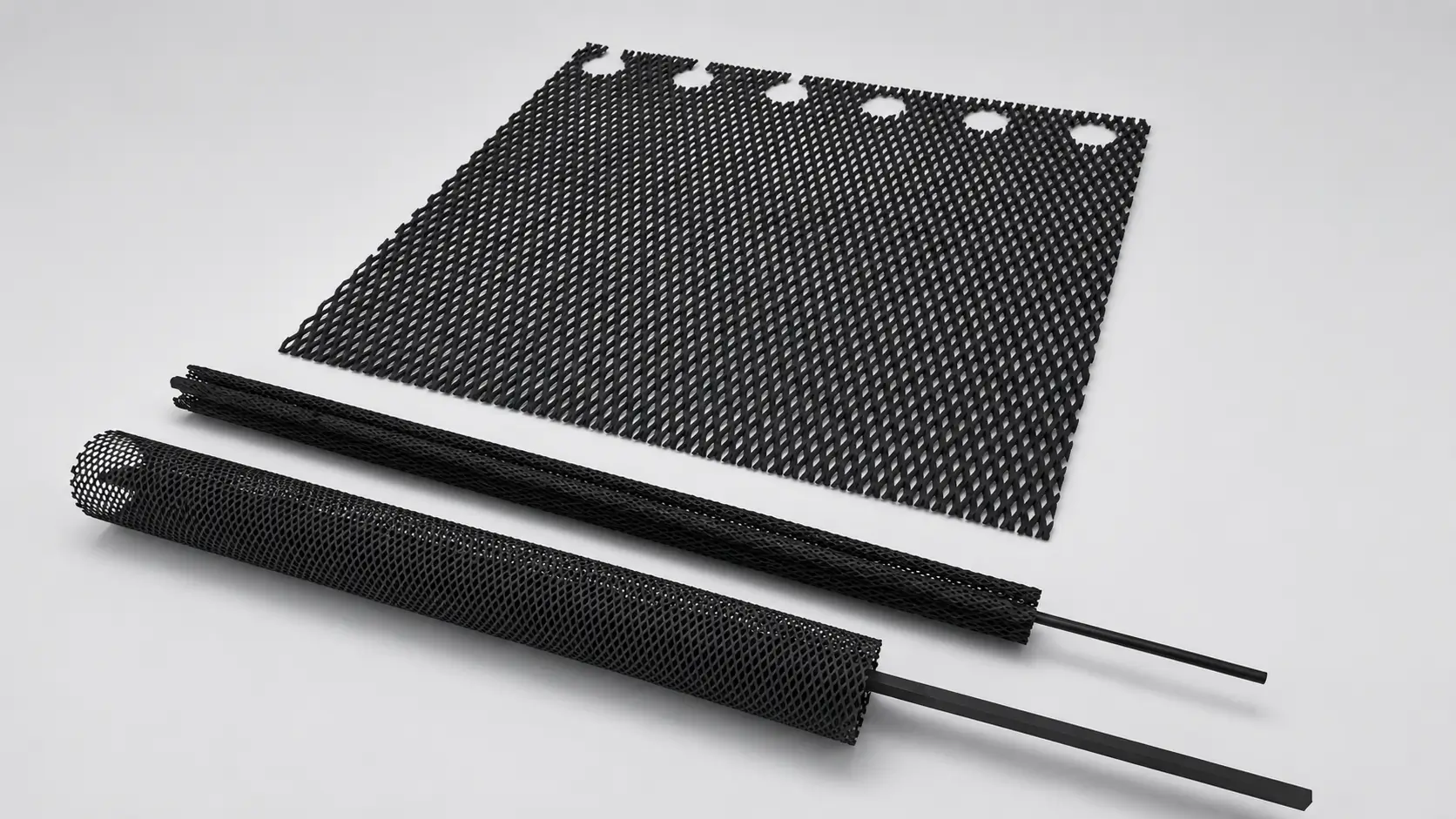
For expanded mesh, record the opening dimensions and orientation, strand dimensions and finished panel envelope. For woven mesh, document the wire diameter and opening pattern. If the drawing includes a perimeter frame, tab or reinforcement, make its outline and material part of the release drawing. Identify the handling and installed loads the part must withstand.
A mesh close to the right size can still have an incompatible tab, unsupported edge or different open area. Show any clearances that matter during installation and removal. If the part sits across a liquid flow, ask the cell designer what geometry is required to avoid restricting that flow.
Agree the coated area before comparing electrical figures
Ask the vendor to state whether a reported area is projected area, another defined mesh area, or a value supplied by the buyer. Record one or both faces as applicable and mark masked regions, attachment areas and electrical contacts. The definition belongs on the quote and in any report that uses it.
| Detail | What to define | What to check |
|---|---|---|
| Mesh blank | Construction, opening size and direction | Match the approved drawing and inspection method |
| Frame and tab | Joining, mounting, connections and boundary | Fit and traceability of the delivered assembly |
| Coating | Duty, exposed faces and masking | Approved designation and lot release evidence |
| Area convention | Projected area or another explicit definition | The operating and test records use the same basis |
Review mounting, flow and inspection as a set
Compare the mesh, frame and contacts under the actual application conditions. A geometry change can alter clearances, available area, stiffness or the location of the connection. Have the equipment owner confirm which changes require a fit check or trial. Ask the supplier to identify the points it can inspect on the offered mesh and how those readings will be reported.
Use the HELE TITANIUM titanium mesh buying guide for substrate geometry and MMO anodes when the scope includes coating and electrode duty.
Frequently asked questions
Are bare titanium mesh and a coated mesh anode the same order?
Specify whether the purchase is a substrate, coated mesh, or assembled electrode with connections. List the drawings and release evidence for the actual scope.
Does the outer size specify the open area?
Include the mesh construction, opening dimensions and the direction or repeating pattern. Outer size alone leaves these features undefined.
Can we compare a quoted current density for two mesh panels?
First agree the area definition and duty. Ask both vendors to identify the basis for the reported quantity.
Do the tabs need to be coated?
Mark the required active areas and any coating or masking at the contact on the drawing. Have the process owner approve that boundary.
What records help when replacing an existing mesh panel?
Retain the installed revision, mounting photos, bath and load history and current condition. Use them to compare the actual assembly with the proposed part.
Should the receiving team check the whole assembly?
Yes. The approved plan can cover the outer envelope, mesh orientation, connections, agreed coating evidence and part identity.
Request a coated mesh RFQ review
Send HELE TITANIUM the panel and tab drawing, area convention, representative duty and release checklist. State whether the scope includes the coated assembly. Submit an anode enquiry
Prepare a technical enquiry
Share the process or protected asset, operating conditions, geometry or drawing, and the scope you need reviewed.
Ask a technical question →
Project contact