
What to Verify Before Accepting a Bulk Hypochlorite Delivery as Generator Backup
Verify lot identity, certificate basis and release responsibilities for purchased hypochlorite used as backup to on-site generation.
Table of Contents
Treat purchased sodium hypochlorite as a separately received batch when it backs up an on-site generator. Verify which batch arrived, what its certificate covers and who can release it against the purchase requirements. Set a separate record for plant operating checks once that batch is approved for its intended use.
Identify the batch and the reporting basis
Match the delivery paperwork, supplier and product designation to the approved order. Record the lot, quantity and relevant dates, including sampling or testing when supplied. If a delivery includes material from more than one lot, ask the supplier to identify what the records cover and how those quantities can be distinguished.
Request the ordered active-content result with its stated analyte, units, basis and test method. For example, a report may express sodium hypochlorite content or available chlorine. Have the designated reviewer confirm how the contract defines the result and whether the certificate uses that definition. Where the order calls for independent verification, use the approved lab and the plant’s applicable method.
Assign each document to its acceptance task
| Review item | Evidence to request | What the reviewer decides |
|---|---|---|
| Identity and quantity | Order reference, delivery record, product name and lot identifiers | Which material and quantities are covered |
| Quality at the applicable point | Batch certificate, reported basis and test date, and receipt verification if specified | Whether the batch meets the approved acceptance requirements |
| Age and holding status | Relevant production, receipt or test dates and any applicable supplier documentation | Whether age or an unresolved issue requires an additional review |
| Disposition | Release, hold or rejection referenced to the lot and named approving role | Which batch is authorized for its intended use |
The U.S. EPA’s supply-chain profile distinguishes off-site supply from on-site generation and describes the potential for sodium hypochlorite to degrade over time. That is a reason to specify what evidence the buyer needs at receipt and at any later release point. Use the agreed contract and supplier documentation for the applicable criteria. EPA sodium hypochlorite supply-chain profile
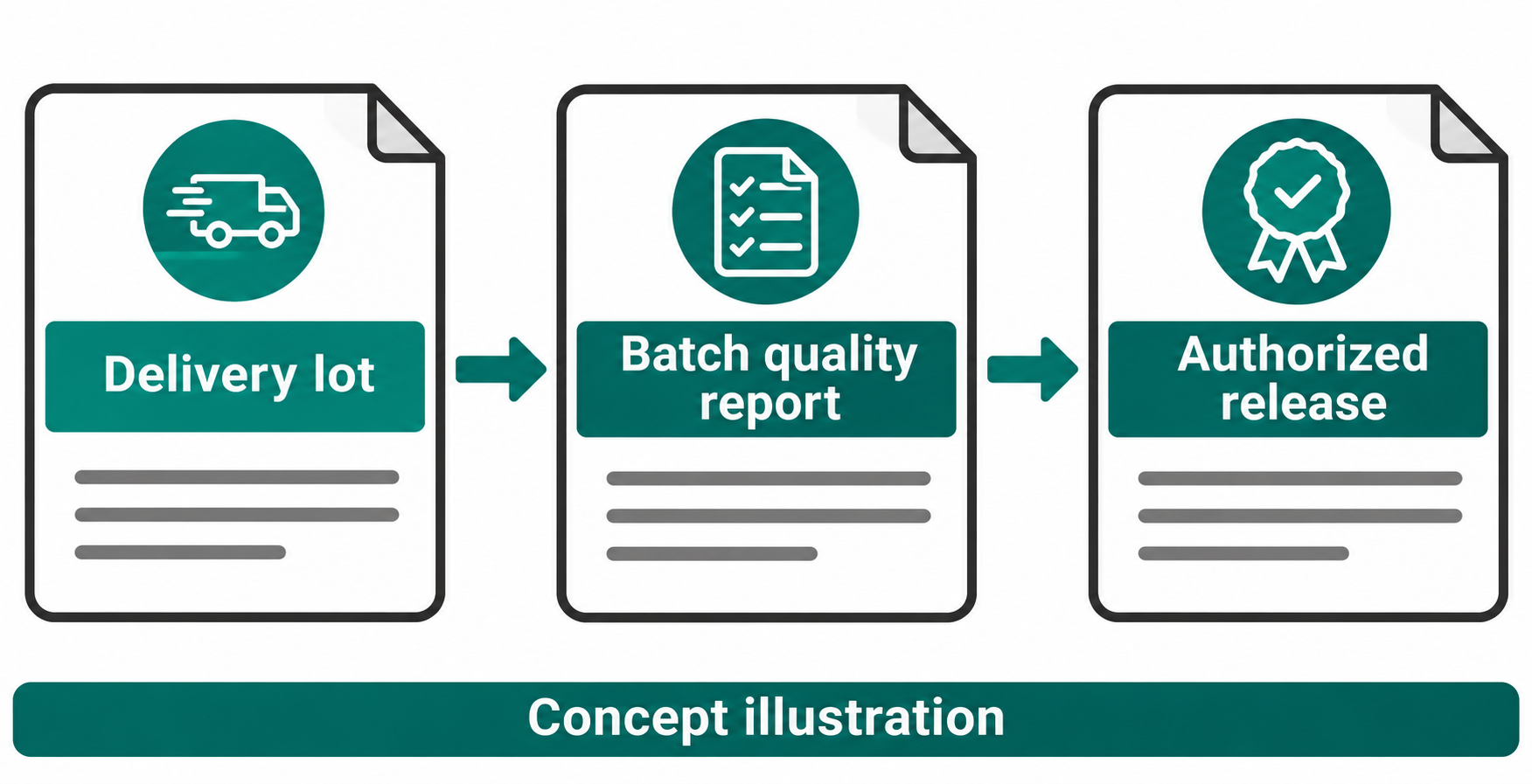
Keep the delivery decision tied to its own records
Assign the receiving role, laboratory reviewer and final release owner. If the batch identifiers or report basis are incomplete, record what is missing and seek the authorized disposition. A downstream residual result is evidence about the treatment process at its measurement point. The generator outlet record describes the generating package. Keep both linked to their own acceptance work alongside the purchased delivery record. HELE electrochlorination scope guide
Frequently asked questions
Does a certificate apply to every delivery from the same supplier?
Verify that the certificate refers to the batch and quantity being reviewed and the method required by the order.
What if the report and purchase order use different content bases?
Record both bases and ask the authorized lab or quality reviewer to reconcile them. Request corrected reporting when the agreed comparison cannot be established.
Does the test date matter if the certificate has a lot number?
Record the date as part of the evidence. The receiving and release criteria determine whether that result is sufficient for the delivered material.
Can a satisfactory plant residual release the delivered batch?
Use the batch acceptance evidence specified in the purchase documents. Keep downstream residual as its own operating record.
Who decides whether a delivery remains on hold?
Use the buying plant’s approved authority. Give that reviewer the affected lot, discrepancy and available supporting documents.
Should the generator and external backup use one acceptance form?
Use distinct evidence fields and release responsibilities for the two supply routes. The project can keep both on one schedule if each decision is clear.
Review the equipment and backup supply boundaries
For a generator enquiry, tell HELE TITANIUM the equipment scope and where the plant assumes responsibility for purchased backup and its acceptance. View sodium hypochlorite generators · Share the equipment scope
Prepare a technical enquiry
Share the process or protected asset, operating conditions, geometry or drawing, and the scope you need reviewed.
Ask a technical question →References

Project contact