
How to Approve a Colour Reference for Anodized Titanium Parts
Approve an anodized titanium colour reference by matching the physical sample, finish, viewing method, inspection and rework release.
Table of Contents
Approve a physical sample that represents the ordered titanium, surface preparation and anodized finish. Record the faces and viewing conditions the sample represents. If the buyer needs a range rather than one target, approve boundary samples or a documented comparison method before the first lot is finished.
Anodized titanium can show a different appearance as illumination and viewing direction change. Nippon Steel's experimental report measured directional reflectance and studied the effect of surface roughness on observed interference colours. For purchasing, that makes the inspection setup part of the finish specification. Nippon Steel technical report on interference colour
Make the sample represent the finished part
Choose the visible faces during drawing review. Record the material and condition, surface preparation, direction of any visible lay and the finish revision. A flat sample may be sufficient to agree a colour family. Check a representative part or sample geometry when a curved face, recess or edge changes the viewing condition. Identify any zones that need different acceptance rules because of function, assembly or visibility.
Keep one controlled reference available to each party responsible for inspection. Label it with the drawing and finish revision, sample ID, approved faces, date and approving party. If the job uses upper and lower boundary references, identify them separately. Record where the samples are held and what to do if a sample is damaged or replaced.
Agree a comparison another inspector can repeat
| Inspection input | What to agree |
|---|---|
| Surface | Material, finish revision, preparation, lay direction and the zones that will be compared |
| Viewing | Suitable light source, background and the illumination and viewing direction used at acceptance |
| Measurement | When an instrument is specified, identify the method, measurement geometry, locations, units and acceptance limit |
| Reference | Physical target or boundary samples, identified copies and the person authorized to approve a replacement |
| Release | Inspection record, review of disputed observations and who can approve a deviation |
If a buyer specifies instrument readings, confirm that the equipment and method are appropriate for the directional surface and that both parties use the agreed geometry and setup. A tolerance developed for one finish or instrument configuration should be qualified before it is used for a different part. Keep sample photos with the record for identification. Use the approved physical or instrument comparison for acceptance unless the drawing defines another method.
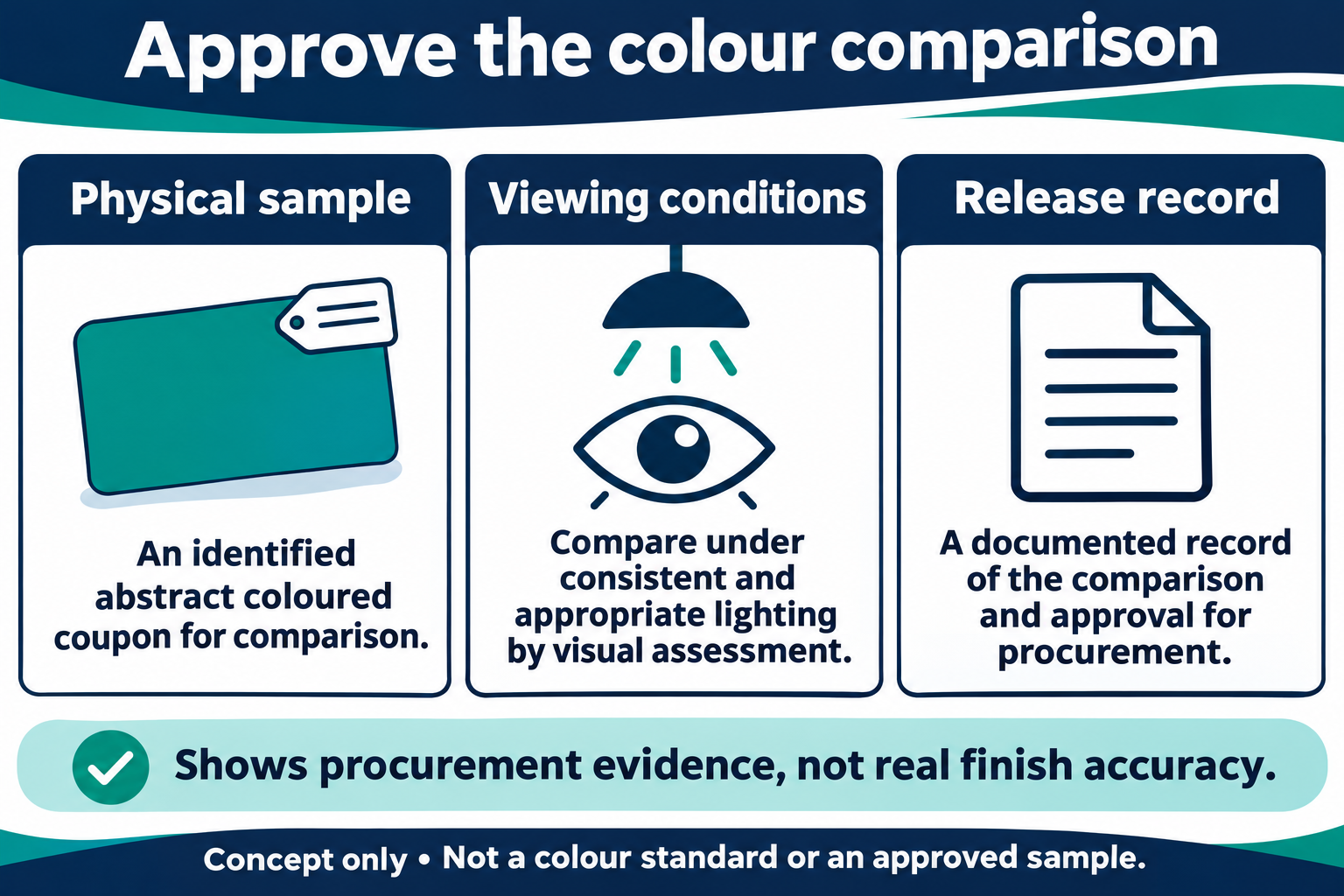
Conceptual comparison of an identified physical sample, viewing conditions and a finish release record. Concept illustration only. The coloured coupon is not a HELE sample, colour standard or acceptance limit; use the approved reference and comparison method.
Close the checks if a finish is reworked
Obtain authorization for the specific rework before treating the revised appearance as an acceptable substitute. Identify which features could be affected under the approved route. Depending on the drawing, the inspection may need to revisit fit or mating surfaces, masked or uncoated zones, exposed texture and dimensional records as well as the visible colour. Keep the previous disposition, the approved revision, the after-rework results and the person who released the parts in one file. Review finishing requirements with HELE
Frequently asked questions
Can a photograph be the master colour reference?
Use it for discussion or identification unless the order approves a controlled imaging comparison. Agree how the finish will be inspected independently of a buyer's screen or camera.
When should the buyer approve a complete part sample?
Use a representative part when shape, recesses, texture or adjacent mating components affect the visible result. Record which decisions a flat coupon can support on its own.
Which way should a brushed sample face during comparison?
Record the lay direction and approved viewing arrangement. Compare the same zones at the orientation agreed by the buyer and supplier.
Is a numeric colour difference enough for release?
Use a numeric limit when the purchasing documents specify a suitable instrument, method, geometry and acceptance rule. The approved visual requirements may still apply to other characteristics on the drawing.
How should the supplier handle a sample that changes or is damaged?
Retire the affected reference from acceptance use. Identify the replacement and obtain the required approval before using it for production release.
Does a reworked part need only a new colour check?
Use the authorized rework disposition to identify every affected requirement. Keep the dimensional or functional checks required by the drawing alongside the finish result.
Prepare a technical enquiry
Share the product form, grade or standard, dimensions, quantity and inspection requirements.
Ask a technical question →References

Project contact