
Titanium Wire Buying Guide
Specify titanium wire by its end use, material or filler classification, final diameter and delivery format.
Table of Contents
Specify titanium wire by its end use, material or filler classification, final diameter and delivery format. A general material-wire order and a welding filler purchase can call for different documentation. Define the downstream process and lot evidence before comparing coils, spools or straight lengths.
Match the specification to the function
Describe the intended operation, such as drawing, forming, fabrication or welding. For material wire, specify the approved titanium grade, condition and product standard. For welding filler, identify the classification permitted by the qualified procedure, delivery form, diameter and required identification. AWS A5.16/A5.16M describes classification requirements for titanium and titanium-alloy welding electrodes and rods. AWS A5.16/A5.16M
Keep material and surface requirements for specialized uses tied to the relevant qualification. Where the wire serves as an electrode substrate, specify whether the supply is bare wire or includes coating and working-area requirements.
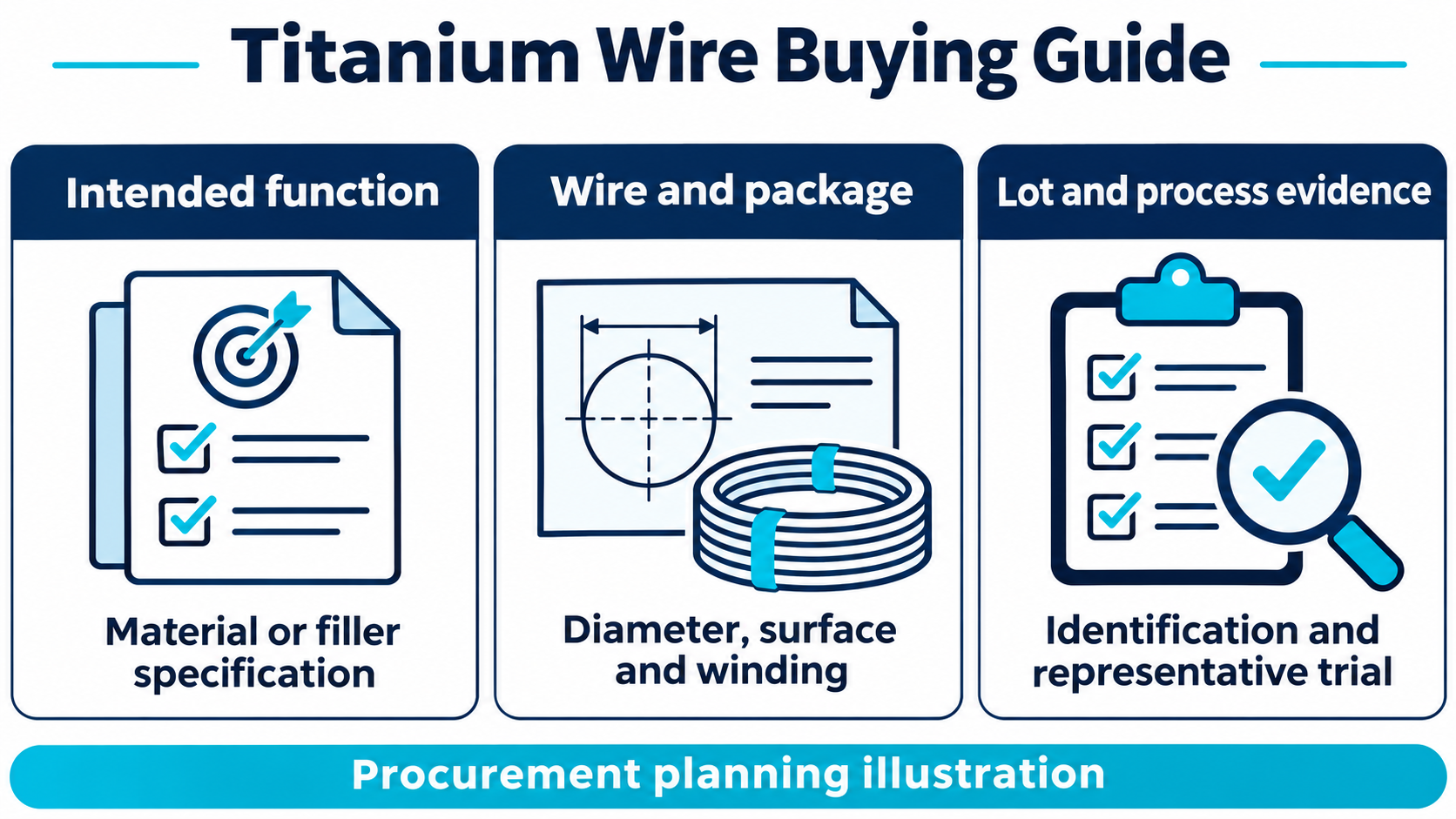
Titanium Wire procurement illustration: intended function, wire and package, lot and process evidence. Concept illustration of the article's procurement checks: material or filler specification; diameter, surface and winding; identification and representative trial.
Make diameter, surface and package fit the next operation
Set the finished diameter and limits, then identify the condition, surface and measurement basis. Where the process depends on feeding or straightness, state what must be checked and include the apparatus constraints. Specify the spool, coil or straight length format, dimensions, winding orientation and material identification.
State whether joints are allowed and how they must be flagged. If the operation is sensitive to surface contamination or damage, agree the accepted delivery protection and storage requirements. Compare quotes using usable lengths and the accepted pack format as well as price.
Verify the lot and performance relevant to the buyer
Connect material or filler records to the supplied wire and relevant shop tests. Agree inspection of dimensions, surface and delivered configuration. If performance depends on the buyer's machine or joining process, define a representative trial and the evidence needed from it.
Send the process and duty, material or filler specification, finished diameter and condition, pack or spool setup, quantity and required documents. HELE titanium wire
Frequently asked questions
Is a titanium wire grade equivalent to a welding filler class?
Use the material requirement or filler classification that applies to the actual order. For welding, use the qualified procedure and accepted filler designation.
Can packaging affect the quote?
Yes. Spool dimensions, winding and supports affect handling, feeding and delivery. Identify the configuration the line can use.
How do I state diameter limits?
Give the finished diameter, accepted variation and relevant measurement method. Identify any other geometry or condition that controls the use.
What should the order say about joints in a coil?
State whether they are permitted and how the supplier identifies and documents their position.
Which lot record should be retained for welding filler?
Match the supplied package and its lot identification to the specified classification and receipt records needed by the qualified procedure.
When is a sample trial justified?
When feeding, forming or joining depends on the delivered condition, agree representative supply and the measurements or observations needed for approval.
Prepare a technical enquiry
Share the product form, grade or standard, dimensions, quantity and inspection requirements.
Ask a technical question →References

Project contact