
Titanium Foil Buying Guide
Specify titanium foil for the downstream operation that will use it.
Table of Contents
Specify titanium foil for the downstream operation that will use it. Agree the final thickness and usable width, surface and edge condition, coil or sheet format, and the evidence needed to judge suitability. Very thin stock often needs a more explicit inspection and handling plan than a nominal material callout supplies.
Define final dimensions and intended use
Identify whether the order covers sheet-cut blanks, strips or continuous coil. State titanium grade, material specification, condition, thickness range and usable width. If the downstream process depends on remaining formability or a particular surface, give the design owner the actual operation and acceptance requirements.
Describe where and how thickness, flatness or edge variation will be checked. Confirm measurement method and sampling locations for the actual thin geometry. Ask the supplier to identify what its offered report covers, from points on a cut piece to locations across the width or length of a roll.
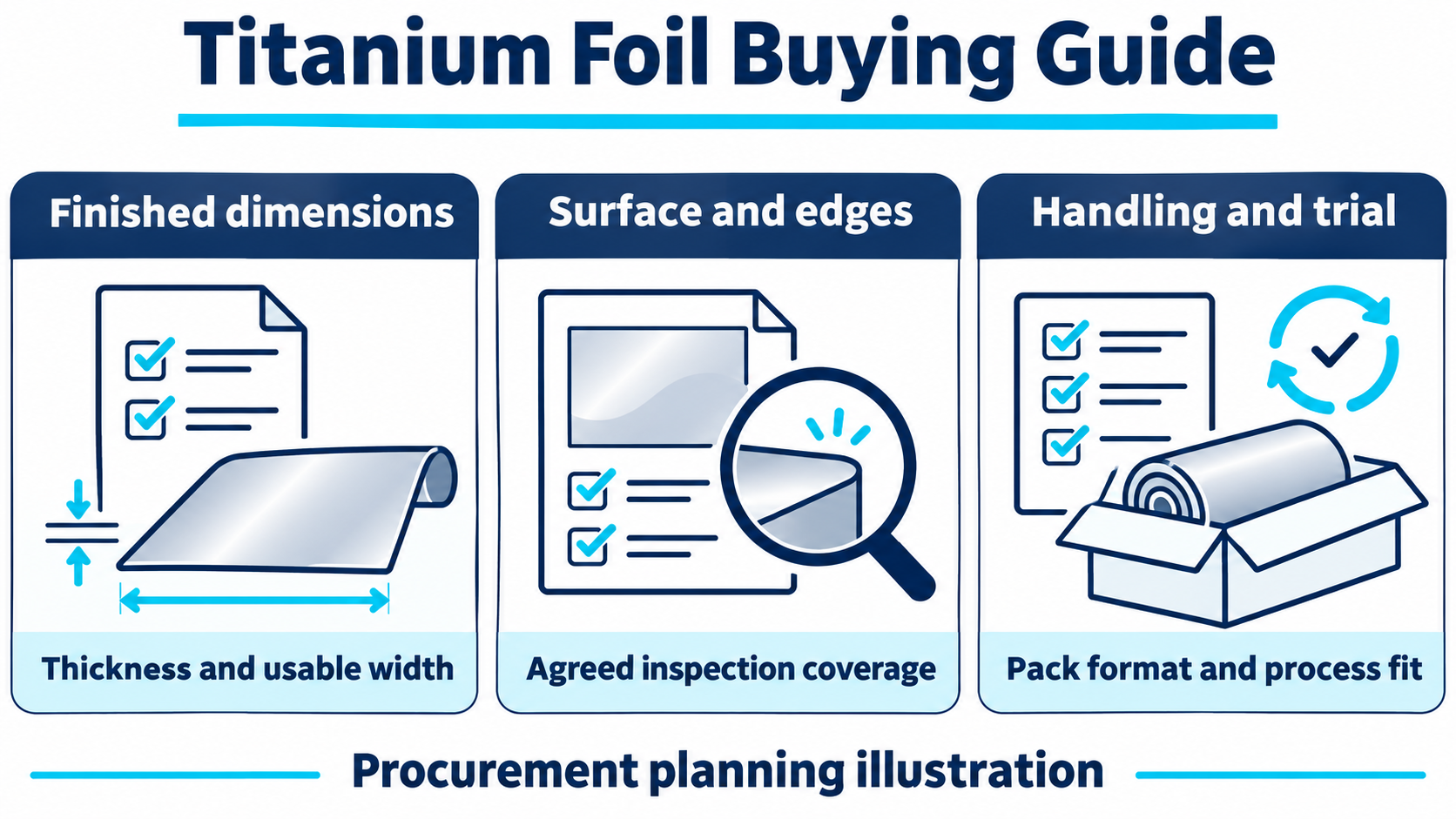
Titanium Foil procurement illustration: finished dimensions, surface and edges, handling and trial. Concept illustration of the article's procurement checks: thickness and usable width; agreed inspection coverage; pack format and process fit.
Specify surfaces, edges and delivery format together
Name relevant surface and cleanliness requirements. If the buyer controls pinholes or other discrete features, agree the definition, detection method, inspection coverage and reporting basis. For slit foil, identify the edge condition, any permitted burr direction, winding orientation and core or pack limits.
Review the planned handling, storage and feeding route. Request protective packaging, separation and identification suited to those conditions. Where joints or multiple lengths are acceptable, state how the supplier marks them and how the receiving line will respond.
Verify receiving evidence and production compatibility
Link the ordered material and processing lot to the foil and its dimensional, surface or edge records. Keep the inspection basis with the packing identifiers. If downstream coating, forming or joining determines suitability, define a representative trial and what the process owner needs to observe before releasing additional material.
Send the end use, material and thickness requirements, usable width, coil or blank format, surface limits and inspection or trial plan. HELE titanium foil enquiries
Frequently asked questions
What thickness belongs in the RFQ?
State the finished limit and any measured locations. Ask the supplier to identify the method and how its report covers the delivered form.
When should slit edges be inspected?
Define the edge requirement when it affects feeding, bonding or finishing. Include the accepted orientation and inspection method.
Is a pinhole check a standard part of every foil order?
Specify it when the design requires it, along with the relevant detection criteria and coverage.
What does usable width mean for a coil?
Identify which portion can feed the downstream process, including allowances for trimming or excluded edge regions.
How should foil be protected during receiving?
Agree the pack, supports, handling and cleanliness conditions with the supplier. Keep identifiers intact when opening or dividing the pack.
How can a buyer qualify a new foil lot?
Compare dimensions, condition and specified reports. Where performance depends on a process, agree the representative test and release criteria with its owner.
Prepare a technical enquiry
Share the product form, grade or standard, dimensions, quantity and inspection requirements.
Ask a technical question →
Project contact