
Titanium Pipe Flanges Buying Guide
Specify a titanium flange from the complete joint.
Table of Contents
Specify a titanium flange from the complete joint. The purchase needs the flange type, grade and condition, governing dimensional basis, facing, bore, bolt pattern and mating components. Confirm who owns the pressure design and who will accept the delivered flange and installed assembly.
Define the application and flange type
Issue the service and drawing information needed to identify the approved joint. Confirm whether the supply is a flange alone or includes a stub end, gasket, bolting or other component. State the required size, facing and joint geometry, including any controlled end or hub dimensions.
Ask the design team to identify the applicable dimensional standard, pressure design basis and material requirements separately. ASME lists B16.5 for pipe flanges and flanged fittings in its stated size range. Confirm that the dimensions and material rules suit the project. An assigned class or nominal designation needs the supporting design and service conditions. ASME flange and fittings standards
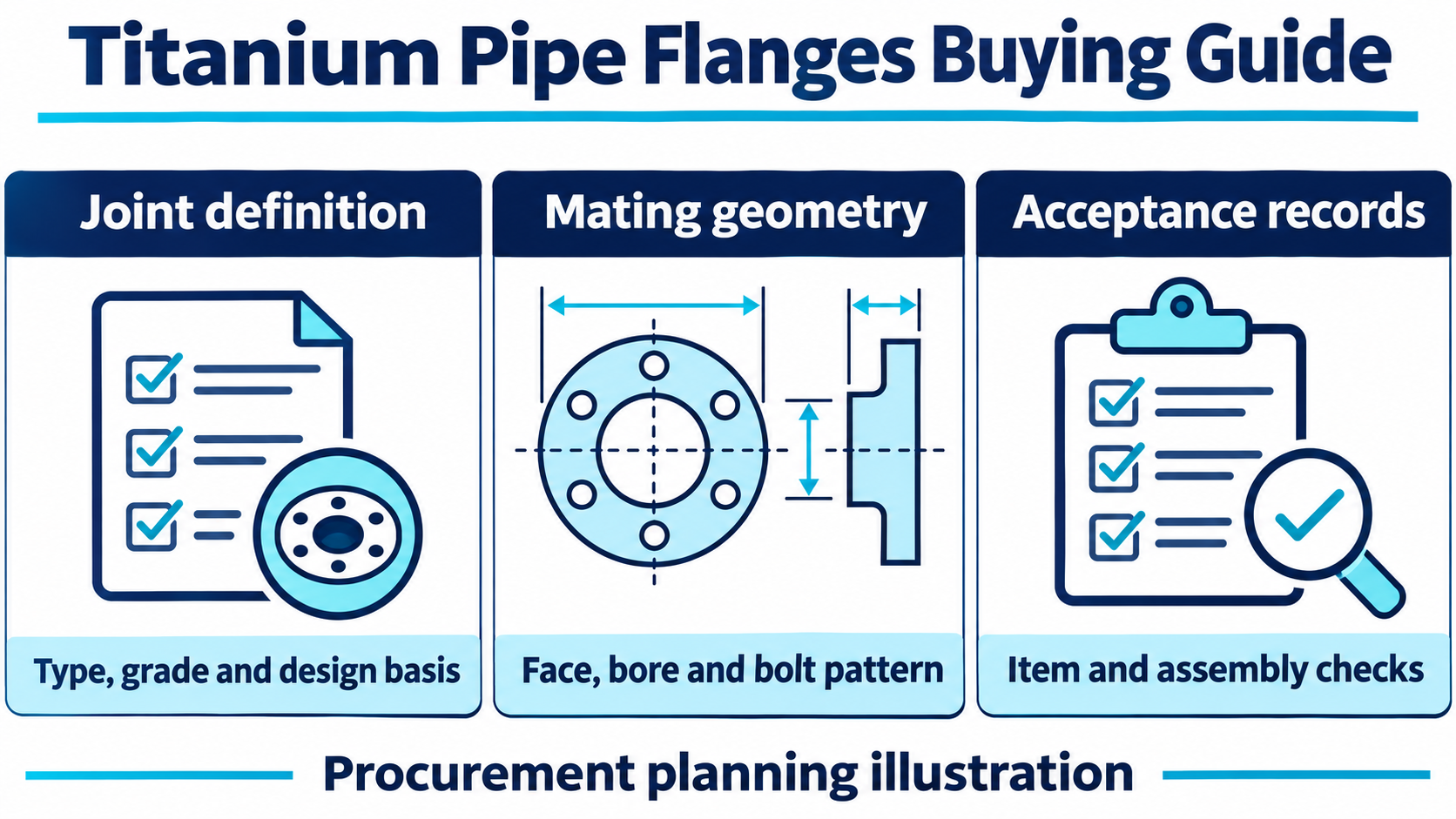
Titanium Pipe Flanges procurement illustration: joint definition, mating geometry, acceptance records. Concept illustration of the article's procurement checks: type, grade and design basis; face, bore and bolt pattern; item and assembly checks.
Freeze the face, bore and mating details
Put the sealing face, finish and gasket or groove requirements on the controlled drawing. Identify the mating pipe or stub end, bore and any end preparation affecting fit. For bolt pattern and fastener clearance, provide the mating flange drawing or approved dimensional requirements. Include any orientation the installer must preserve.
Compare manufacturing routes against the design, approved material and delivery condition. If a proposal changes starting stock, fabrication or surface finishing, require a review of its impact and the resulting inspection obligations.
Make verification specific to the purchased joint
Ask for the material and route evidence, dimension and facing checks, marks and examination reports required by the order. Confirm identification on the delivered flange and records. Assign assembly, gasket and bolting verification to the parties responsible for installation. Preserve the protective packaging and identification needed at delivery.
For a quotation, provide the flange schedule and service basis, controlled drawings, grade and condition, gasket and pipe interface details and the required inspection records. HELE titanium pipe flanges
Frequently asked questions
Does a flange class define the complete joint?
Include the governing design basis, material, facing, gasket, bolt pattern and mating dimensions required for the actual assembly.
Which dimensions affect gasket fit?
Identify the face type, contact geometry and any groove requirements. Show the applicable finish and inspection locations.
How should a flange for a replacement job be identified?
Use verified as-installed dimensions, equipment identifiers and design requirements. Ask engineering to approve differences from the original joint.
Do material records cover the finished facing?
Ask for a separate finished dimension and surface result, linked to the same item where required.
Who accepts changes to the manufacturing route?
Use the authority named in the order. Provide the proposed change and evidence supporting the resulting properties and fit.
What should be protected during shipping?
Identify faces, grooves, prepared ends and markings. Agree how they are checked at receiving before installation.
Prepare a technical enquiry
Share the product form, grade or standard, dimensions, quantity and inspection requirements.
Ask a technical question →References

Project contact