
Titanium-Clad Copper Buying Guide
Specify titanium-clad copper as a composite component with a defined electrical, mechanical and exposure boundary.
Table of Contents
Specify titanium-clad copper as a composite component with a defined electrical, mechanical and exposure boundary. Identify the copper core, titanium covering, bond and end details, then establish which areas must stay protected in service and how they will be inspected.
Define the current path and exposed surfaces
Show how current enters and leaves the component, where it is supported, and which parts contact the process environment. Provide the electrical duty, service medium and temperatures used by the design team. Where the assembly depends on thermal performance or connection losses, identify the measurement point and agreed test scope.
Use a cross-section and connection drawing to mark the two materials, their grades and delivery conditions, the shape and cladding extent and the exposed or protected end regions. Identify holes, bends and machined surfaces where processing may affect the covering or the designed interface.
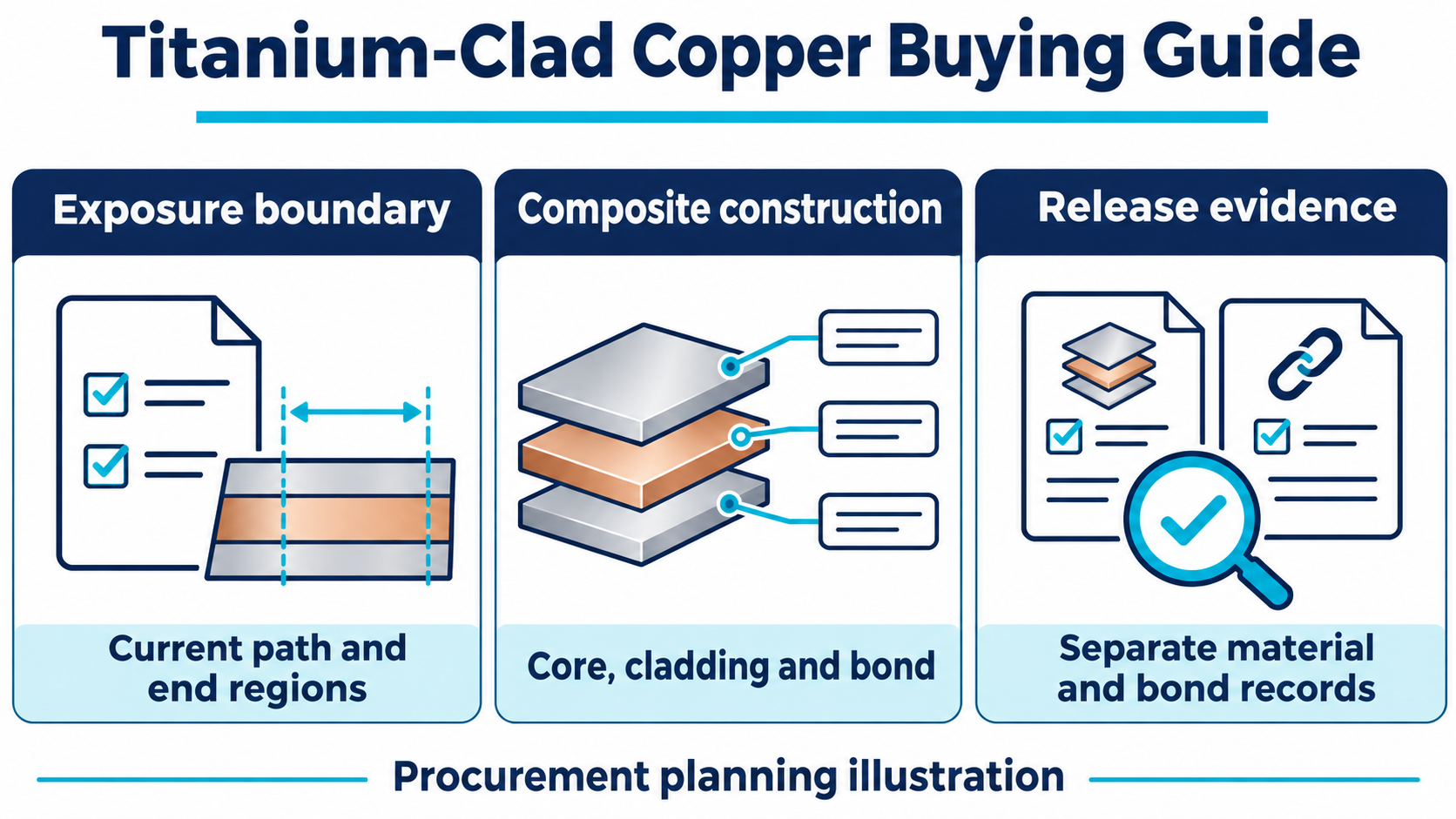
Titanium-Clad Copper procurement illustration: exposure boundary, composite construction, release evidence. Concept illustration of the article's procurement checks: current path and end regions; core, cladding and bond; separate material and bond records.
Agree the bond route and allowed operations
Ask the supplier to identify the proposed composite construction and how the interface will be verified. If the design specifies an inspection of bond continuity, define accessible areas, coverage, reporting and any limits for indications. Where coupons are used, connect their source and manufacturing route to the parts they represent.
If further cutting, drilling, joining or forming will occur, assign that work and identify what must remain intact or be restored afterward. Review end closures and mating conductors on the drawing. Confirm which process changes require approval because they affect exposure, electrical contact or the verified condition.
Tie release evidence to the delivered composite
Request material records for each constituent, the part and lot identifiers and the agreed evidence for the bond, cladding and dimensions. Check the electrical or fit requirements in a separate record where those functions are part of acceptance. State who examines any damage to the exposed or protected surface before release.
Share the service environment, duty, composite section, interfaces, finishing scope and tests when requesting a quote. HELE titanium-clad copper enquiries
Frequently asked questions
Which grades should appear on the drawing?
Identify the required copper and titanium separately along with their condition and documentation. Ask the supplier to list proposed deviations.
How should coverage be specified?
Mark the covered, exposed and protected regions, especially transitions, ends and holes. Define how the relevant boundaries will be checked.
What can a material certificate verify?
It provides evidence for the material it identifies. Assign separate records to bond continuity, geometry or other finished composite features.
Can the buyer machine the composite after delivery?
Review the planned work with engineering and the supplier. Record how the cladding and required interface condition will be verified afterward.
How do we compare bond inspection offers?
Use the same coverage, method, reporting and acceptance rule. Keep access limitations and any representative samples visible.
What matters when replacing a current conductor?
Provide the complete assembly drawing, connector state, duty and observed issues. Confirm any change in dimensions, exposure or electrical contacts before ordering.
Prepare a technical enquiry
Share the product form, grade or standard, dimensions, quantity and inspection requirements.
Ask a technical question →
Project contact