
Titanium Rod and Bar Buying Guide
Buy titanium rod or bar against the usable stock the downstream process needs.
Table of Contents
Buy titanium rod or bar against the usable stock the downstream process needs. State grade and condition, profile and dimensions, straightness, surface and traceability. If the material will be machined, agree the allowance and stock envelope needed to produce the final part.
Define the delivered profile and expected processing
Identify round bar, rod or a specified section and show the final part or processing route it supports. Confirm the approved grade, material specification and delivery condition. Put cut lengths, section dimensions and permissible variation on the order.
Where bar stock will be turned or milled, confirm how the buyer will hold and locate it. Record the starting dimensions and allowance required for cleanup, and identify any straightness or surface issue that could affect usable stock. If the supplier offers a different size or route, assess its impact on yield and finished properties.
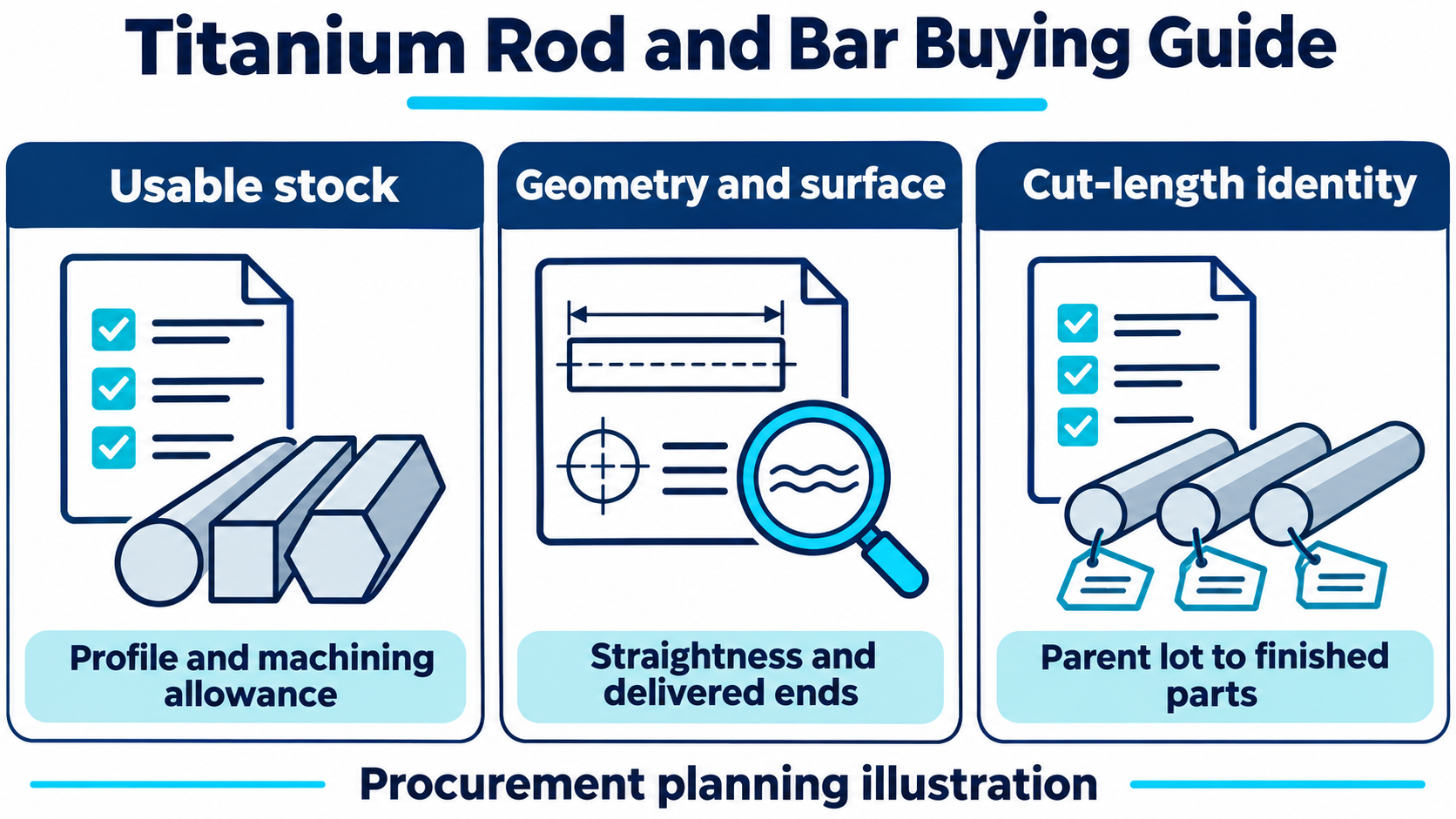
Titanium Rod and Bar procurement illustration: usable stock, geometry and surface, cut-length identity. Concept illustration of the article's procurement checks: profile and machining allowance; straightness and delivered ends; parent lot to finished parts.
Check geometry, surface and supplied operations
Specify straightness measurement basis, section tolerances and surface condition. Give a method or documented acceptance criteria for appearance where surface controls matter. If the order includes cut, ground or otherwise prepared stock, clarify the delivered dimensions, ends and any marking requirements.
Ask what operations the offered price includes and who owns any further work. Compare yield, conversion cost and inspection rather than using price per unit weight alone. Define any supplier responsibility for stocking or allocating a specific lot to the order.
Make receiving and downstream identification practical
Request the material record and lot identifiers required by the order. Match the dimensions and surface checks to the delivered product and note how the supplier will mark cut lengths or bundles. Where the buyer subsequently cuts the material, assign how identity will be carried to final parts. Titanium material certificates and inspection
For a quote, send the approved material and condition, profile, size and length, intended process, surface and straightness requirements and required records. HELE titanium rod and bar
Frequently asked questions
Which dimensions matter beyond diameter?
Include length, relevant section limits, end condition and straightness where they affect fit or workholding.
Who sets cleanup allowance?
The responsible manufacturing and design teams agree the starting envelope against the intended route and final requirements.
How can two bar supply routes be compared?
Align grade, condition, finished geometry, surface, processing scope and tests. Compare usable stock for the intended part.
What documents should come with cut lengths?
Define how each length or pack connects to the parent heat or lot and approved material and inspection records.
Can a supplier quote an alternative section size?
Allow it to be identified as a deviation. Have engineering and the next processing team confirm suitability and cost before approval.
When should straightness be verified on receipt?
Specify it when it affects workholding, feeding or usable extra stock. Agree the measuring support and basis in advance.
Prepare a technical enquiry
Share the product form, grade or standard, dimensions, quantity and inspection requirements.
Ask a technical question →
Project contact