
How to Verify Titanium Anode Basket Hooks Fit an Existing Busbar
For an existing plating line, release the replacement hook against a verified busbar interface and a documented first fit-up.
Table of Contents
For an existing plating line, release the replacement hook against a verified busbar interface and a documented first fit-up. Record which stations the fit-up represents, who has approved the loaded support and removal path, and which electrical checks the line owner must complete before service. A trial on one convenient station may leave a second station with a different bar profile or obstruction unassessed.
Establish which stations the replacement must fit
Number the intended mounting positions on a line sketch. Identify the usable seating areas, local obstructions and any position that differs from the original drawing. Ask maintenance to compare the controlled drawing with accessible as-installed records. If the line has been modified, establish which profile and dimensions actually govern the replacement.
Make differences visible before freezing the basket drawing. One hook design may fit all stations once the supplier has reviewed their interfaces. Where a joint, cover, previous repair or changed support alters the available space, ask the responsible team whether to include that station in the trial or specify a different configuration. Record the decision by station ID.
HELE considers the hook geometry together with the line layout, electrical path and maintenance requirements. For a retrofit, carry the approved interface into a fit-up record that identifies the station. HELE basket interface guidance
Use the first fit-up to answer specific questions
Agree whether the first check will use a controlled replica, an approved gauge or the installed bar under the site's authorized conditions. Link the reference bar or gauge to the interface drawing. If the trial uses a replica, document which station it represents and what will still be checked at the plant. A hook can fit a straight reference profile while local covers or supports constrain installation.
Review seating and handling separately. Note where the hook is intended to bear and which surfaces remain clear. Check the planned insertion and removal path against nearby hardware and the handling provision. Ask the responsible team to define the conditions for any loaded check, including what mass the basket carries during removal. Document the basket, charge and attached items relevant to the agreed handling case. The plant team must approve access, load and handling for its equipment.
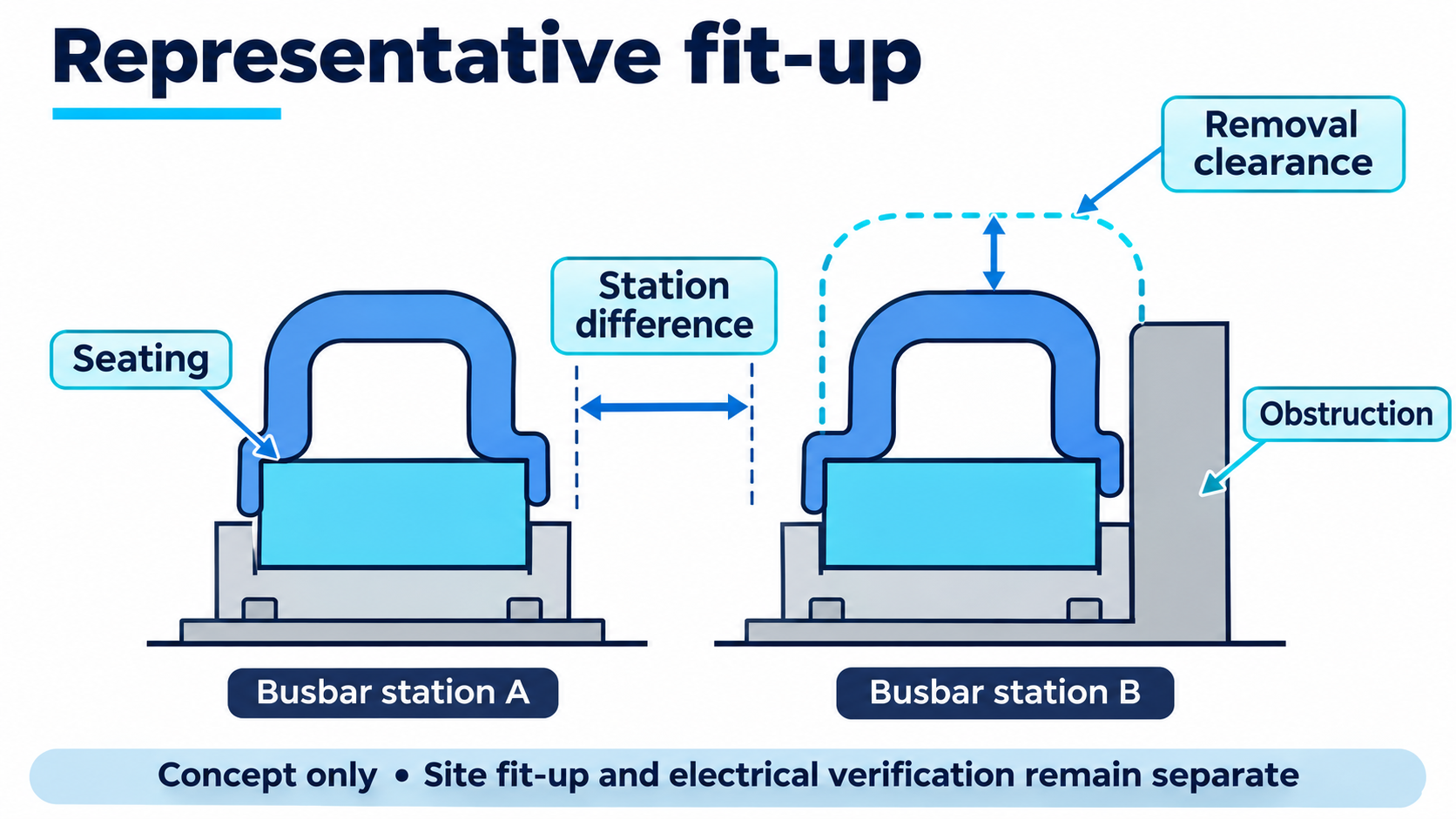
Two conceptual busbar stations illustrate seating and a nearby obstruction affecting removal clearance. Conceptual illustration only. Geometry, symbols and document icons do not represent an approved design, measured result or completed acceptance.
Separate fit-up release from permission to operate
The first fit-up record should identify the basket, hook drawing revision, station or representative fixture, checks performed, unresolved differences and approver. If an approved change is needed to achieve fit, carry it back to the drawing and identify which stations it affects before repeating the order.
Physical seating records where the hook fits. Have the responsible line engineer specify and own the electrical verification for the approved configuration and operating duty. Agree whether that is part of commissioning, who records the result and when the line may return to service. If the electrical review is still open, preserve that status beside the mechanical fit-up.
For an enquiry, send the as-installed interface sketch, a list of locations the replacement must fit, the loaded handling case and any drawing or photographs you can share. Ask the supplier to show which fit-up and inspection evidence it can provide. HELE titanium anode basket enquiries
Frequently asked questions
Can I quote a replacement from the basket envelope alone?
The envelope helps define the space inside the tank. Add the installed bar profile and contact location to define where the hook sits and the access needed to place it.
What if I only have a used basket to copy?
Identify wear, bending and past modifications on the sample. Ask which dimensions are intended to be reproduced and validate those against the installed bar before authorizing the copy.
Do all stations need to be included in the first fit-up?
List the station differences and agree which positions represent each approved interface. Keep a separate check for exceptions that the representative fit-up does not cover.
Which mass should be used for the handling review?
State the basket, soluble charge and accessories present in the agreed handling condition. Record whether that condition allows for retained liquid where relevant and let the responsible team confirm the load basis.
What should remain open after a shop trial on a replica?
List what the replica reproduced and what it omitted, such as adjacent obstructions or maintenance access. Assign the remaining checks to the first site fit-up.
Can a signed fit-up close the electrical acceptance item?
Keep the electrical item open until the designated line team records the result against the agreed criteria. The fit-up record supports the geometry decision.
Prepare a technical enquiry
Share the process or protected asset, operating conditions, geometry or drawing, and the scope you need reviewed.
Ask a technical question →References

Project contact