
How to Specify Replacement MGPS Anodes for a Vessel
Specify vessel MGPS replacement anodes by drawing revision, active geometry, controller channel, mounting, and acceptance records.
Table of Contents
Start a replacement enquiry with the vessel’s anode schedule, mounting drawing and latest operating records. Ask the supplier to quote against the identified anode position and drawing revision. The old anode’s remaining length is useful condition evidence, but the original drawing is the better basis for the new active length and mounting dimensions.
A marine growth prevention system (MGPS) is part of a seawater circuit. A vessel may have several anode positions, and similar-looking assemblies can serve different functions or connect to different controller channels. The objective at a planned docking is to get each replacement to the right location with a known electrical, mechanical and sealing interface. HELE MGPS anodes · Cathelco MGPS system description
Identify the circuit and the anode position
Mark each anode on the latest approved arrangement drawing. Include the sea chest, strainer or other housing location and the branch of the seawater system it serves. Cross-check the drawing against the tag at the vessel and the connection shown in the controller record. Where port and starboard positions look identical, label the photographs and the parts list with the actual location.
Record the material and role as stated on the OEM schedule. HELE reviews copper, aluminum and iron assemblies against the original system design. A material name alone cannot identify which channel or function belongs to the assembly. Keep hull cathodic protection and sacrificial anode records separate from the MGPS schedule so that the yard can issue the right parts to each work package. Copper, aluminum and iron MGPS anodes
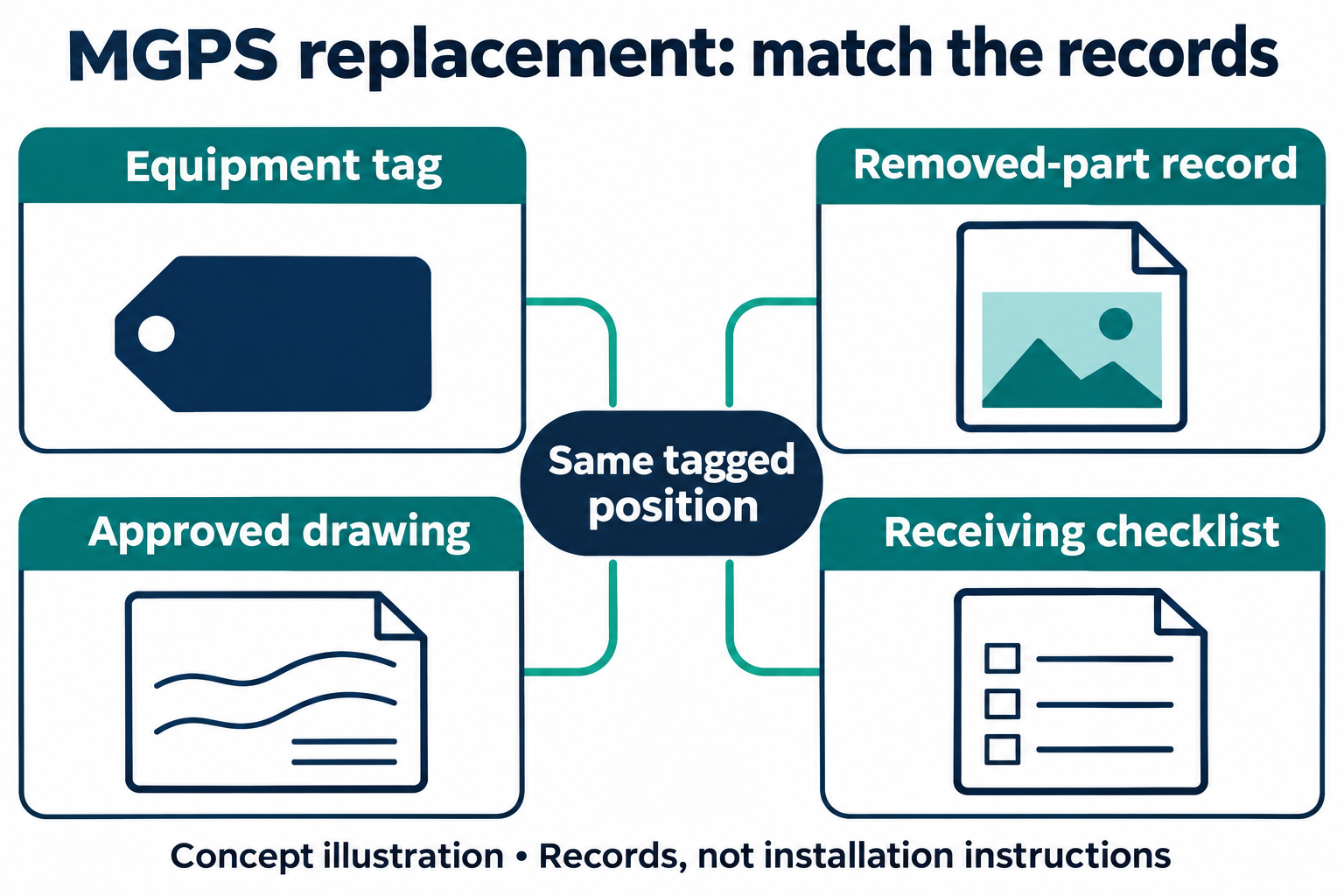
Concept diagram linking an equipment tag, removed-part record, approved drawing and receiving checklist to the same MGPS anode position. Conceptual record-matching illustration only. Confirm the tagged position and approved drawing; this is not an installation design.
Put the original drawing and observed condition in separate columns
| Record | What to send | Decision it supports |
|---|---|---|
| Identity | Vessel equipment tag, system maker and model if available, original part ID and drawing revision | Which part and location the quotation covers |
| Active geometry | Drawing length and diameter, exposed section, insulation start and end | Whether the new working geometry matches the approved arrangement |
| Mounting and sealing | Thread or flange details, insertion clearance, gasket or seal interface and accessible photographs | Whether the assembly fits the existing housing and can be serviced |
| Electrical interface | Lead length, termination, gland, channel designation and documented duty | Whether the assembly connects to the intended existing controller and cable route |
| Operating record | Logged current and relevant alarms by channel, recent maintenance and the circuit in service at the time | Whether a straightforward replacement or a system review is appropriate |
| Removed assembly | Remaining dimensions, consumption pattern, cable and seal condition, each tied to the tag | What to investigate and what to document before the next service interval |
Show as-found dimensions with a label. If the drawing is unavailable, send measured mounting dimensions, photographs with scale, any surviving tag and the vessel’s equipment record. Ask the supplier to issue a confirmation drawing and list the dimensions that still need shipyard verification. Mark uncertain information as provisional on the purchase order so it stays visible before manufacture.
Decide whether the work is a replacement or a change
For a planned renewal with a confirmed design, compare like-for-like scope by tagged location. State the quantity, installation date and which pieces are expected in the box. Some quotations include the anode element only, while others include the lead, gland, mounting hardware or seals. Itemize these parts to expose the difference before price comparison.
Unexpected consumption, repeated alarms or two similar channels carrying different recorded loads merit an investigation alongside the spares enquiry. Compare the operating periods, tags and any maintenance or circuit changes before attributing the discrepancy to the anode. If the yard plans to change the active dimensions, material, controller, or mounting design, have the responsible system engineer and vessel representative approve the change. A physical fit check alone cannot resolve a changed operating duty. Anode replacement and failure review
Agree what the yard will accept
At drawing approval, close the active geometry, installation interface, cable details and identification schedule. At receipt, match every package to the delivery list and approved drawing revision. Check the supplied parts, dimensional record and cable identification before sending components to their tagged positions. Agree which material documentation and inspection records are required in the purchase order.
After fitting, the responsible yard and vessel teams can record the installed tag and channel, complete the project checks for the mounting and sealing interface, and retain controller and commissioning records under the approved system procedure. Record any open item with an owner and a point at which the work can be released. This gives the maintenance team a baseline for the next inspection.
Prepare the replacement enquiry
Send the anode schedule, latest drawing, tagged photographs and the scope you expect the supplier to include. Add the docking date, delivery location and any specific inspection or documentation requirements. Request a drawing-based MGPS replacement review
Frequently asked questions
Can I order from a photograph of the old anode?
A photo can help identify the assembly and its mount. Include a scale, equipment tag and views of the lead, seal and mounting face. Release the order against an approved drawing or individually confirmed dimensions.
Should I specify the length measured after removal?
Record the as-found length for the maintenance file. Use the original active length or an approved replacement drawing when you specify the new item.
Does the order need a new gland or seal?
Compare the system drawing, yard scope and supplier’s component list. The purchase order should identify which parts are supplied assembled, loose or separately by the yard.
Can two similar anodes share one item number on the order?
Only after the schedule confirms their material, active geometry, mounting and electrical interfaces are the same. Keep a location list even when one part number serves several positions.
What makes unusual consumption worth investigating?
Investigate when the observed pattern differs from the expected duty, earlier inspection history or another comparable position. Bring the channel readings, alarm history and circuit operating record to the review.
What should stay in the vessel’s maintenance record?
Keep the installed tag, drawing revision, material and part identification, receiving checks, system commissioning record, and the observed condition of the removed assembly. This makes the next replacement easier to specify.
Prepare a technical enquiry
Share the process or protected asset, operating conditions, geometry or drawing, and the scope you need reviewed.
Ask a technical question →References

Project contact