
PEM Test Rack vs. Test Platform: Which Data Will Your Experiment Need?
Compare a PEM test rack and test platform by controls, channels, sample exports, and the data needed to accept the test equipment.
Table of Contents
Choose a PEM electrolyzer test rack or a configurable test platform from the experiment’s required controls and records. A simple rack can suit teaching and early electrical characterization when its approved operating envelope and available signals match the task. A configurable platform is worth evaluating when the method depends on independently controlled conditions, additional instrumentation or traceable records across a changing operating sequence. Simple test rack · Single-channel test platform
A procurement comparison should ask what is commanded, what is measured and what makes it into the exported dataset. Those are different questions. For example, a setpoint appearing on a screen does not establish that a sensor recorded the actual condition for the duration of a run.
Convert the test objective into a data requirement
| Buyer’s task | Ask the bidder to show | When to review a configurable platform |
|---|---|---|
| Teaching or a basic voltage-current comparison | Present the fixture fit, electrical ranges and what students can view or save | The lesson requires a controlled additional variable or consistent data export across groups |
| Comparative performance measurements | List the controlled conditions, measured channels and calibration or verification records | Different samples must be tested under a repeatable fluid, temperature or pressure basis |
| Long-duration observations | Show time stamps, export format, sample continuity and how a stopped run is identified | The work depends on synchronized channels, logged alarms or a defined restart record |
| Instrumented research | Identify available software interfaces, sensor and sampling provisions, and which features are options | Extra channels, gas analysis or a nonstandard fixture are part of the approved experimental protocol |
Start with the device under test. Supply the drawing, fixture and connection details, and the operating envelope the lab expects to use. Ask the bidder to identify restrictions and interfaces explicitly. Option names can be similar across quotations even when they describe different sensors, ranges or control modes.
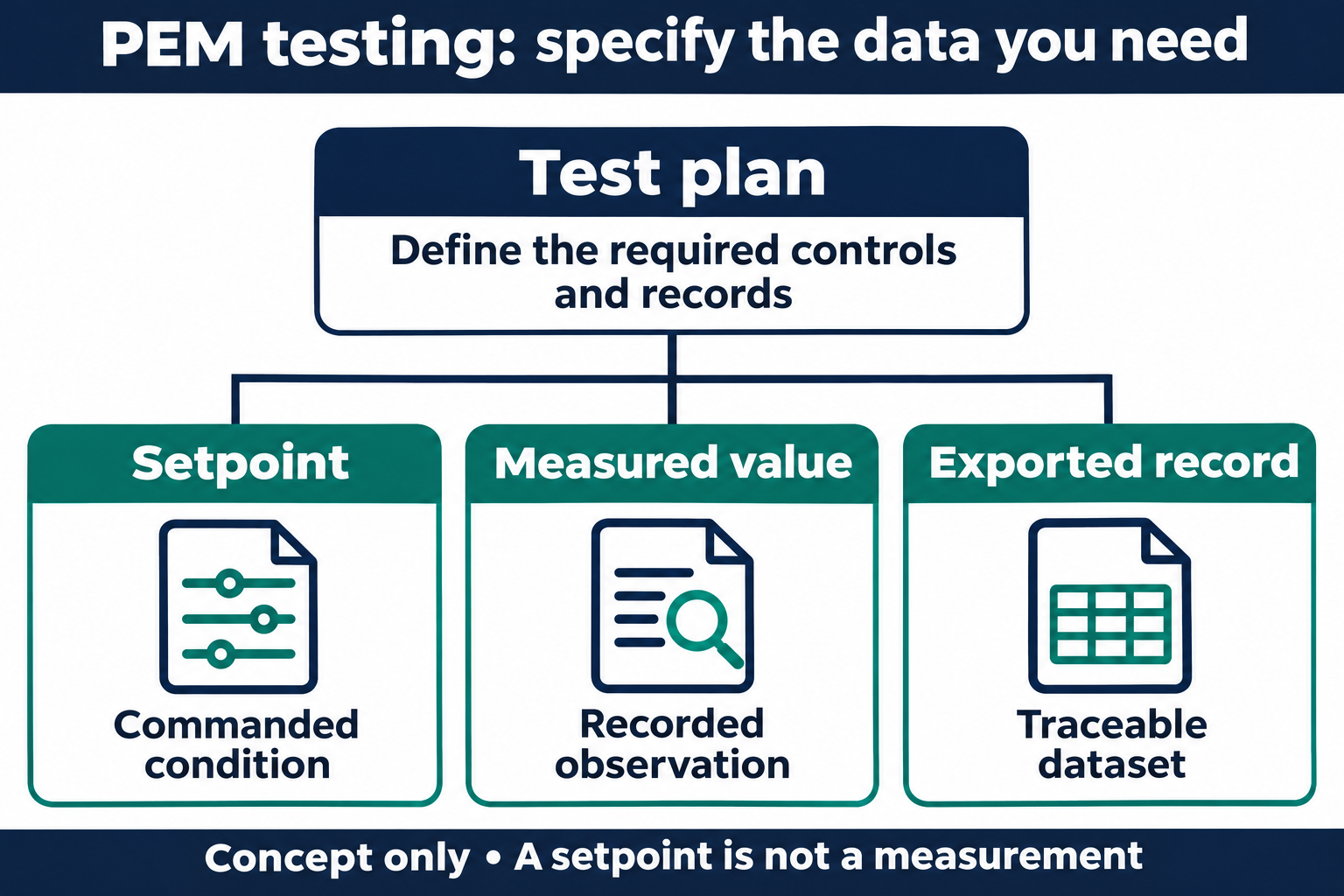
A PEM test plan separates commanded setpoints, measured observations and traceable exported records. Conceptual data categories only, not an equipment capability statement or test procedure. Confirm which conditions are commanded, measured and retained by the quoted configuration.
Ask for one annotated sample export
Give the supplier a short data specification. Include the channel name, unit, expected range, whether it is a setpoint or reading, time basis and how missing or invalid data should appear. Require a sample export from a representative verification run. Check that the record ties to a configuration or run identifier so that another researcher can tell which conditions applied.
If the plan relies on responses to a change in load or another condition, ask how the equipment records transitions and flags stabilization. Leave sampling frequency, measurement uncertainty and required control tolerance to the actual protocol. Review the current responsibility for water and electrical service, site provisions, and training requirements under the supplied equipment documentation. Harmonized PEM water electrolysis test procedure
Set an acceptance exercise before comparing prices
Request one comparable exercise from the bidders. Agree what the supplier will demonstrate using the approved configuration, which channels and controls will be checked, and how you will compare the sample export against your specification. Identify which verifications require the laboratory’s own device or final installation and keep them as named acceptance items.
Send the experiment brief, device details, channel list and required controls for a configuration review. This gives the lab a basis for assessing a simple rack and an expanded platform before the purchase order. Review the available test platform configurations
Frequently asked questions
Can a simple rack support voltage-current observations?
It can when the approved device, electrical range and fluid conditions fit the quoted configuration. Verify that the data you need are recorded in a usable form.
Is the displayed setpoint a measured value?
A setpoint is a command. Ask which channels report actual measurements and how the export labels them.
Does the platform include gas analysis?
Confirm the quoted sensor and module list. If analysis is required, include the measurement method, reporting fields and acceptance check in the enquiry.
What should a sample export contain?
Ask for named channels, units, time stamps or a defined time basis, and the applicable configuration or run ID. Include how faults, pauses and missing records are represented if the protocol relies on them.
Can the laboratory use its own stack?
Submit the drawing and interfaces for approval. Check fixture fit and the proposed environment and test conditions against the equipment scope.
Which checks belong in site acceptance?
Keep any checks that depend on the final lab utilities, installed instrumentation or the buyer’s own device on the site acceptance list. Agree the other verification items with the supplier.
Prepare a technical enquiry
Share the hydrogen or test duty, operating conditions, interfaces and the equipment scope you need reviewed.
Ask a technical question →References

Project contact