
How OEM Buyers Can Review a Manufacturing Supplier
Compare prospective suppliers on production scope, application review, inspection evidence and ownership of changes.
Table of Contents
Shortlist a supplier by matching the work in the quote to the actual drawing or process requirement. Then request evidence the supplier can provide for that order. A shared evaluation sheet helps procurement and engineering identify differences before cost and delivery are compared.
Assess four parts of the proposed manufacturing scope
| Review area | Ask to see | Decision it supports |
|---|---|---|
| Manufacturing | Itemized route, offered material or components, and any outside operations | Who will do the work and what the delivered item includes |
| Application review | Confirmation of critical inputs, exclusions and drawing or process assumptions | Whether the offer is based on the right use and boundary |
| Quality and release | Proposed inspection plan, report examples and traceability approach | How the required material, fit and function will be verified |
| Change control and communication | Named owners, quotation revision, open items and approval process | Who resolves a discrepancy before production or release |
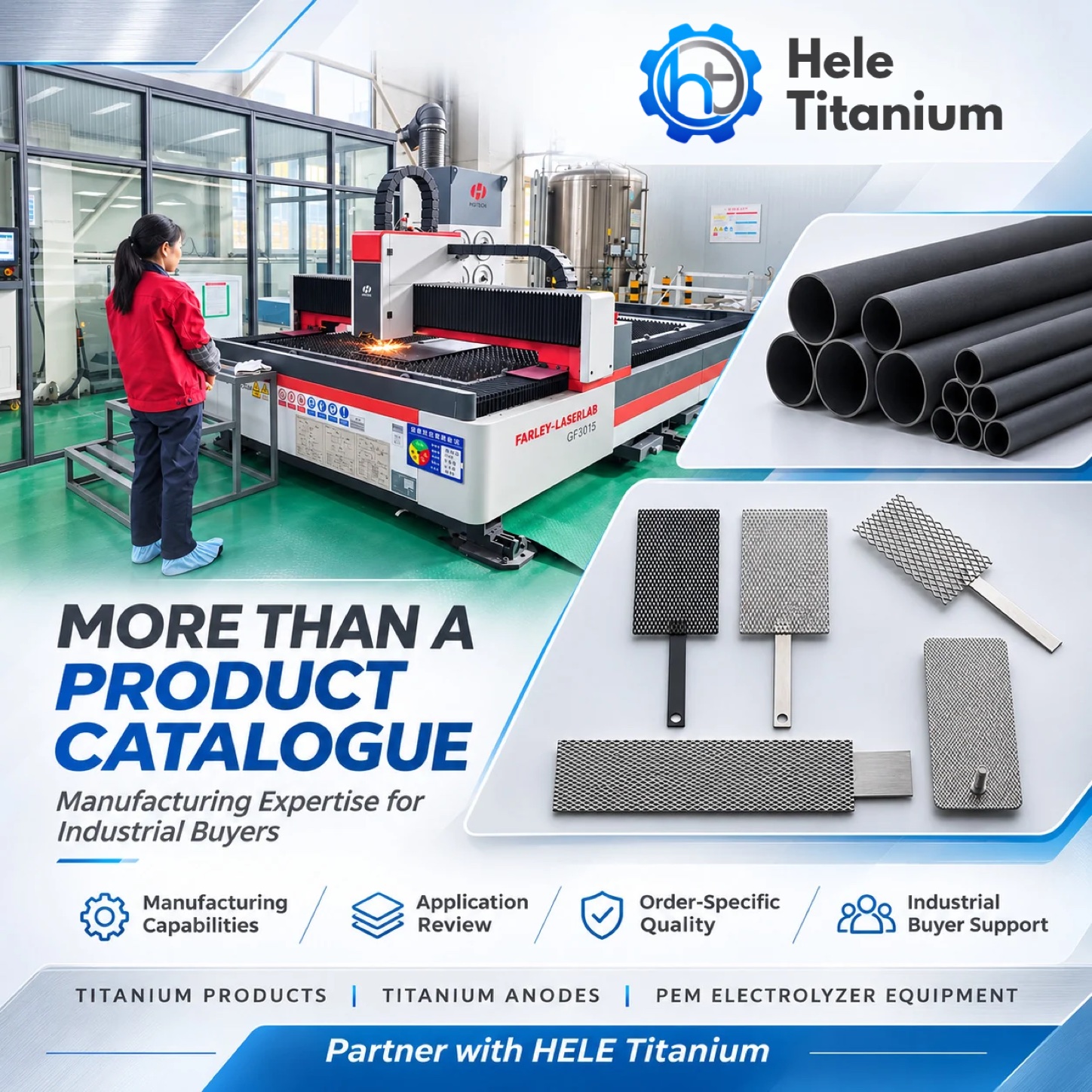
HELE manufacturing graphic showing a laser cutting system and buyer review topics. Supplier review starts with the proposed production route and the evidence required for the order.
Ask for evidence tied to the offered part or project
For machined titanium, ask which datum, threads, mating features and surface requirements the inspection plan covers. For coated anodes, compare coating evidence against the reaction, current and active area on the same drawing. For PEM equipment, ask for the equipment list, agreed operating conditions and information about which tests cover the stack, package and site. Select the evidence needed for the order stage and mark which items are required before final approval.
Give each bidder the same requirement and ask them to identify changes separately from the base price. Record a result for each applicable decision, with any open issue assigned to the buyer or supplier. Titanium materials and custom fabrication · Anode proposal comparison
Frequently asked questions
Should a capability list be sufficient to approve a supplier?
Use it to shortlist, then review the proposed manufacturing route, application fit and evidence for the actual item.
What can a sample inspection report show?
It can show format and checking practice. Ask how the supplier will identify the delivered lot, critical features and approved drawing on the order-specific report.
How do we review operations performed by another shop?
Identify the subcontracted step, the entity responsible for the follow-up and how traceability and accepted results return to the final release pack.
What should we request when the supplier offers a different material?
Request the proposed grade and condition, the reason for substitution and any effects on production or service. Have the design authority approve the documented change.
Can a production trial be used to compare suppliers?
Agree the trial design, inputs and acceptance criteria first. Identify what needs repeat verification on production lots and tie results to the route qualified.
Who should sign off the final comparison?
Have technical and procurement owners review the same revision. Assign separate sign-off for deviations, commercial scope and the inspection or acceptance plan as appropriate.
Prepare a technical enquiry
Share the product form, grade or standard, dimensions, quantity and inspection requirements.
Ask a technical question →
Project contact