
How to Investigate Coating Loss on an Iridium Oxide Titanium Anode
Investigate iridium oxide coating loss with part records, inspection evidence, duty history and a replacement or recoating review.
Table of Contents
Preserve the used parts and document their positions before approving a replacement. The first decision is whether the pattern is localized to a plate, contact or station, or is shared across an anode lot. That distinction helps the team choose an inspection scope and identify what must change on the next order.
Record the condition before cleaning the anode
Ask maintenance to photograph the working face, reverse side, edges, mounting points and contacts against the same part identifier. Note the direction of flow and the position relative to neighbouring plates. Keep photographs of material on the surface separate from photographs taken after any approved inspection or cleaning. Save the removal record with the drawing revision and operating logs. Agree on handling with the site before shipping used parts.
Mark exposed areas, loose fragments, deposits and abrasion separately. For a series of plates, map the positions on the drawing so the laboratory can compare affected locations with apparently sound areas. Start with unaltered evidence from the affected parts and a representative plate with comparable duty.
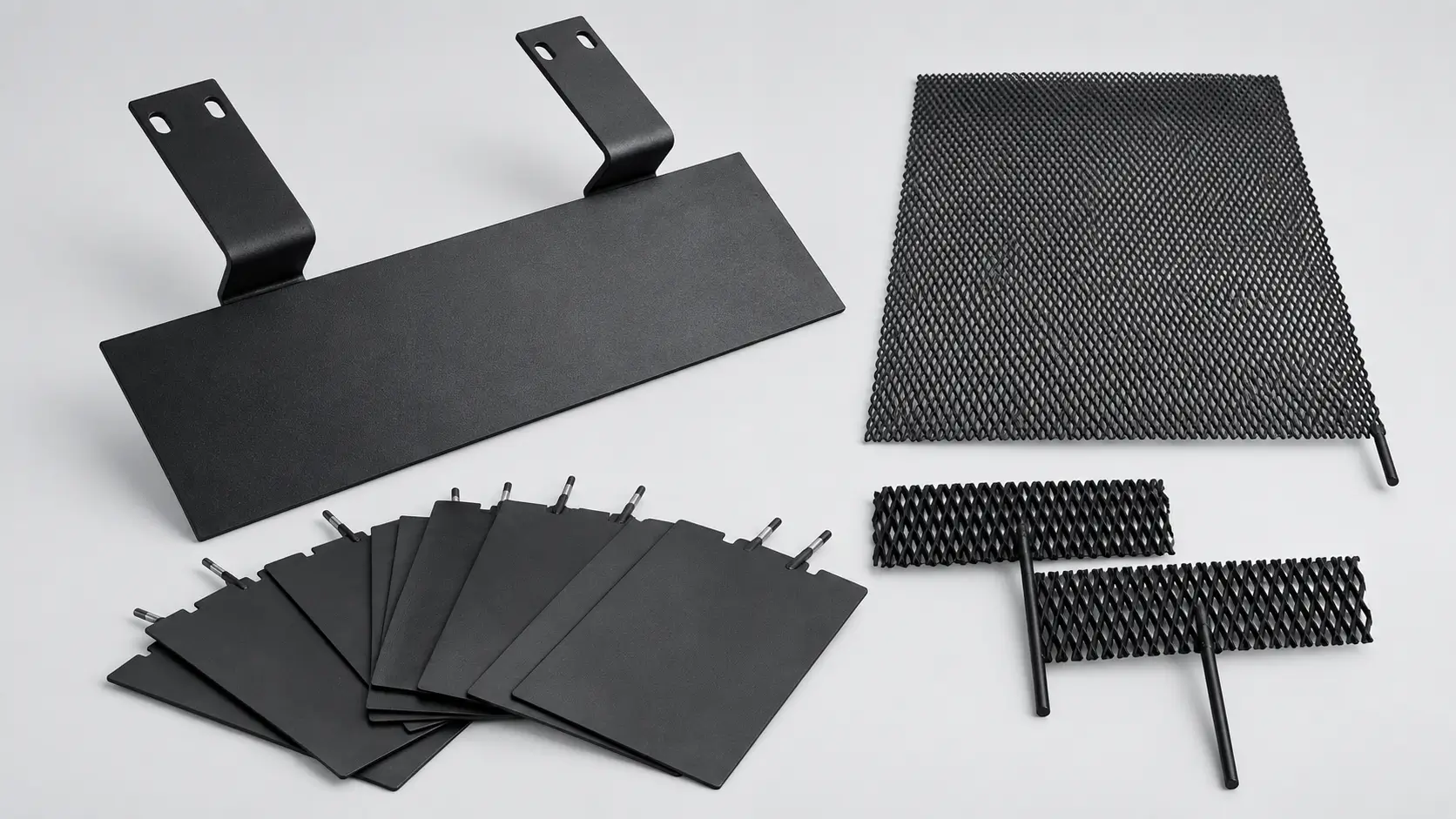
Compare four explanations against the records
| Observation | Records to compare | Question to resolve |
|---|---|---|
| Loose material near a mounting point | Removal photos, as-built drawing and installation record | Was the coating disturbed during fit-up or removal? |
| Different condition by plate position | Position map, flow and duty history | Does the pattern follow a location in the cell? |
| Rising voltage with little visible flaking | Voltage at the stated measurement point, contact condition and bath records | Is further inspection of electrical interfaces or coating condition warranted? |
| Similar changes across a lot | Shipment record, lot release results and duty timeline | Which observations support a shared manufacturing or service history? |
An accelerated study of an IrO₂–Ta₂O₅ coating in ammonium citrate documented loss of active iridium during testing. Use that work to frame possible mechanisms and agree on examination. A service-life claim for the installed plate needs its own electrolyte, duty and failure endpoint. Original coating durability study
Define what the replacement has to demonstrate
Give the supplier the approved drawing, bath chemistry and duty history. Agree which evidence will release the replacement, who will inspect the fit and contacts and what the first production run will record. Where recoating is considered, have the returned substrate inspected for geometry, surface condition and the connection before confirming the scope. See HELE TITANIUM iridium oxide coated titanium anodes and the anode replacement review.
Frequently asked questions
Does visible flaking prove loss of adhesion during manufacture?
Document the location and morphology, then compare handling, bath, loading and lot evidence. A shared manufacturing explanation needs evidence across comparable samples.
What voltage information is useful?
Record the measurement point, current or operating load, bath conditions and date. A series taken on a consistent basis is more useful than an isolated reading.
Can a deposit look like degraded coating?
Yes. Photograph the original condition and identify the deposit through the site’s agreed inspection procedure before interpreting the surface underneath.
How do I compare life between proposals?
Agree the service envelope, operating hours, end-of-life definition and evidence method. Ask which commitments apply to the specific order.
Can we recoat any used plate?
Have the substrate and connections inspected first. The condition and geometry of the returned part determine whether it can be proposed for reuse.
What should accompany a returned sample?
Include its identifier and position, drawing revision, photos, duty history, bath data, symptom timeline and the scope of the requested analysis.
Request an anode failure review
Send HELE TITANIUM the part and lot identifiers, installation drawing, original-condition photographs and operating timeline. Identify what the plant must establish before it releases a replacement. Submit an anode enquiry
Prepare a technical enquiry
Share the process or protected asset, operating conditions, geometry or drawing, and the scope you need reviewed.
Ask a technical question →References

Project contact