
How HELE’s Titanium Manufacturing Capabilities Developed
See how drawing-based titanium manufacturing, coated anodes and PEM systems came to require different buyer inputs.
Table of Contents
HELE Titanium’s company timeline traces its work from titanium materials and precision processing to coated anodes and PEM stacks and systems. Each step expanded the information buyers need to define who supplies what and how the order will be accepted.
Titanium materials and precision processing
The first phase grew from titanium processing in Baoji. These orders begin with the material specification or controlled drawing. Grade, stock condition, finished dimensions and inspection evidence establish the basis for comparing quotations. Titanium materials and custom fabrication
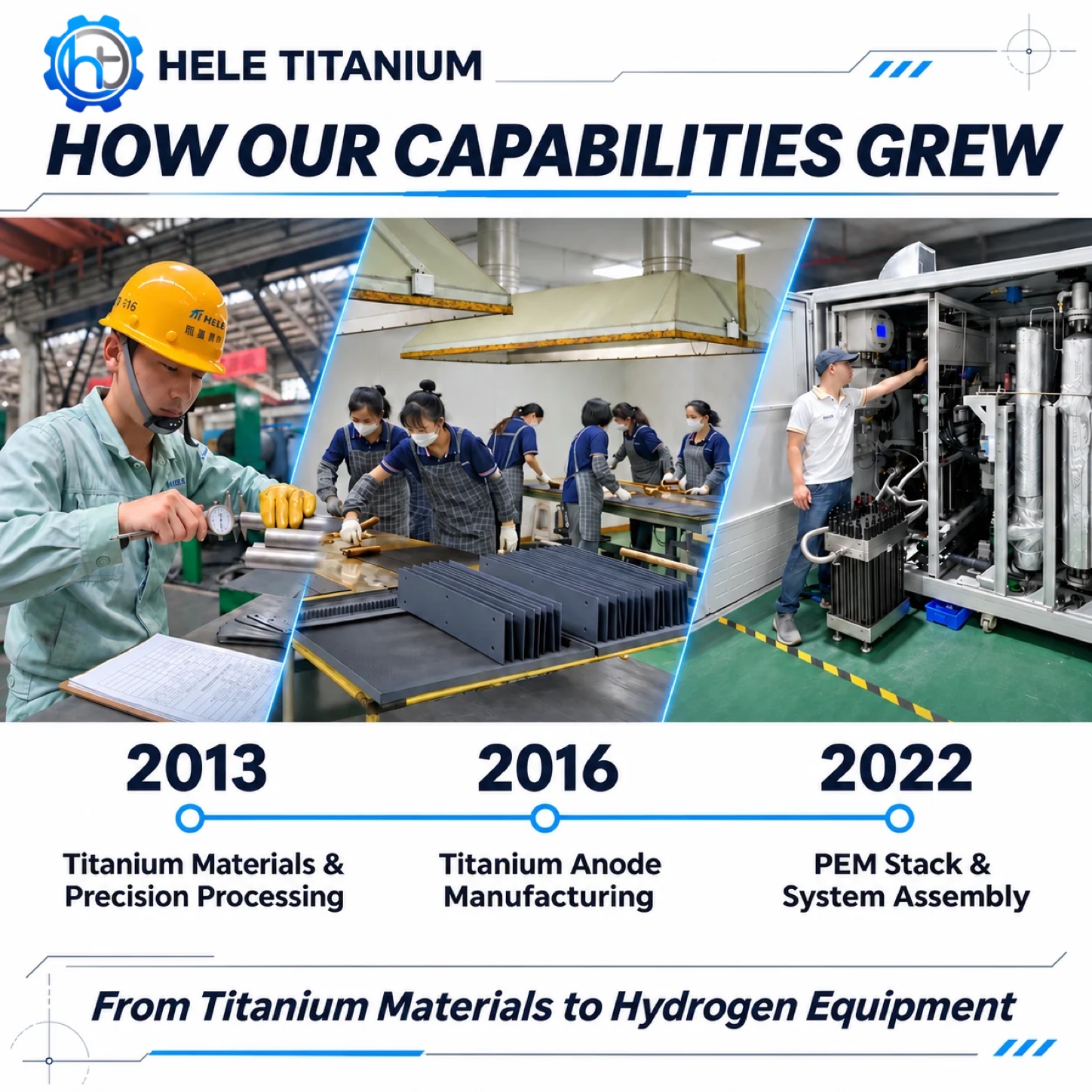
HELE company timeline graphic showing titanium processing, anode manufacturing and PEM stack and system assembly. HELE’s company timeline places titanium processing, electrochemical anodes and PEM equipment in sequence.
Electrochemical anode manufacturing
Moving into coated anodes added the electrolyte, reaction, active area and electrical connection to the manufacturing definition. The same geometry can need a different specification when the process duty changes. For a new or replacement anode, provide the equipment drawing and operating conditions together. Titanium anode purchasing checklist
PEM stacks and system assembly
Hydrogen equipment added project interfaces and acceptance to the scope review. An integrator specifying a stack should identify how it will provide power, water, cooling and gas handling. A buyer specifying an integrated system should identify the required delivery conditions and which utilities and site works are in scope. PEM electrolyzer equipment
Small differences at the enquiry stage can change how a project is quoted. If your team is preparing a new order, state which of these supply levels applies and which technical decision is still open.
Prepare a technical enquiry
Share the product form, grade or standard, dimensions, quantity and inspection requirements.
Ask a technical question →
Project contact