Metal recovery or electrowinning
Name the recovered metal, identify the approved electrolyte and share the current electrode and cell configuration.

Compare electrode candidates by the target metal or reaction, electrolyte and cell interfaces for a replacement or a controlled trial.
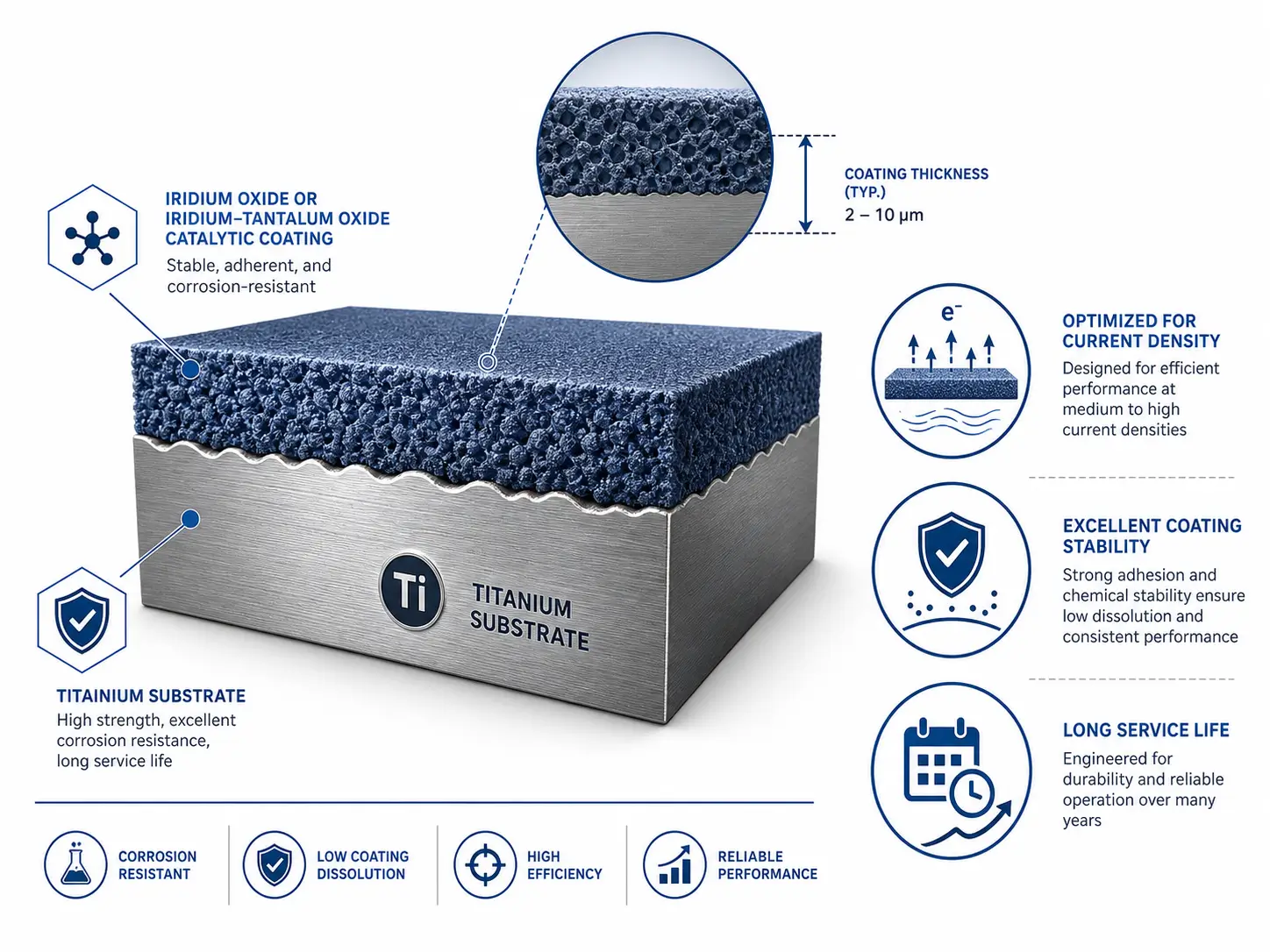
Similar-looking electrodes may be intended for different anodic duties. Identify the process objective, bath constituents and how the electrode is mounted before comparing a replacement or setting up a trial.
Name the recovered metal, identify the approved electrolyte and share the current electrode and cell configuration.
Define the reaction or treatment target, process owner’s acceptance criteria and the proposed trial boundary.
Use the same operating and measurement basis when screening candidates. Confirm pilot or trial limits with the process owner.
| What to compare | What to provide | What it helps confirm |
|---|---|---|
| Target reaction | Name the recovered metal or intended anodic duty and the process objective. | Which electrode families should be screened. |
| Electrolyte | Share the composition, contaminants, pH and operating temperature. | Whether candidate substrate and coating warrant testing. |
| Electrical and mechanical duty | Provide the current range, duty cycle, active area, electrode gap and terminals. | A common comparison basis and drawing-defined fit. |
| Trial and acceptance | State the sampling method, process target and required inspection records. | Which measurements and records support the decision. |
Review iridium-based coatings where relevant to the specified anodic duty. Treat specialty electrodes as separate candidates and confirm their applicability for the actual electrolyte and acceptance requirements.
Compare candidate electrodes using the same duty, units and acceptance basis.
Collect the electrolyte, geometry and inspection requirements for review.